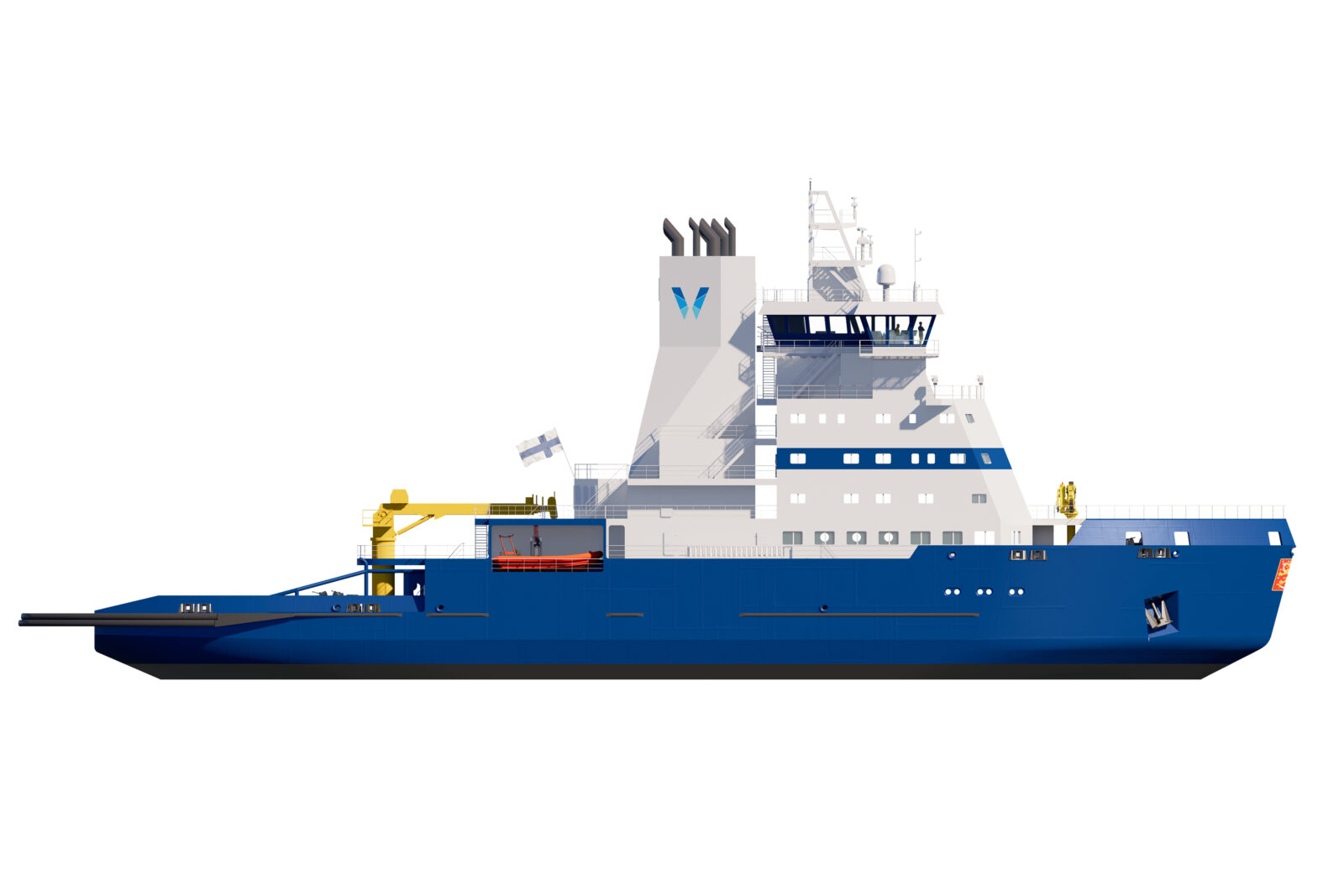
Since April 2025, Railotech has been developing a new medium-class icebreaker for the Finnish Transport Infrastructure Agency. The concept design, including comparative model testing, has now been completed, and the project is entering the tender phase. The objective is to sign the shipbuilding contract in autumn 2026.
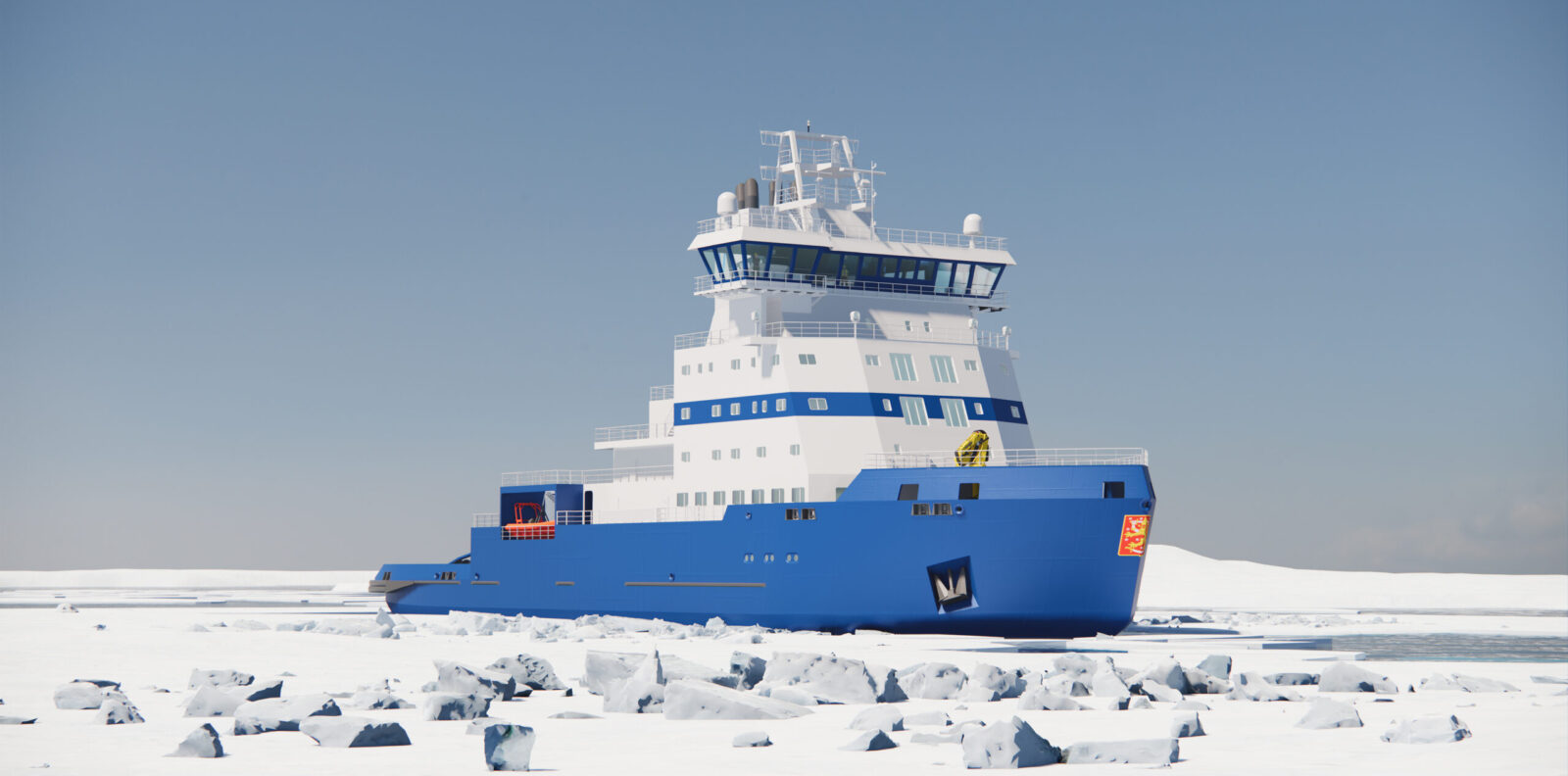
The Finnish government has launched a programme to renew the national icebreaking fleet, beginning with Voima, Finland’s only B-class icebreaker. Commissioned in 1954, Voima turns 72 this year, and remains the world’s oldest icebreaker in active service.
The purpose of the new medium-class icebreaker is to improve the efficiency of Finnish icebreaking operations. The vessel will be deployed to the Bothnian Bay in early winter and later transferred to the Bothnian Sea or the Gulf of Finland as conditions intensify during the season.
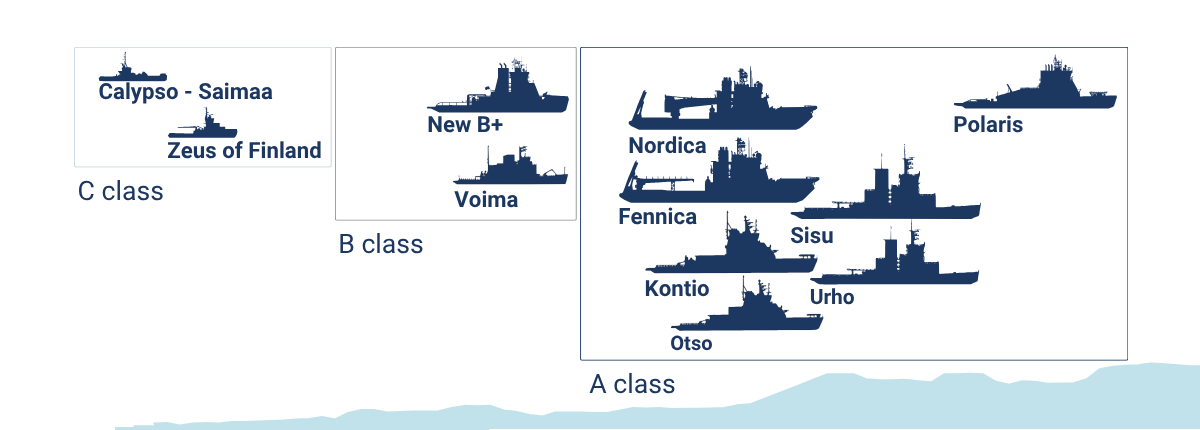
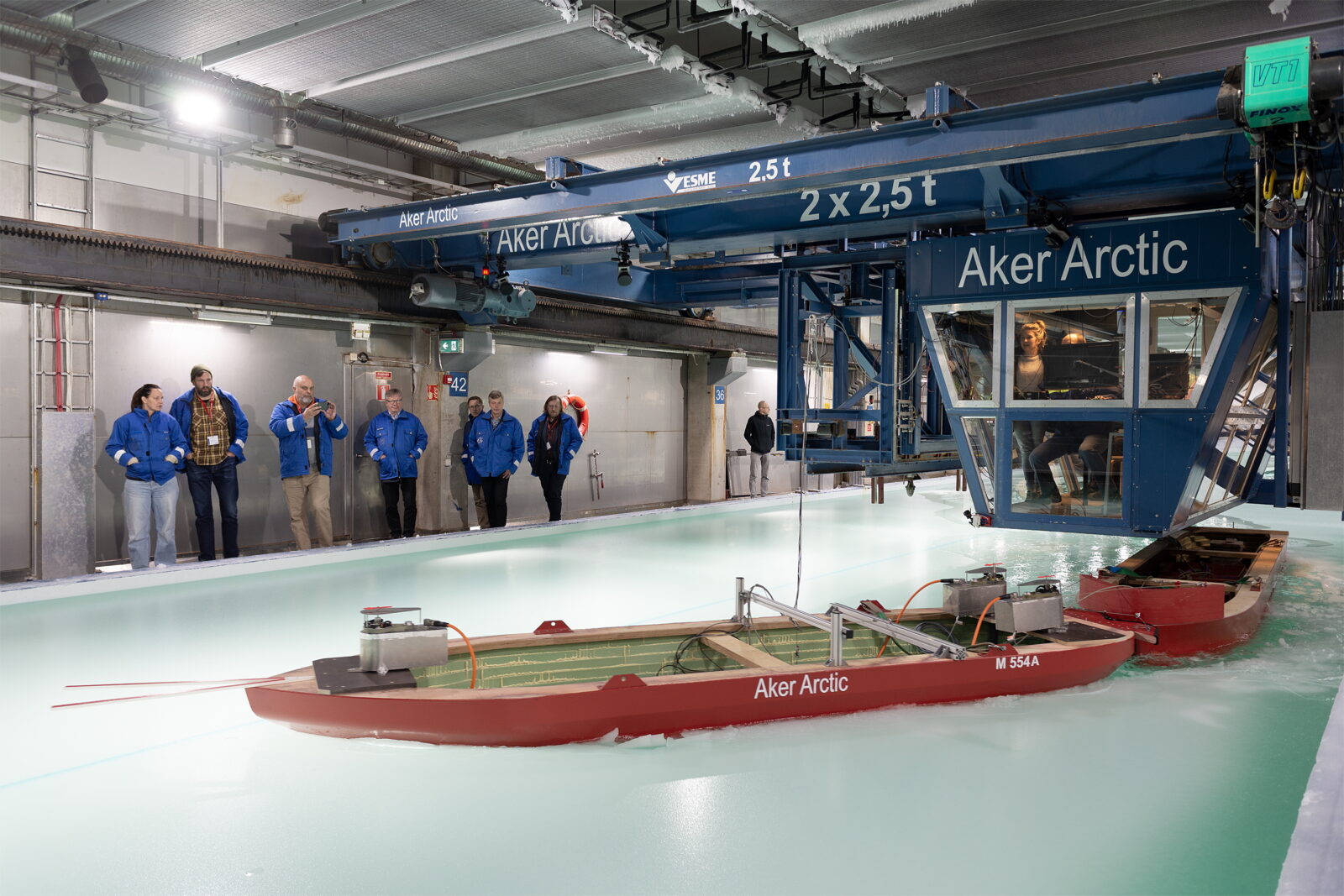
Railotech was awarded the design contract to develop three outline design alternatives, two of which were progressed to tender-level design for the Finnish Transport Infrastructure Agency. With a planned service life exceeding 50 years, an extensive model-testing programme was conducted to identify the most suitable option for a changing ice regime, while also ensuring cost efficiency in acquisition, operation, and maintenance over the icebreaker’s full lifecycle.
Tailored hull form for changing winters
Seven out of the past ten winters in the Baltic Sea have been classified as mild. The hull form of the new icebreaker reflects this shift in operating conditions: instead of predominantly stable landfast ice, the vessel is more likely to encounter dynamic and fragmented ice fields characterised by heavy ridging, slush barriers, and extensive areas of open water.
Optimising the design for efficient performance in the ice regimes prevailing within the intended operational area is a key design driver in every icebreaker project.
“The bow is sharper and more wedge-shaped with a moderate stem angle compared to traditional icebreakers designed for operation in thick unbroken ice,” says Chief Designer Tuomas Romu from Railotech.
The new icebreaker must also be capable of fast and economical transit in open water. In addition to icebreaking performance, the hull has therefore been streamlined for improved hydrodynamic efficiency, high-speed convoy operations, and reduced slamming, an undesirable characteristic of many traditional icebreaker designs.
Two propulsion concepts thoroughly evaluated
Both tender concepts feature an azimuthing propulsion unit in the bow to enhance operability, as escorting and assisting commercial vessels is one of the icebreaker’s primary tasks. The assistance speed target of eight knots was successfully achieved.
The key difference between the two concepts lies in the stern propulsion arrangement: one design employs two conventional shaftlines and rudders while the other is equipped with two azimuthing propulsion units. Although a triple-azimuth propulsion, pioneered by Finland’s newest A-class icebreaker Polaris, has proven to offer superior manoeuvrability, it also entails higher acquisition and maintenance costs.
For this reason, the Finnish Transport Infrastructure Agency sought to determine whether an alternative solution could deliver the required operability at a lower lifecycle cost. The results exceeded expectations.
Comprehensive model testing to support decisions
All design alternatives were subjected to extensive model testing, including ice model tests, open-water tests, manoeuvrability trials, and seakeeping assessments. This enabled a reliable comparison of performance, operability, and manoeuvrability, as well as a comprehensive 50-year lifecycle cost evaluation.
The results demonstrated that the twin shaftlines combined with an azimuthing bow propulsion unit fully met the Finnish Transport Infrastructure Agency’s operational requirements, while offering significant long-term cost savings. As a result, the decision was made to proceed with this propulsion configuration.
“The concept featuring twin shaftlines and an azimuthing bow propulsion unit was shown in the concept design study to be more affordable but still very capable. The azimuthing bow propulsion unit provides high agility and excellent performance in brash ice,” says Maritime Specialist Lauri Kuuliala, Finnish Transport Infrastructure Agency.
Performance exceeds requirements
The new Finnish icebreaker’s technical solutions are based on proven, state-of-the-art technologies. The vessel’s power plant has been future-proofed with the possibility to adopt methanol fuel at a later date. Energy efficiency is further enhanced through a battery energy storage system and waste-heat recovery.
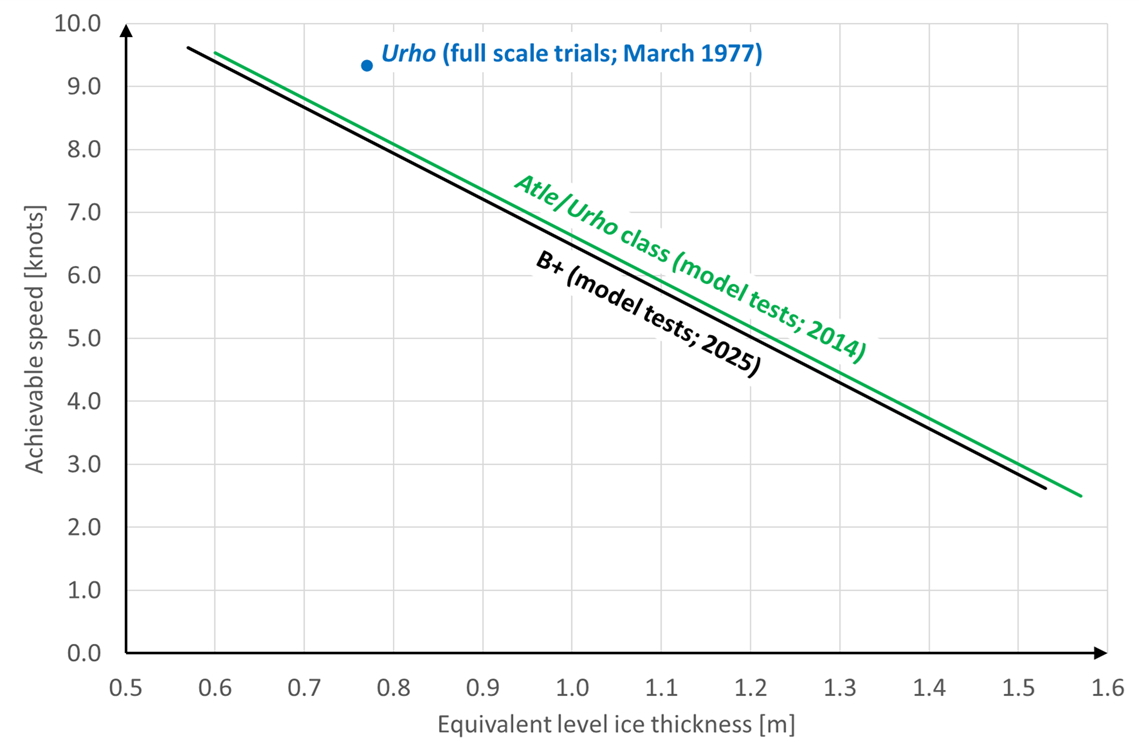
Ice model tests indicate that the new icebreaker can achieve speeds exceeding 8 knots in 80 cm-thick level ice and over 9 knots in 60 cm ice, both clearly surpassing the initial performance requirements specified by the Finnish Transport Infrastructure Agency.
Additional tests demonstrated the vessel’s ability to maintain continuous motion even in 1.5 m-thick level ice. Manoeuvrability and ridge penetration capability were also assessed as excellent.
“Although the new icebreaker is not intended to replace the bigger A-class icebreakers, in terms of icebreaking capability it’s in fact not that far from the much bigger and more powerful Urho class,” notes Romu. “Perhaps we should refer to it as a ‘B++’ class icebreaker.”
Workshops with professional mariners
Human factors have become an increasingly important aspect of ship design. Given the long service life of an icebreaker, the vessel must also function as a safe, efficient, and comfortable working environment.
To support this, a series of workshops was held with professional mariners currently serving on Finnish icebreakers. Each session focused on a specific area of the vessel: the wheelhouse, machinery spaces, accommodation quarters, and — most critically — the towing arrangement, which is essential for escort operations.
“The opportunity to involve experienced end users has led to practical improvements across multiple areas of the design,” says Romu.
Delivery scheduled for 2029
The Finnish Transport Infrastructure Agency received the complete contract documentation from Railotech in December 2025 and launched the shipyard tender process in February 2026. The target is to sign the construction contract in autumn 2026, with the new icebreaker entering service in 2029.
“The cooperation and efficient procurement process reflect the approach used for Polaris and demonstrate how a high-quality icebreaker project can be delivered on schedule,” says Romu.
“Our project team was able to make timely, well-founded decisions, and Railotech’s project team demonstrated strong capability in rapidly implementing those decisions into the design while providing clear technical guidance throughout the process,” adds Kuuliala.
The design and acquisition of the new icebreaker are supported by funding from the European Union’s WINMOS III programme and its successor, WINMOS IV. WINMOS IV has been granted €90 million, approximately half of which is allocated to Finland’s icebreaker renewal programme.
Text by Catarina Stewen
Technical details
Length (incl. towing notch):
About 96 m
Beam:
About 24 m
Icebreaking draught:
7–8 m
Displacement:
About 7500 tonnes
Hull structure:
Extra high strength steel, stainless steel cladding at the ice belt
Ice class:
Polar Class 5 Icebreaker(+)
Bollard pull:
At least 120 tonnes
Propulsion power:
About 10.5 MW
Icebreaking endurance:
20 days
Cabins:
18 crew and 12 passengers


