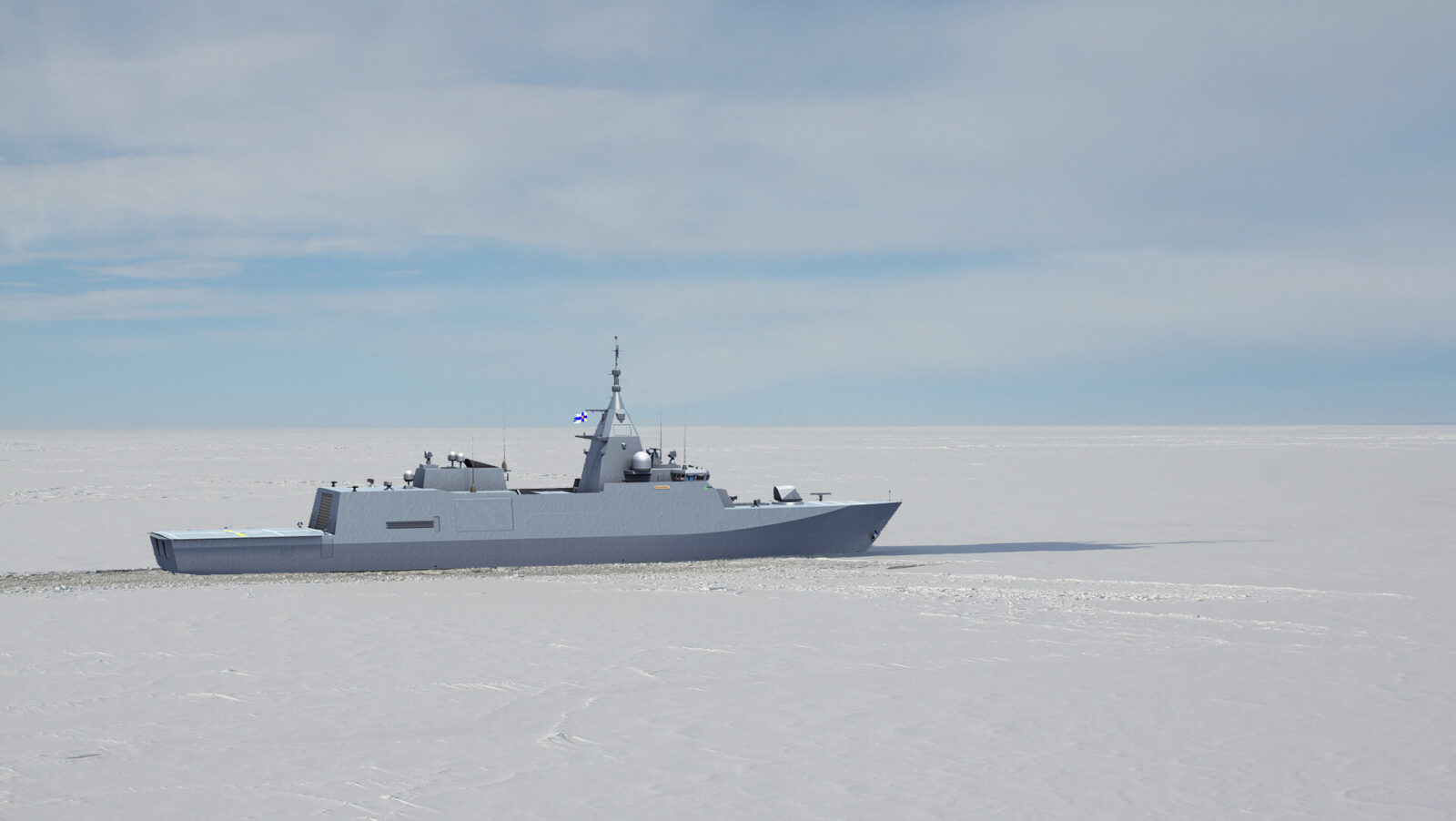
Finland’s harsh and changeable winter seas demand vessels that can be trusted in any weather. When the Finnish Navy set out to create a new class of multirole corvettes capable of operating year-round across all of Finland’s maritime domain, they approached their trusted partner, Railotech. Today, the Pohjanmaa-class corvettes under construction stand as the result of more than a decade of engineering, research, and collaboration.
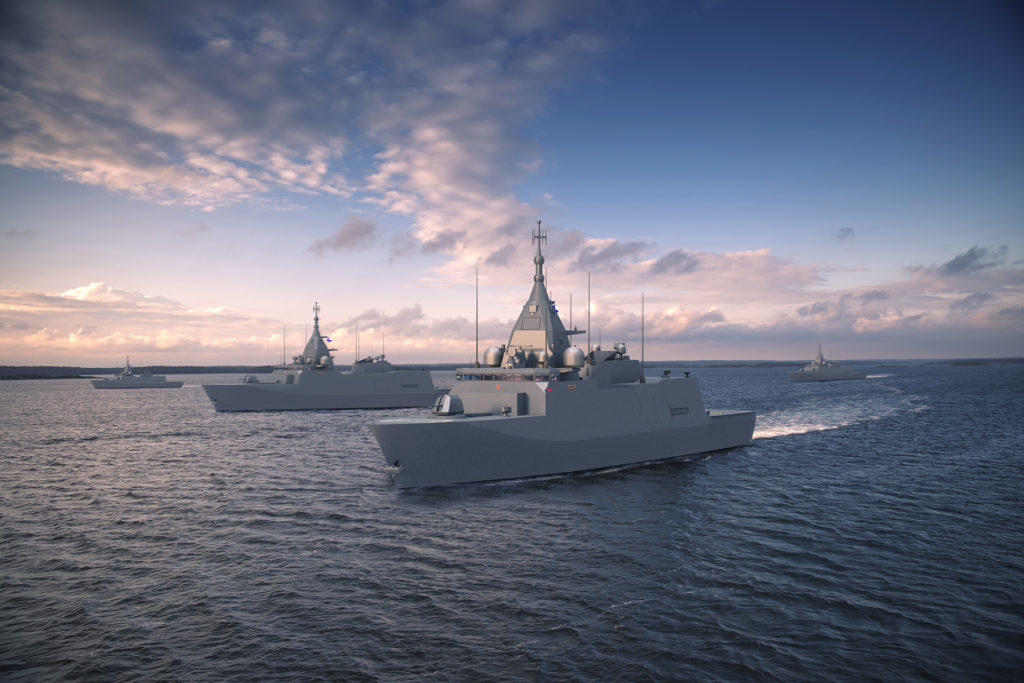
In 2010, the Finnish Navy launched the ambitious Squadron 2020 programme. The goal was to renew the fleet used for surveillance and defence of Finland’s maritime borders. Seven aging vessels would eventually be replaced by four highly capable, multirole corvettes.
From the outset, the Navy’s vision was bold. The new vessels would need to repel sea-based attacks, safeguard vital maritime connections, operate seamlessly in the labyrinthine archipelago, and manage stormy and shallow waters, while remaining fully functional in all Finnish weather conditions.
Winters vary every year
The main challenge of Finnish winters is their unpredictability. The southern Baltic may remain ice-free, while the northern reaches turn into a shifting mosaic of ice, sometimes thin and navigable, sometimes hardened into towering pressure ridges. Calm level ice can stretch out like a frozen plain, but wind and currents can quickly churn it into chaotic layers of broken floes and brash ice.
Open water areas can be equally demanding, with storm winds driving waves over six metres high. Freezing spray can encase deck equipment overnight, while snow, sleet, rain, and fog arrive in quick succession, challenging not only the crew but also sensors and weapon systems. As climate patterns become less predictable, extreme and rapidly changing conditions are becoming more common.
Seeking expertise from Railotech
To turn vision into reality, the Finnish Navy turned to Railotech, a long-standing, trusted partner with deep expertise in ice-capable vessels, for guidance: what kind of ship could meet all their needs?
Early discussions revealed several conflicting requirements that would shape years of work. High speed and efficiency in open water traditionally conflict with the rugged strength required for ice. Low underwater noise, essential for anti-submarine operations, typically pushes designs in yet another direction.
As feasibility studies progressed, one conclusion became clear: no existing propulsion system in the world combined all these properties. A joint research programme was therefore launched to develop a military-standard, low-noise propulsion system, combining the Navy’s open-water performance demands with the required ice capability.
The research programme included theoretical studies, model testing, and later full-scale trials. A breakthrough idea emerged using bronze as a test material to simulate various load conditions. Although bronze is commonly used in open water, it is typically dismissed as insufficient for higher ice-class vessels. Its modifiability, however, made it ideal for experimenting with multiple design variations.
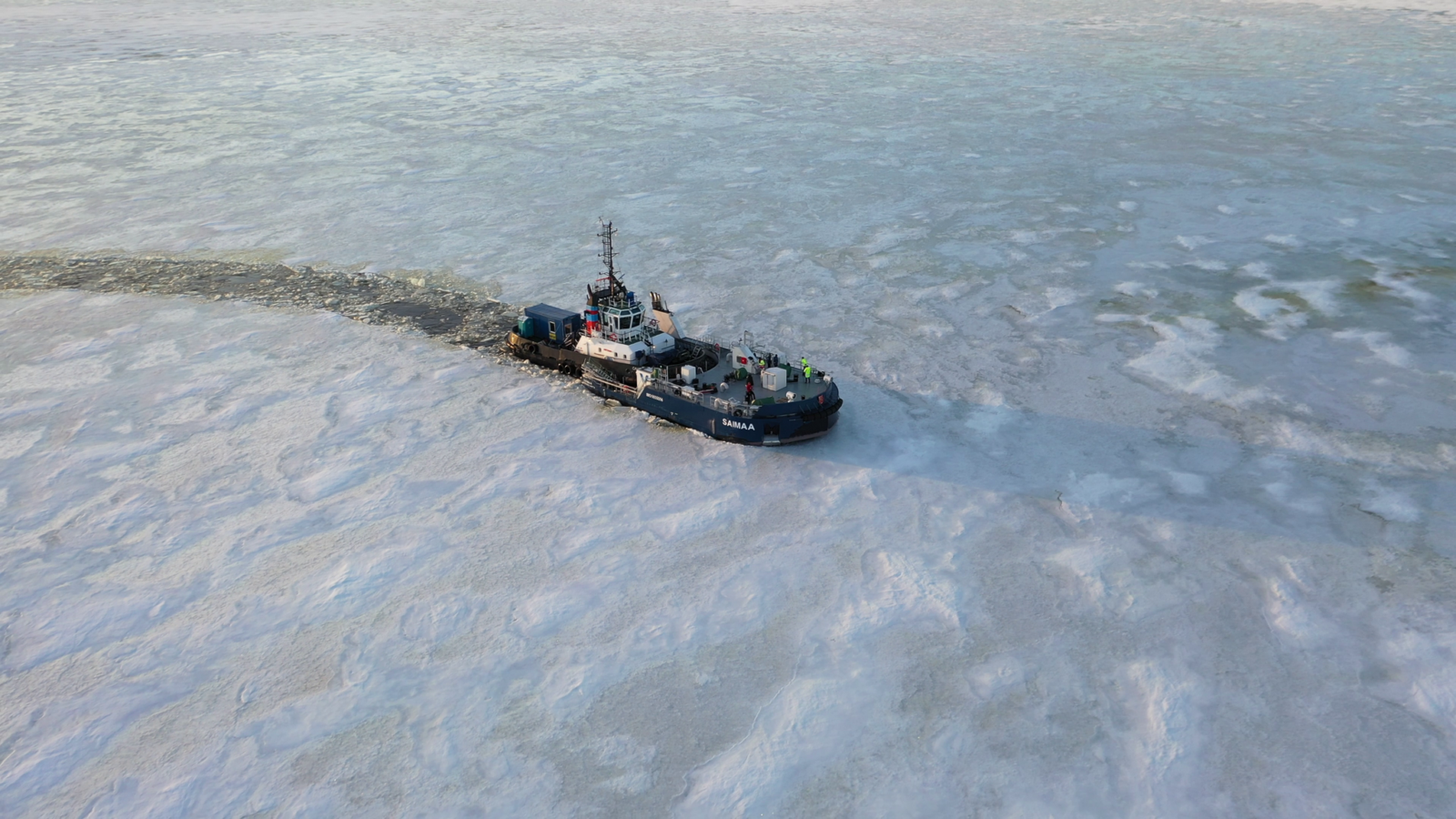
A notable spin-off from the development programme was the creation of a new dimensioning method for using bronze in ice conditions. This breakthrough enabled the design and delivery of a bronze propeller for the tug Calypso, which can be operated together with the detachable bow Saimaa to keep fairways open.
Full-scale trials in the real Baltic
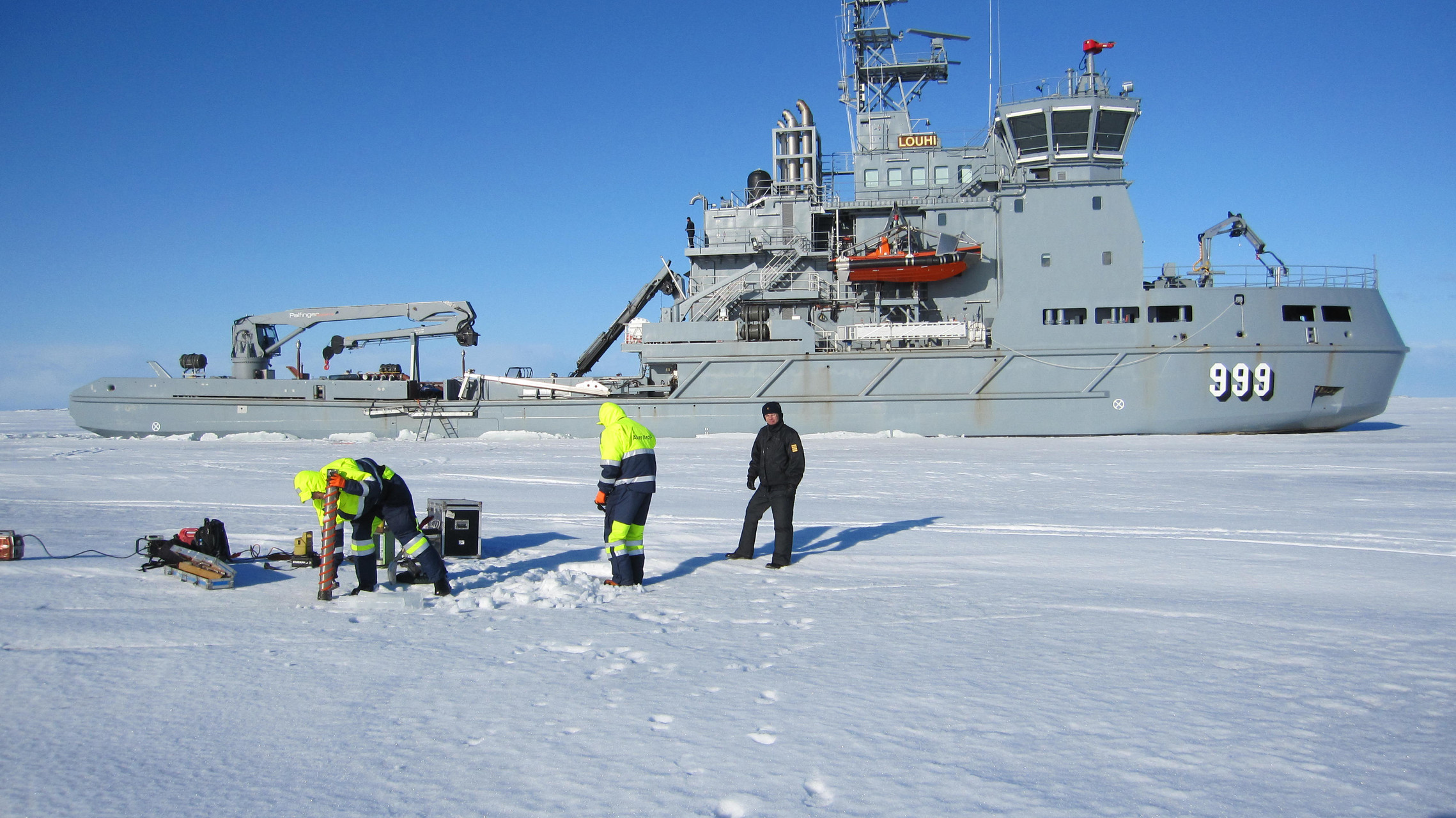
By 2015, it was time to step beyond the laboratory. The Finnish Navy’s multipurpose oil and chemical spill response vessel Louhi became the testbed. On a cold winter morning, engineers replaced one of her original propellers with a bronze prototype, the culmination of months of modelling and simulation.
The test results were promising. A second round of trials followed a year later, this time pushing the propeller harder. In 2017, the minelayer Hämeenmaa participated in an additional series of full-scale tests to verify the final design requirements.
Finally, after years of refinements, the propulsion system developed for the Finnish Navy emerged as something truly unique: a fully tailored solution to meet the Navy’s specified requirements.
In 2019, Railotech received the formal order to manufacture and deliver the complete shaftline package. Full-scale validation in Louhi’s third test confirmed performance in ice.
A hull designed for the propulsion
With the propulsion defined, Railotech engineered, together with Rauma Marine Constructions (RMC), a perfectly matched hull form through our standard concept design process. This ensured a design that met the customer’s stringent requirements and allowed seamless integration with the novel propulsion system, reducing risks for the shipyard.
“Our understanding of how the hull form interacts with propulsion in both ice and open water is the foundation of our engineering work,” explains Kari Laukia, head of equipment and special projects at Railotech.
According to Laukia, silent operations add another layer of complexity, requiring that the hull form, shaftline, and propulsion remain in balance. If one element is off, the entire balance shifts, which is why having a single company provide the full solution is advantageous.
He adds that expertise in integrating the shaftline interface with the ship hull – including appendages – to optimise the hydrodynamics at the stern is essential for vessels operating in seasonally freezing waters.
Construction progressing at full speed
Construction of the first Pohjanmaa-class corvette began at Rauma Marine Constructions in October 2023. By late 2024, the first set of shaftlines and propellers were delivered to the shipyard. The ship is now in the afloat outfitting phase, during which the propulsion system is being installed. Testing will begin once installation is complete.
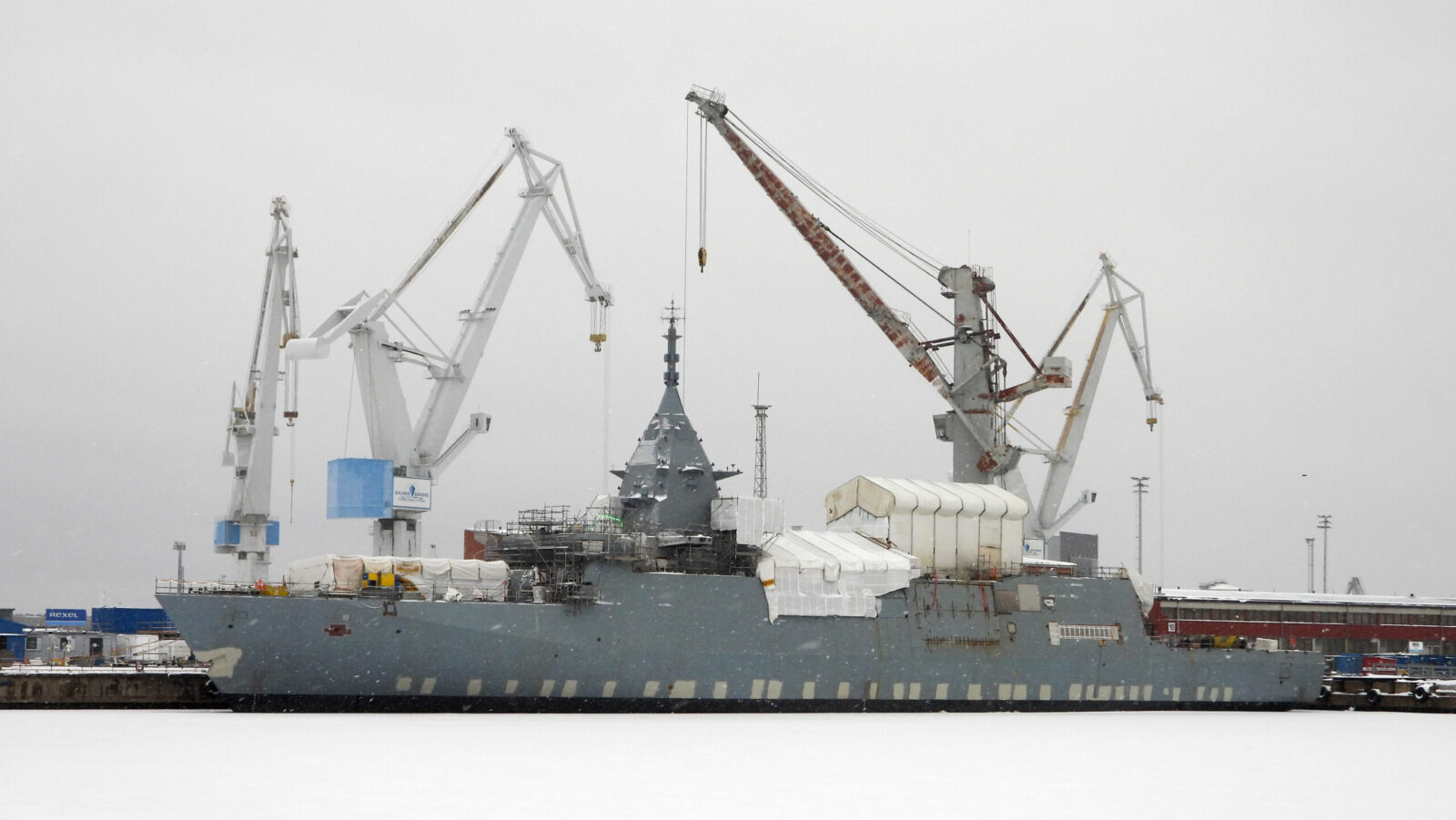
The second corvette is already taking shape in the yard. Most of the equipment has been delivered, with propulsion installation scheduled before the launch in spring 2026. Hull assembly of the third vessel is underway, and the keel for the fourth was laid in January 2026.
Railotech’s work will culminate in the full-scale ice-trial, when the first completed ship undergoes final testing. The Squadron 2020 programme aims to achieve operational capability by 2029, when all four corvettes will have been delivered to the Finnish Navy.
Equipped for advanced border control
Once fully operational, the multirole corvettes will enhance Finland’s year-round maritime surveillance capabilities, protect maritime connections, and secure national territorial integrity. They will also form an essential part of NATO’s capabilities in the Baltic Sea.
The vessels will be equipped for minelaying, reconnaissance, surveillance, anti-air missile operations, and anti-submarine warfare. At 117 metres in length and with a deadweight of 4,300 tonnes, they will be the largest Finnish warships of their class.
All ships will feature Railotech’s advanced Ice Load Monitoring System ILMS, which uses hull-mounted sensors to inform the bridge crew about ice-induced loads. The system helps navigators determine whether loads remain within safe limits and supports informed decisions, for example, adjusting speed for safer ice operations.
All equipment has undergone comprehensive winterisation engineering to ensure flawless performance in all temperatures. Even during ice-free periods, freezing waves and icy precipitation can coat the ship in ice.
A partnership built on trust
Throughout this demanding project, the Finnish Navy and Railotech have worked in close co-operation. The collaboration has relied on close dialogue, mutual trust, and the step-by-step, customer-focused development approach for which Railotech is known, beginning with defining the Navy’s specific needs and evolving into the final design.
As the fourth and final vessel entered construction in January 2026 and the first sea trials approach, the Pohjanmaa-class stands as a testament to perseverance, innovation, and the long tradition of Finnish excellence in ice-capable ship and propulsion design.
Text by Catarina Stewen


