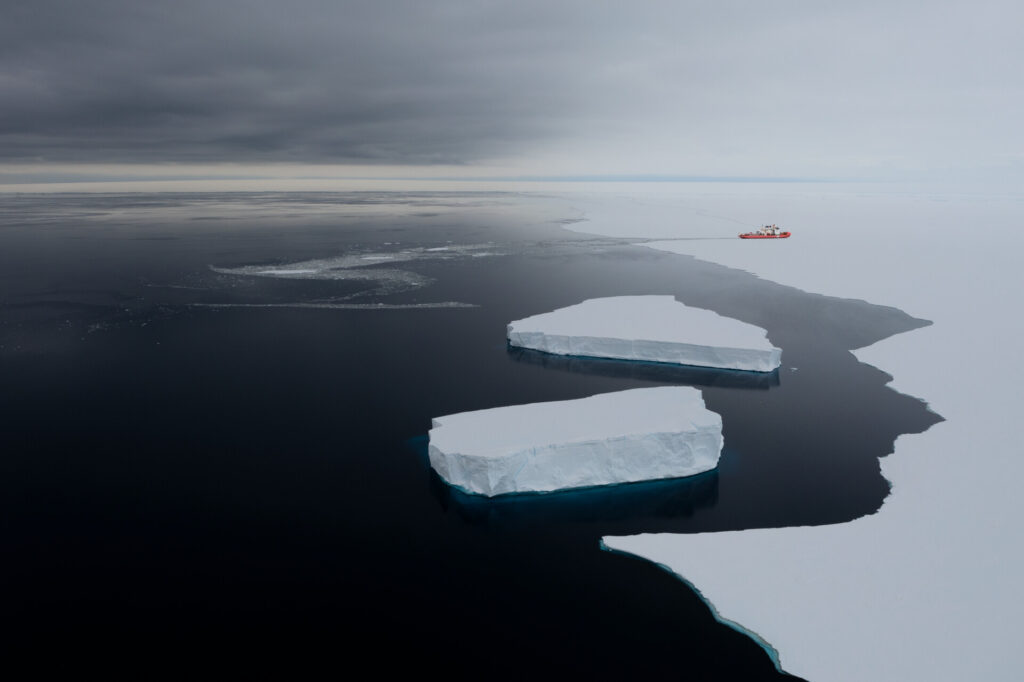
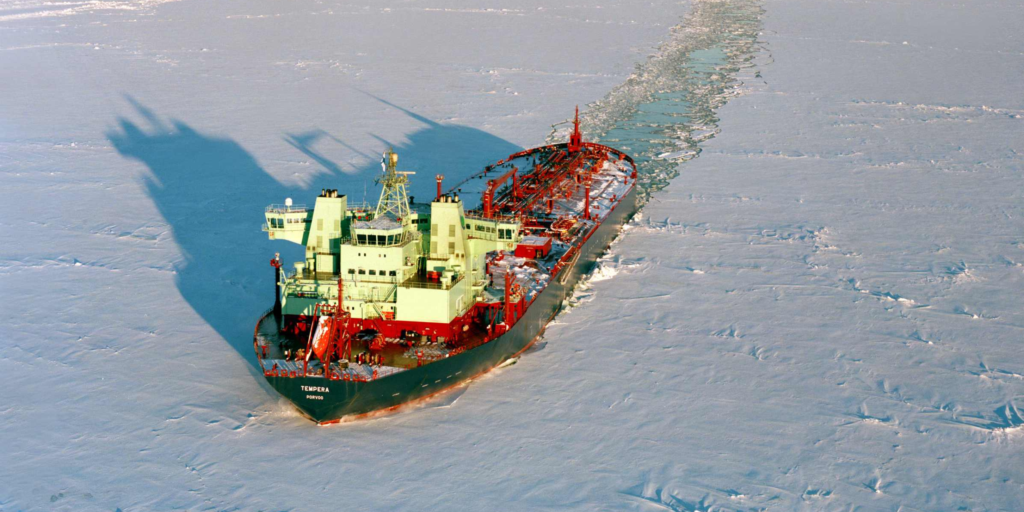
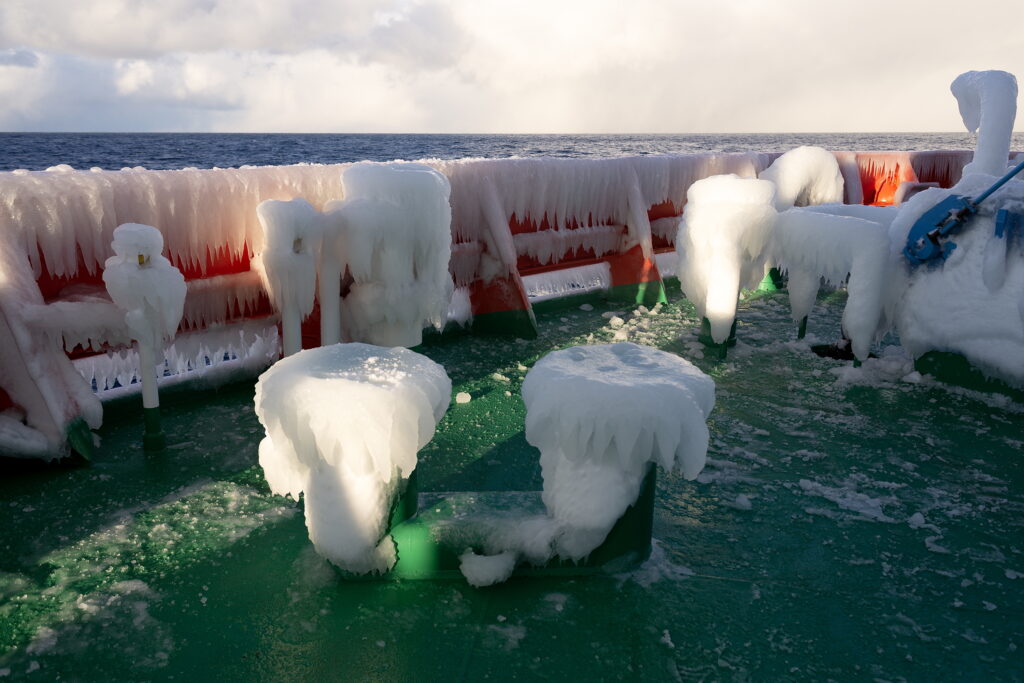
In February 2024, during a planned dry-dock in Brest, Aker Arctic Technology installed a version of its ice load monitoring system ARC ILMS on Le Commandant Charcot. The ARC ILMS uses a series of strain gauges mounted to the internal hull structure to measure the structure’s response to ice loads, both when operating ahead and when operating astern in ‘double-acting’ mode.
Recognizing the truly unique nature of the vessel and the trans-Arctic voyage completed in September 2024, PONANT EXPLORATIONS, Aker Arctic and ABB Marine agreed to cooperate on measuring the ice loads on the vessel’s hull and propulsion system. The intention of the cooperation is to support PONANT EXPLORATIONS’s operations and decision making, while using Le Commandant Charcot as a unique platform for ice loads research.
Loads from the trans-Arctic voyage are now being analysed by Aker Arctic and ABB Marine, with the first results presented to Le Commandant Charcot’s senior officers when the ship called in to Helsinki at the end of November 2024. At the same time, Captain Étienne Garcia and Mathieu Petiteau shared their firsthand experiences of navigating the vessel through challenging ice conditions. They noted that the physical data recorded by the sensors aligned with their observations.
“Having tangible data is reassuring, confirming that we are operating the vessel correctly,” Captain Garcia explains. “In particularly demanding areas, such as East Greenland in spring or the Northwest Passage near multiyear ice in the extreme north of Canada, we experienced high loads. However, the results show that we were operating at 50-60% of the vessel’s maximum capacity, well within its limits.”

Safe use of the ship
After three years of operation, the hull remains intact, with no incidents of overload recorded.
“Given the extent of our operations, spending a significant number of days in ice, navigating various ice types, and venturing deep into polar regions, the results are remarkable and reassuring,” Captain Garcia says. “We now have clear evidence that we are using the ship safely and in line with design recommendations.”
Future opportunities for optimisation
While discussing potential improvements for ice load monitoring, Captain Garcia emphasises Le Commandant Charcot’s robust design.
“The ship is engineered for heavy ice loads, with significant overcapacity to ensure safety. As we continue to accumulate experience in navigating ice, the Ice Load Monitoring System can guide us toward even greater efficiency while maintaining safe operations.”
Rob Hindley, Head of Consultancy and Technology Development at Aker Arctic, adds that this is the first time that ice loads on the hull and podded propulsion units have been measured simultaneously.
“The cooperation continues, with ice load data being continuously gathered as Le Commandant Charcot operates in these extreme environments, and Aker Arctic and ABB Marine working together on a joint review of the data,” he says.
Text by Catarina Stewen