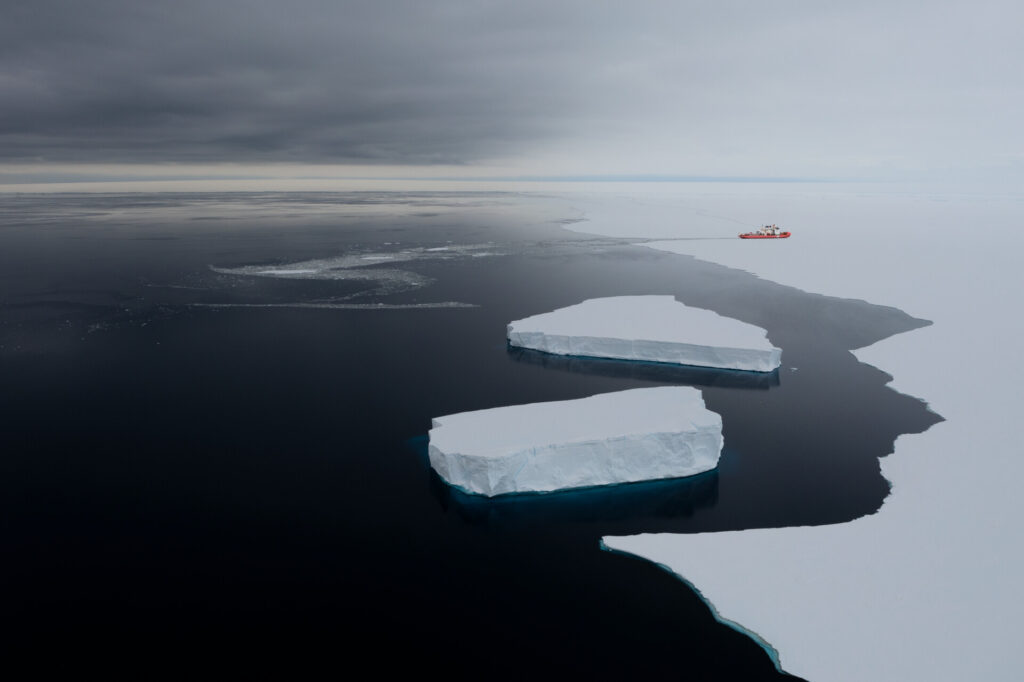
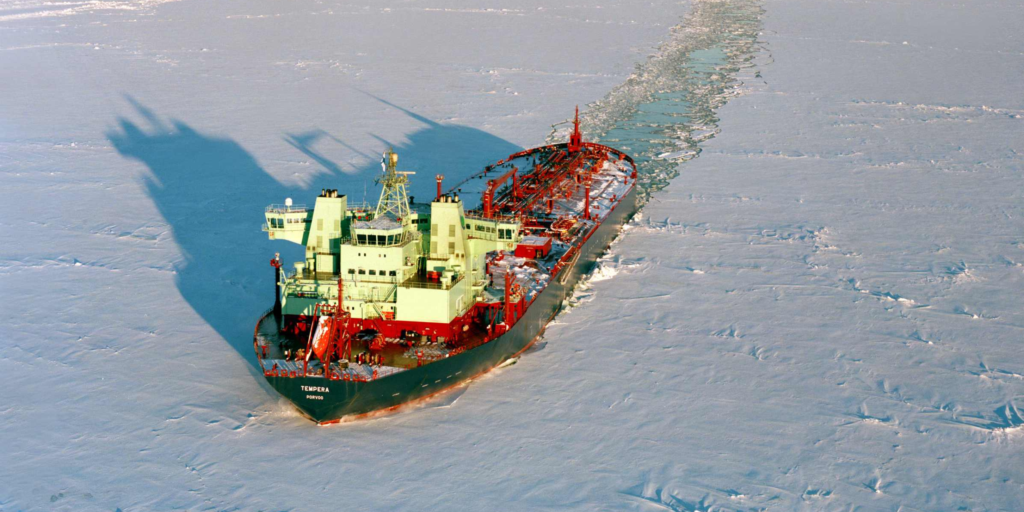
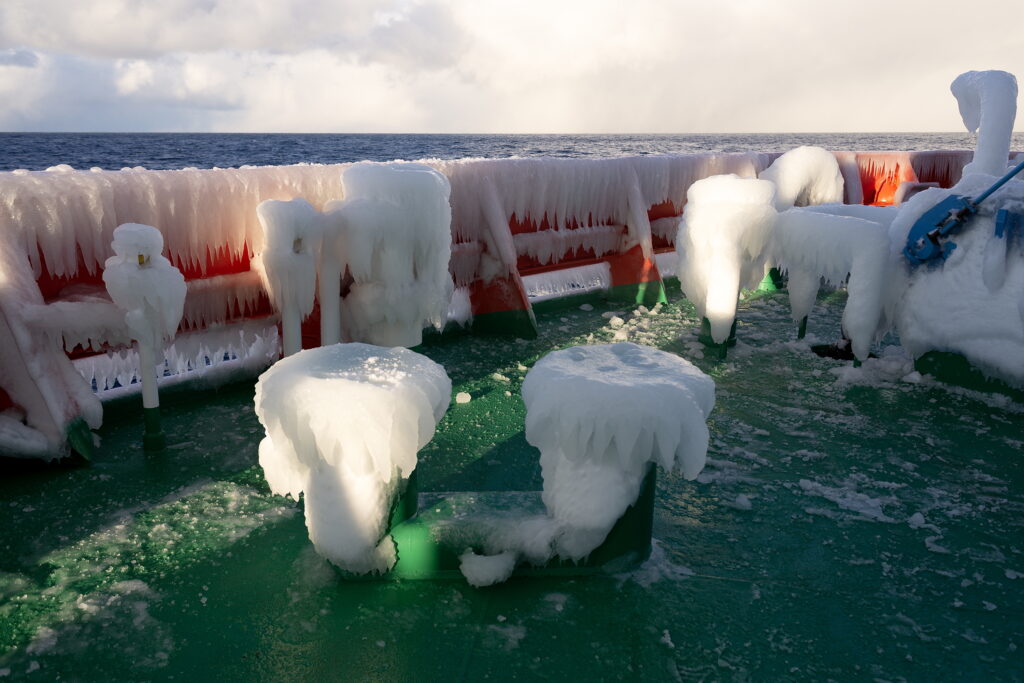
In early December 2025, Rob Hindley, Juuso Lindroos and Sami Saarinen travelled to the Falkland Islands to board RRS Sir David Attenborough for a second round of ice trials in the Antarctic. The objective of the joint operation, involving British Antarctic Survey, Lloyd’s Register, Kongsberg Maritime, and American Bureau of Shipping, was to evaluate the ship in a variety of ice conditions, using hull and propulsion monitoring systems.
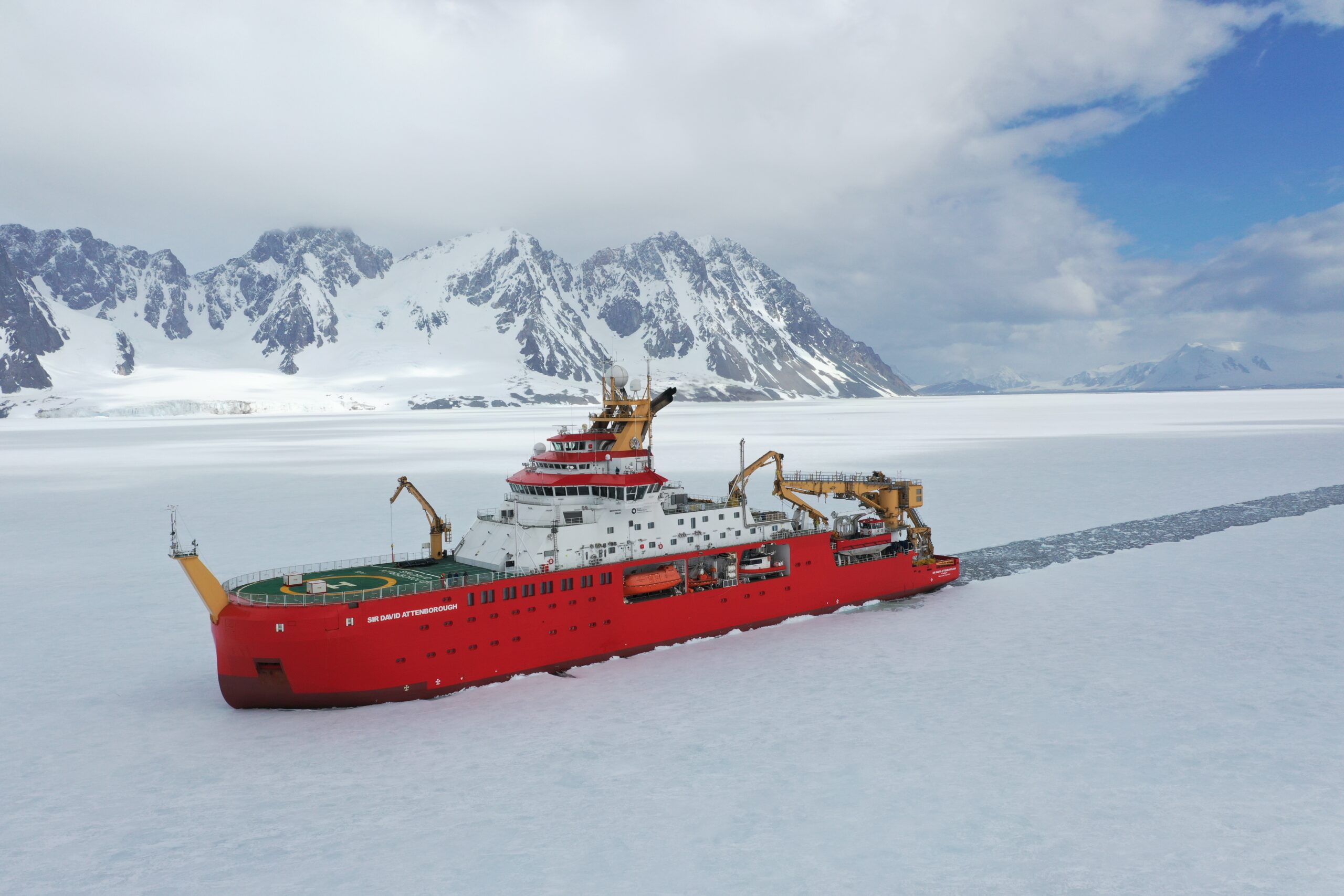
In 2022, a Railotech team joined the polar research vessel RRS Sir David Attenborough to conduct its ice trials, a standard set of Railotech procedures to ensure that the vessel fulfils contractual performance specifications in ice. In addition to the trials, the team also worked to calibrate the installed Ice Load Monitoring System (ILMS) and refined the vessel’s operational limitations. The overall aim was to help the operator, British Antarctic Survey (BAS), understand the ship’s capabilities in ice.
This time, what made the programme genuinely groundbreaking was that, for the first time, propeller, shaft and hull ice loads were measured simultaneously.
Once combined and analysed, the data will be used to set limitations for the ship, specific to the Antarctic ice conditions that it operates in. This will allow BAS to maximise the use of the ship, while knowing the ship’s safety limits.
In addition, the results aim to advance the overall understanding of how ice loads on the hull, propeller and propulsion line interrelate, which may ultimately lead to updates to the Polar Class rules.
Searching for suitable ice fields
From the Falklands to South Georgia
After departing from the Falklands Islands, RRS Sir David Attenborough first sailed to the island of South Georgia, to deliver supplies to the local research station at King Edward Point. The team also had the chance to visit the museum at the abandoned whaling station of Grytviken, Sir Ernest Shackleton’s grave, and attend a barbeque, before continuing towards Antarctica in search for suitable ice conditions for testing.
Weddell Sea: selecting test ice
The area initially selected for the trials was the Weddell Sea. This region typically contains sea ice year-round. Ice conditions are, however, highly variable, and the search for optimal testing conditions relied on a combination of satellite imagery and drone surveys. The intention was to find a variety of ice conditions that would represent the expected limits for the ship, as well as to find ridges and rubble ice to maximize the amount of propeller-ice interaction.
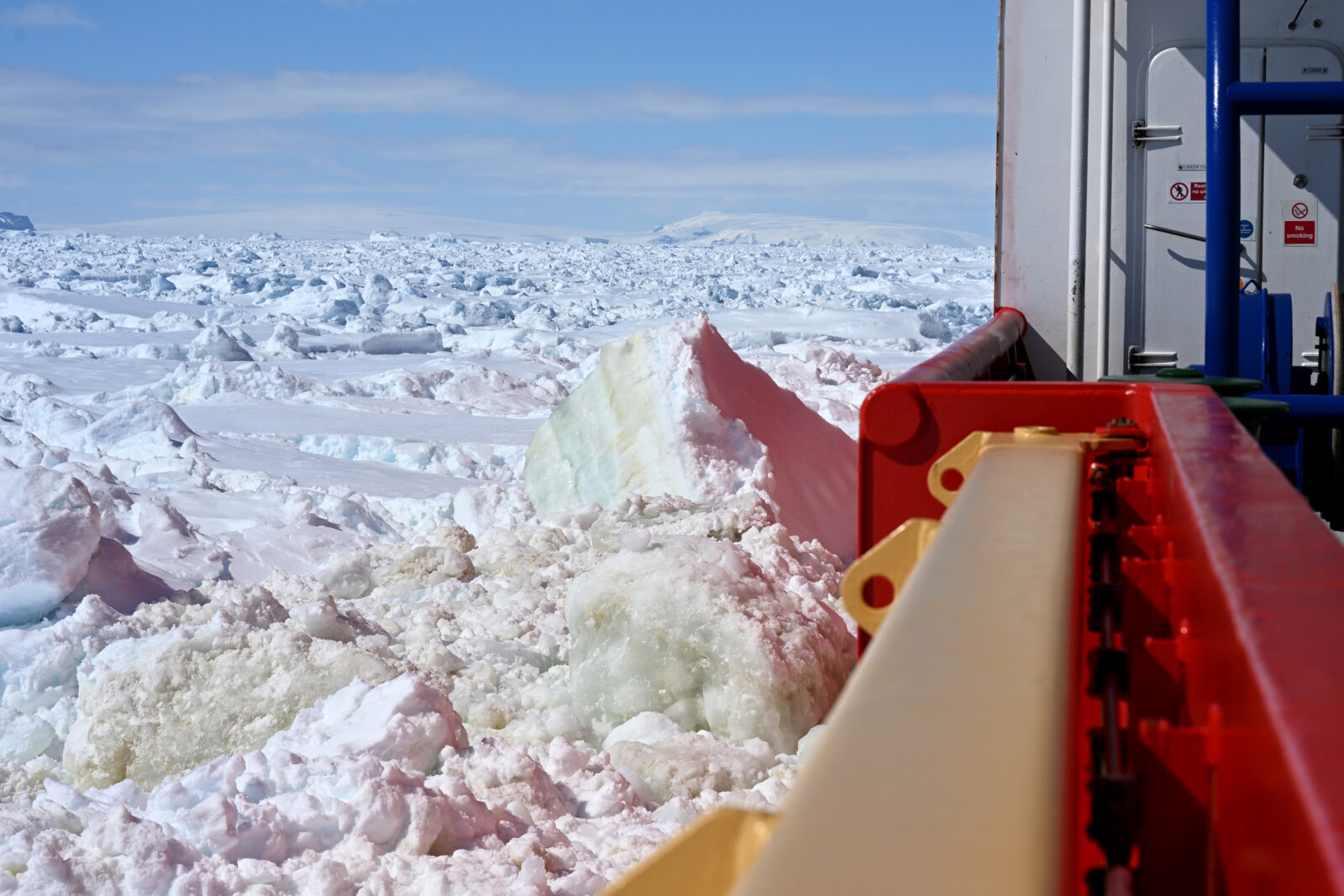
Sailing through the pack ice, the concentration of ice varied, which provided good data points for typical operating conditions. Further South, the ice concentration soon neared nine tenths, enough room for the ship to move, but continuous forward progress was often difficult. The ice was a mix of first year, multi-year and glacial ice. The air temperature was around zero for most of the transit, with the ice being near its melting point making on-ice measurements challenging.
Shifting west to the Antarctic Peninsula
After a week in the Weddell Sea, a decision was made to sail West to the Antarctic Peninsula, in search of a greater variety of ice conditions, including targeting several fjords for level, fast ice. The intention was to locate fast ice that could be used for more systematic testing, aiming to obtain correlation between the ice thickness and the ice loads measured on the ship’s hull, the propeller blade and the propulsion system.
“We spent about two weeks in ice in total,” says Sami Saarinen from Railotech, who was responsible for the on-ice measurements. This was his third Antarctic expedition.
The trials process
Testing of ships in ice is always a balance of seizing opportunities as they arise and being methodical. For these trials, the team was fortunate that the instrumentation onboard the ship was running continuously as the ship moved through the ice. When particular ice features, or ice conditions that were considered representative of the area were identified, the Railotech team was lowered onto the ice to measure its properties, including thickness, salinity and temperature, and to collect ice cores for compressive strength testing.
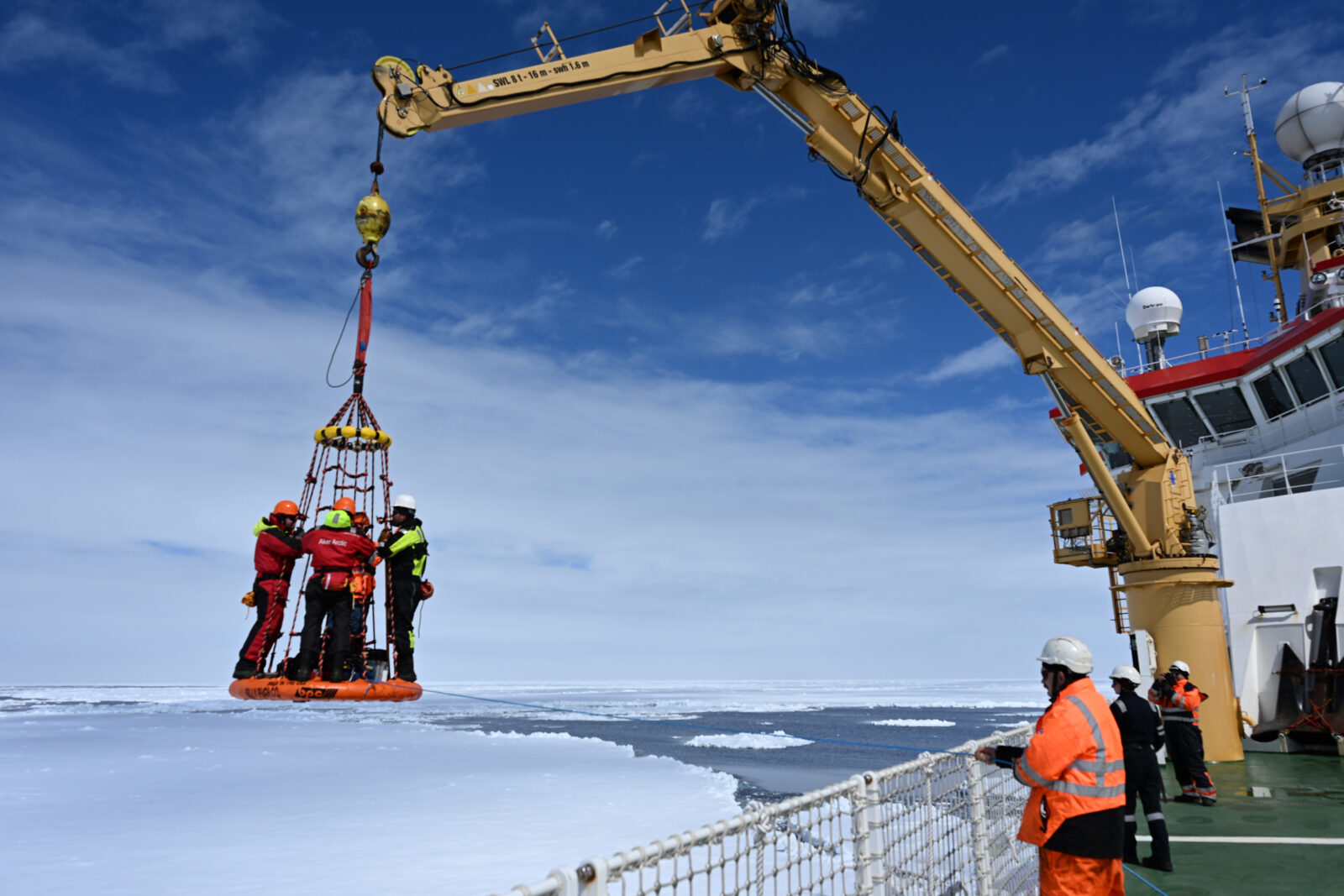
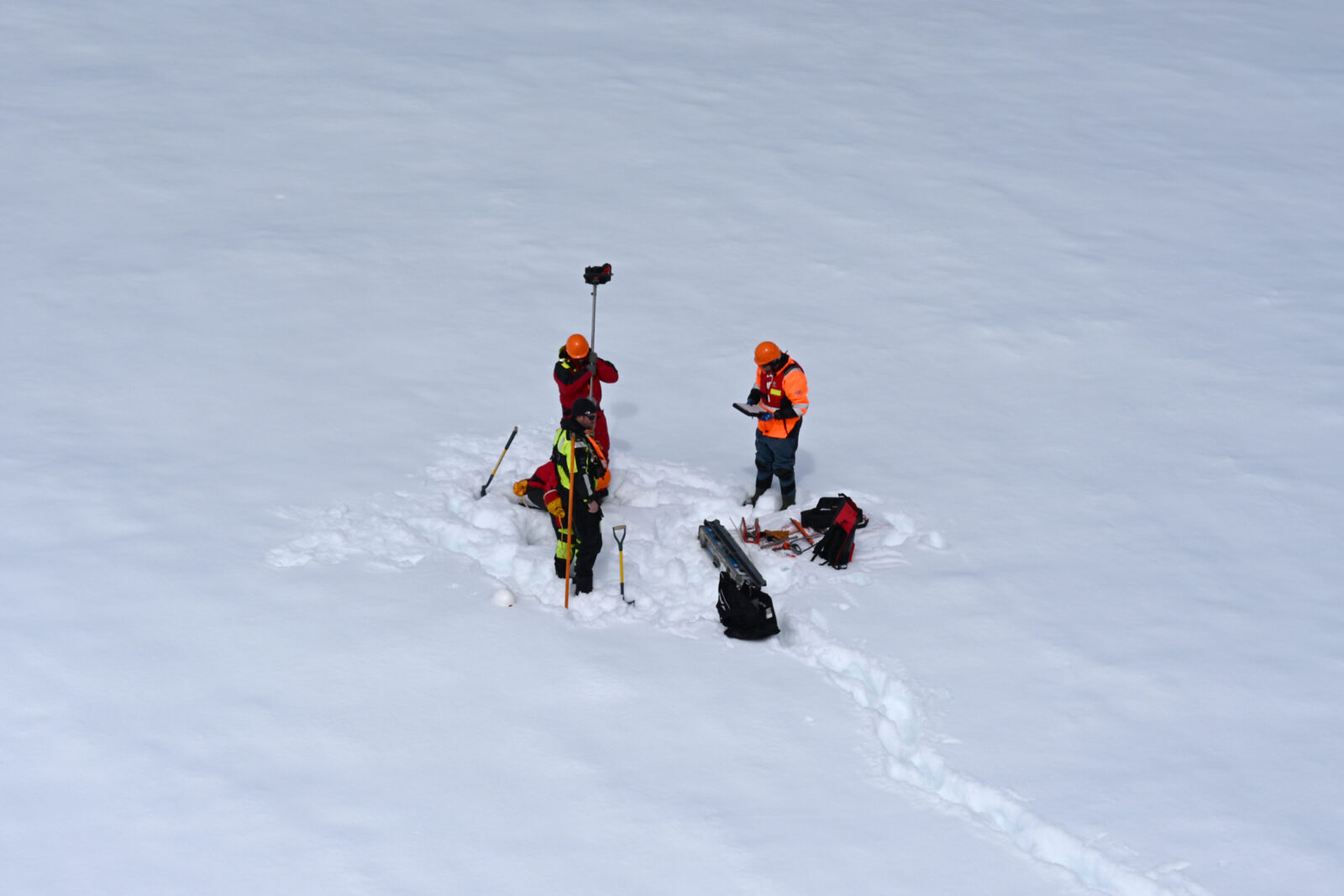
For ridge testing, ice measurements were taken before the vessel broke through the ridge. The ship then proceeded through the ridge while data was collected on propeller ice loading.
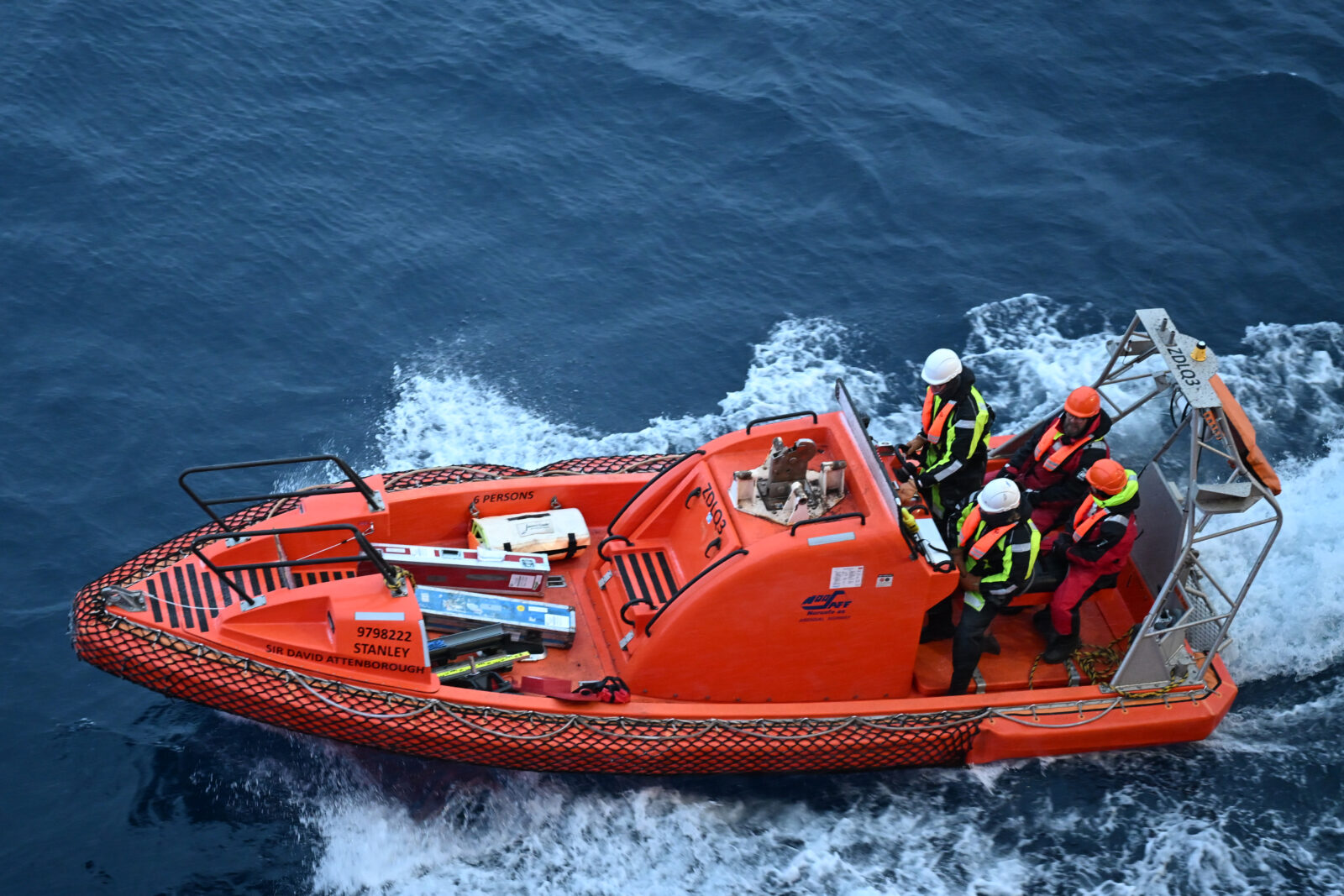
Dive operations formed a unique and critical part of the programme. Divers were deployed beneath the vessel twice daily to download data from sensors installed on the propeller blade and to recharge the instruments. This approach was adopted to enable data from the propeller blade to be examined daily, rather than having to wait until the end of the trials and a dry docking to access the data logger content.
A collaborative effort of international experts
The project brought together leading international expertise in polar vessel design and performance. Railotech led the ice trials, drawing on extensive experience in polar ship design and full-scale ship – ice interaction measurements.
Lloyd’s Register installed the instrumentation on the propeller shafts and borescopes, which were used to visually observe ice pieces interacting with the propeller. Kongsberg Maritime supplied the instrumented propeller blade, used to measure the loads directly. American Bureau of Shipping (ABS) Canada contributed lidar, camera and thermal imaging systems to characterise ice conditions in real time as part of the ICESIGHTS Research and Development campaign jointly run by Railotech and ABS Canada. BAS coordinated field operations using satellite imagery and drone surveys to identify optimal testing locations. To complement the propulsion system measurements, Railotech took responsibility for measuring ice loads on the ship’s structure.
“These trials were truly one of a kind,” says Rob Hindley, Head of Consultancy & Technology Development at Railotech, and leader of the Railotech ice trials team. “Direct measurements of propeller ice loads are fundamental to advancing dimensioning practices for safe and sustainable polar shipping, yet the complexity has meant they are rarely undertaken.”
Results expected to provide new insights
According to Saarinen, the results will deepen understanding of the interrelationship between ice loads on the ship and the surrounding ice characteristics. By combining visual observations of ice conditions, ice surface profiling, physical ice measurements, and recorded load data, the team will be able to identify correlations between the ice the ship encountered and the loads acting on the vessel.
He adds that this voyage built upon the first ice trials, leveraging previously gathered data while exploring the phenomena in greater depth using the latest technology. The collaboration between different organisations, each contributing specialised expertise, proved highly valuable.
“Analysing the full dataset will be complex, but it will produce extremely valuable causal relationships and correlations,” Saarinen says.
New Year’s Eve in Antarctica
The expedition extended through the year-end holiday season.
“On Christmas Day we enjoyed an excellent dinner, and on New Year’s Eve everyone gathered on the bridge for the midnight countdown. It was a very special experience,” Saarinen says.
Afterwards, the vessel returned to Punta Arenas in southern Chile, sailing through the Strait of Magellan – often regarded as one of the most beautiful sea routes in the world – before the team flew back to Finland.
Text by Catarina Stewen