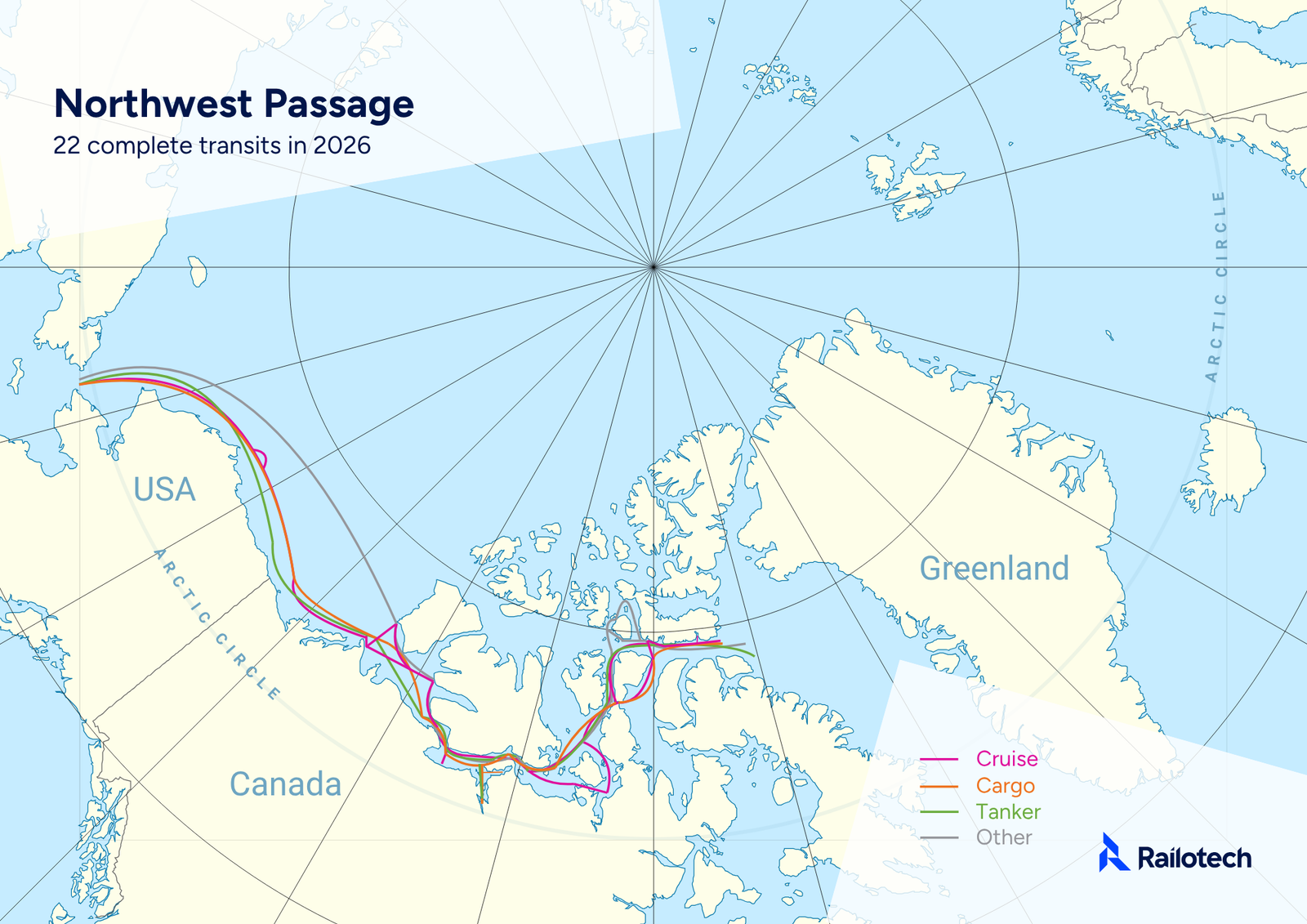
Another short season of international shipping on the Northwest Passage has drawn to a close, with 22 completed transits, including three return voyages. Tuomas Romu from Railotech has been monitoring developments throughout the second-busiest season on record.
With its exclusive focus on engineering for ice-covered waters, Railotech closely follows development in Arctic shipping, including the growing use of the Northwest Passage as a shorter alternative to traditional shipping routes.
Between 5 August and 19 October 2026, a total of 19 commercial and naval vessels sailed through the Northwest Passage, with three making return voyages during the same season. With 22 completed transits in total, the 2026 season ranks second after the record year of 2023 with 24 transits. It also represents an increase over the previous two seasons, with 16 transits in 2025 and 18 in 2024. The statistics cover large commercial cargo and passenger vessels and naval ships, excluding private recreational vessels.
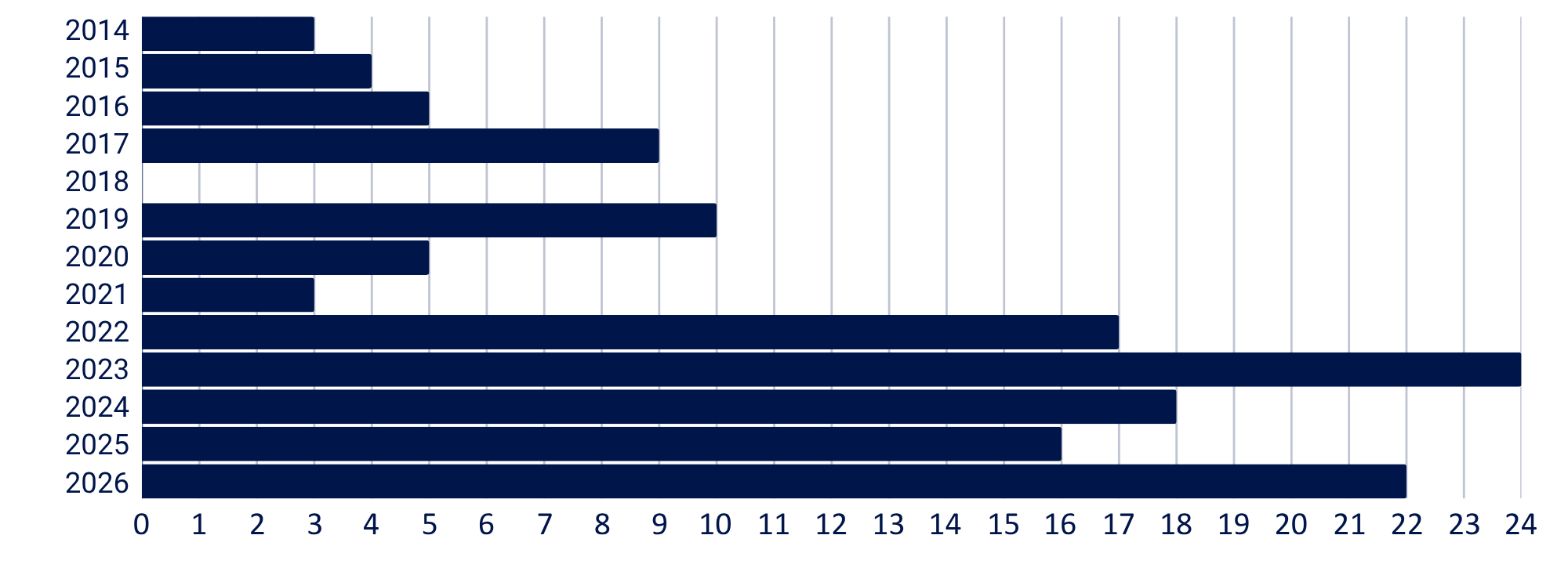
Thirteen transits were westbound (four by cruise ships, eight by cargo vessels and one by a naval vessel), while nine were eastbound (three by cruise ships, five by cargo vessels and one by a tanker). In addition to these transit voyages, regional cargo shipping continued to provide essential services to local communities.
Nine vessels made their first passage
Several shipping companies and cruise operators have used the Northwest Passage regularly for years, including the Dutch shipping company Royal Wagenborg and various expedition cruise liners. However, this season saw nine vessels complete their first full transit. Three of these combined a full transit with a destinational voyage, first unloading cargo in the Canadian Arctic before continuing along the Northwest Passage.
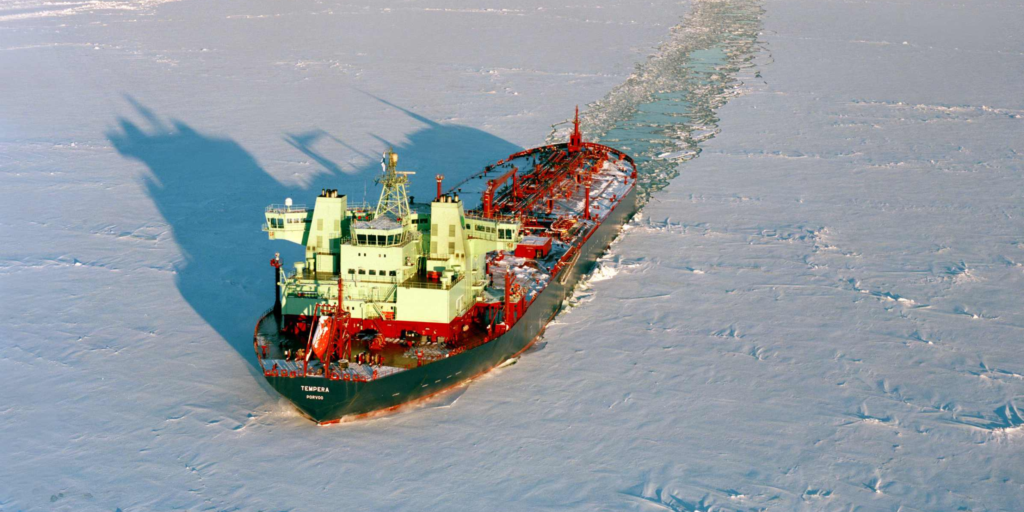
Spliethoff, a Dutch operator already experienced in destinational shipping to the Canadian Arctic, completed its first full transits this year. Scorpio Tankers similarly recorded its second full transit, with the season’s only tanker, STI Westminster.
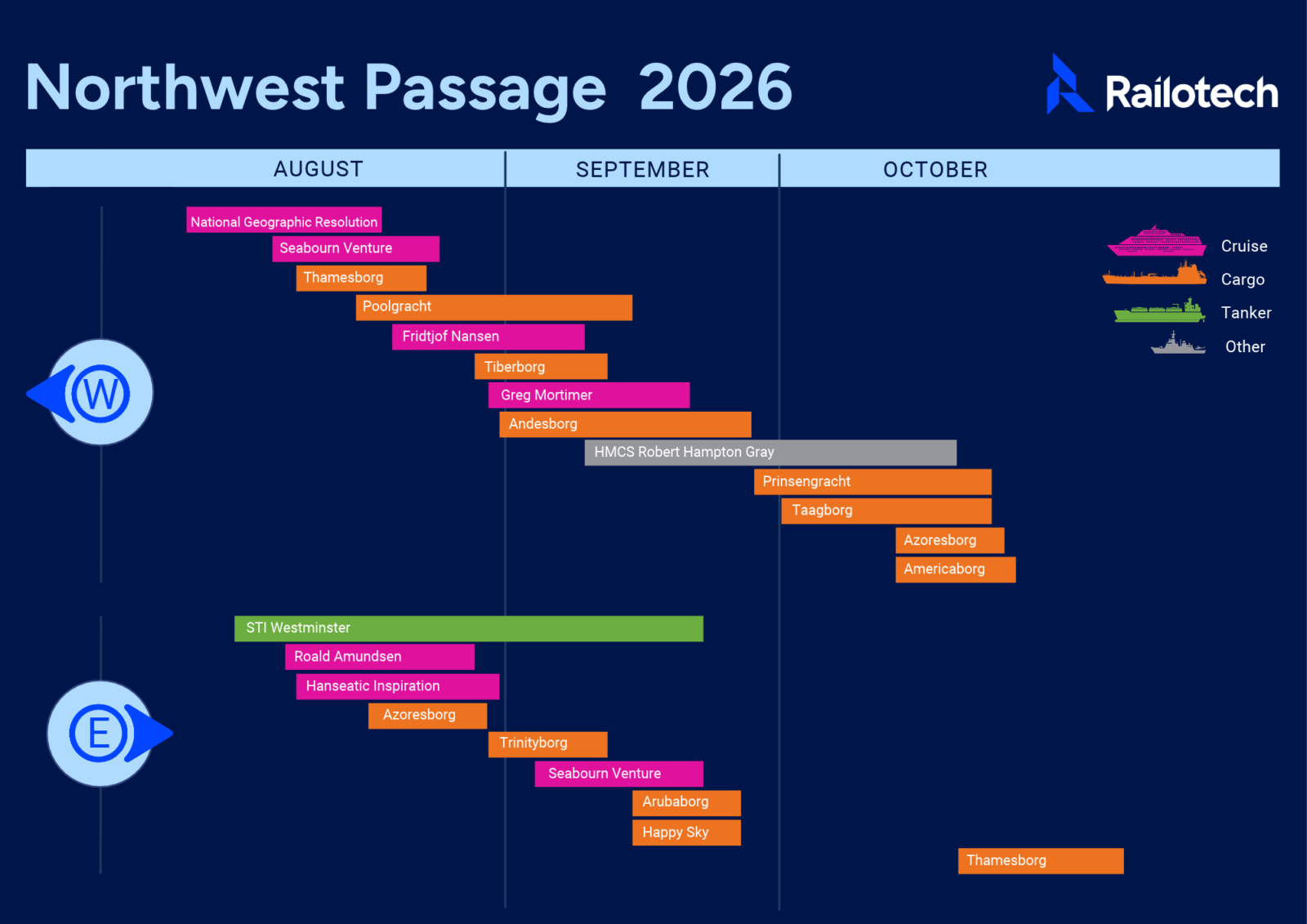
The Dutch cargo vessel Thamesborg made a successful return to the Northwest Passage after running aground in Franklin Strait in September 2025. The vessel remained stranded for five weeks before receiving assistance from the Estonian icebreaker MSV Botnica and the local tugboat Beverly M I. This year, Thamesborg completed two full transits and was also the last commercial vessel to complete a transit, on 19 October.
Another successful return was made by the cargo vessel Tiberborg, which had been forced to turn back in 2025 due to mechanical problems. This year, the vessel completed the full passage.
Canada’s newest Arctic and Offshore Patrol Ship, HMCS Robert Hampton Gray, also made a historic voyage from Halifax through the Northwest Passage to its new home port with the Pacific Fleet in Esquimalt, British Columbia. Before reaching Esquimalt, the vessel was scheduled to conduct surveillance and ice-navigation patrols in the Bering and Chukchi seas, including co-operation with the U.S. Coast Guard.
Finnish icebreaker supports Arctic operations
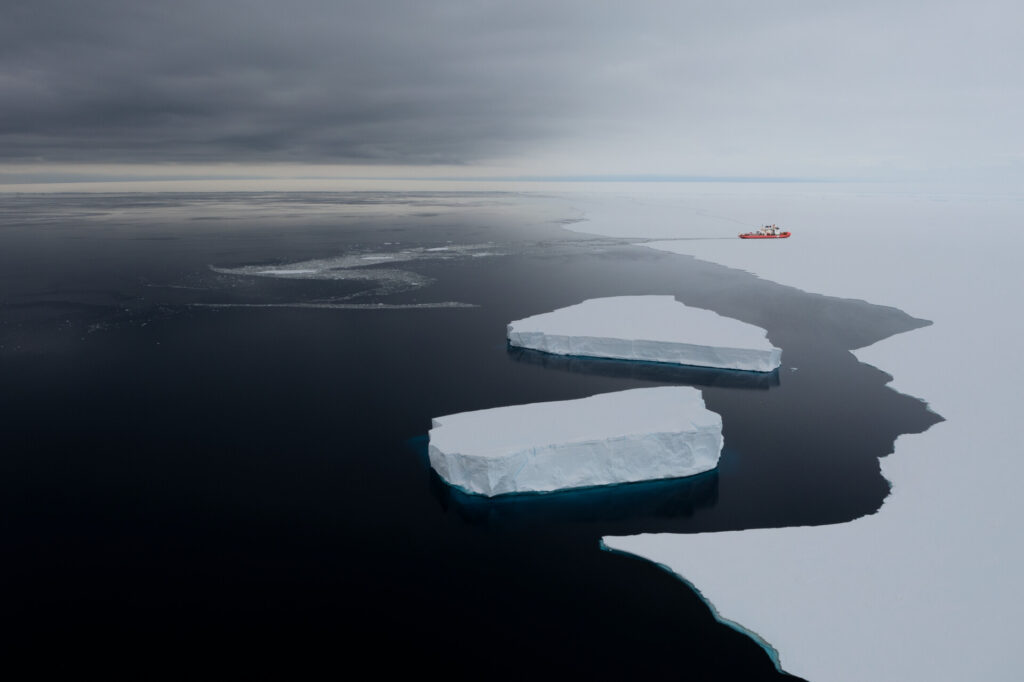
All commercial vessels transiting the Northwest Passage were ice-strengthened and operated largely independently, as icebreaker assistance is generally concentrated at the main choke points. To strengthen its icebreaking and assistance capacity for the 2026 season, the Canadian Coast Guard chartered the Finnish multipurpose icebreaker Nordica.
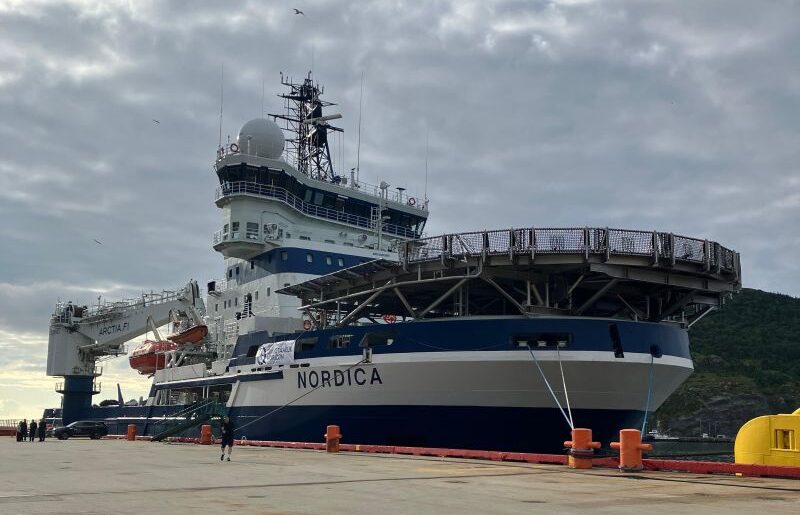
Nordica is no stranger to the Canadian Arctic. In 2015, Arctia’s two multipurpose icebreakers, Fennica and Nordica, became the first Finnish icebreakers to sail through the Northwest Passage, returning to Europe after offshore assignments in Alaska. Two years later, Nordica made Arctic maritime history by completing the earliest Northwest Passage transit recorded at the time, reaching Greenland on 29 July 2017.
According to the Finnish icebreaker operator Arctia, Nordica is expected to return to Finland in time for the Baltic Sea icebreaking season. As icebreaker assistance is not required in Finnish waters during summer and autumn, Finnish icebreakers can support operations elsewhere during these months.
Ice conditions remain a constraint
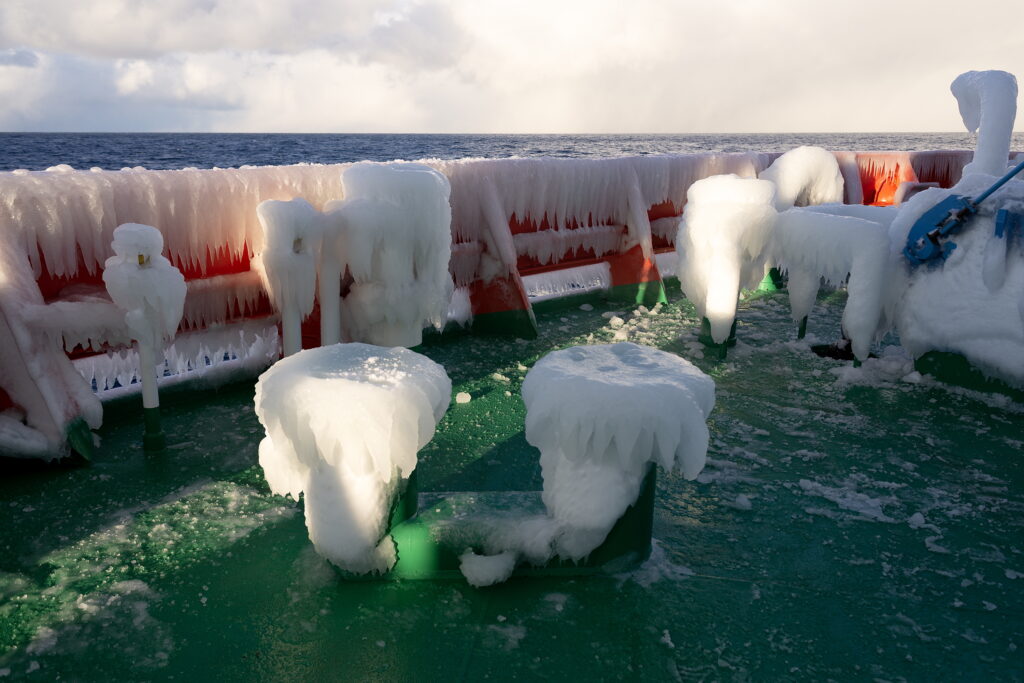
Despite the increase in shipping activity, ice conditions remain a decisive operational constraint along the Northwest Passage. Thick multi-year ice can drift into narrow channels, creating challenging choke points even when ice coverage across the wider Arctic Ocean is relatively low.
Although vessels successfully completed transits during the summer, ice conditions continued to vary considerably across the passage. According to the National Snow and Ice Data Center, significant ice remained along the southern route in early October, while heavy ice blocked M’Clure Strait at the western end of the northern deep-water route.
As conditions become increasingly challenging, the season is drawing to a close. The next international transits are expected in late July or early August 2027.
For more detailed information, the Scott Polar Research Institute maintains records of all Northwest Passage transits.
Record transit activity on the Northern Sea Route
Railotech has not actively monitored shipping on the Northern Sea Route (NSR) since 2022. However, media reports indicate that the 2026 navigation season has seen record transit activity and growing Chinese and South Korean involvement, including new international container shipping services between Asia and Europe.
Challenging ice conditions delayed the opening of the eastern section of the route. In early August, a significant share of NSR transit traffic used an unusual high-latitude route north of the Severnaya Zemlya archipelago, instead of the conventional route through the Vilkitsky Strait, which was blocked by ice.
By the end of September, the number of confirmed transit voyages had already exceeded the total for the entire 2025 season. Meanwhile, the return of autumn ice is gradually bringing the summer-autumn navigation window to a close for vessels with limited ice capability. Final statistics for the Northern Sea Route are expected later in 2026.
Text by Catarina Stewen