Through setbacks, severe winters, and decades of development, a small team of Finnish icebreaking specialists reshaped how ships operate in ice worldwide.
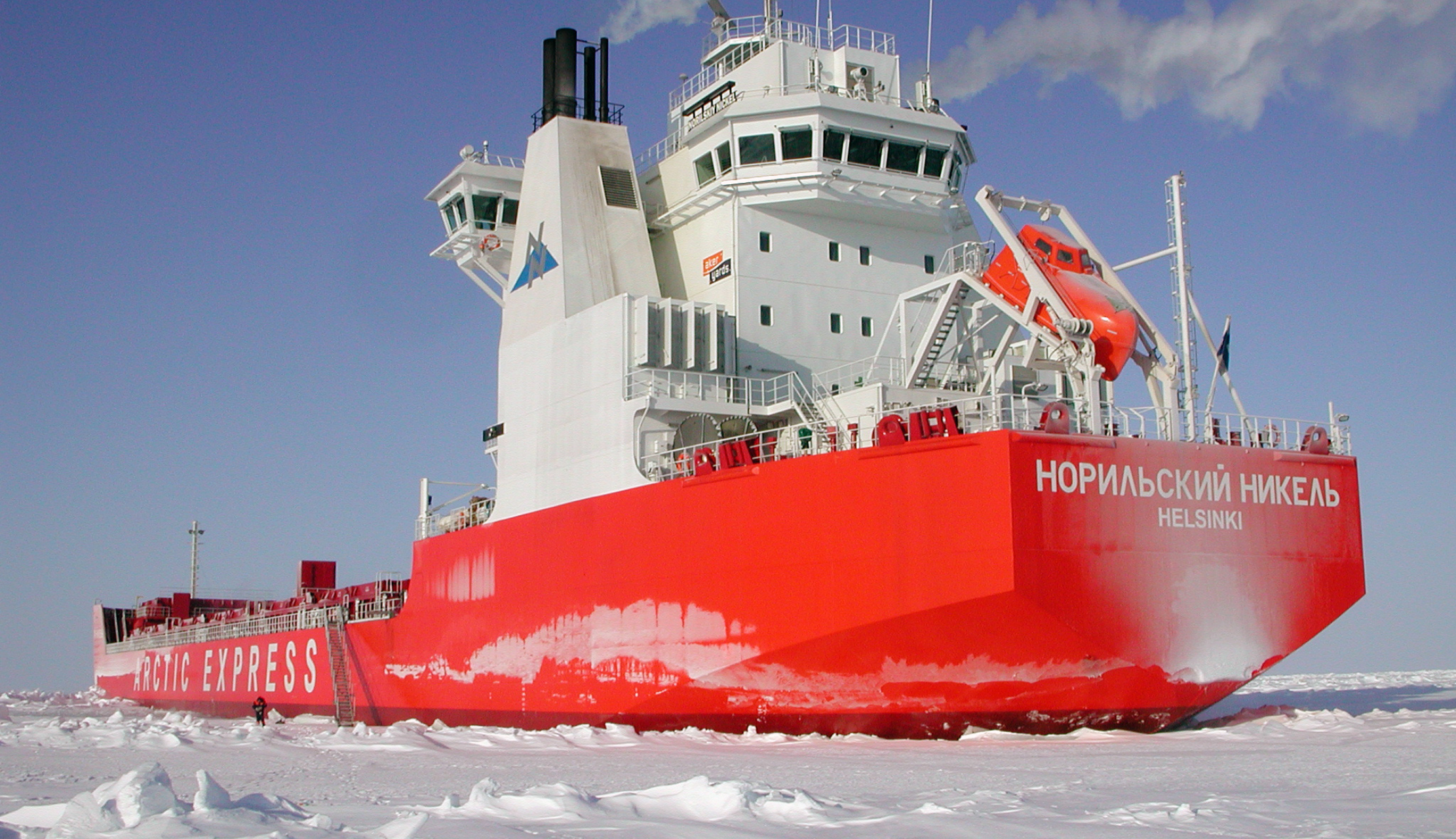
When the idea of a revolving propulsion for ice was first proposed in the 1970s, it was considered unrealistic. Half a century later, the azimuthing thruster and the Double-Acting Ship (DASTM) concept have transformed operations in ice.
From Arctic tankers and cargo vessels to advanced icebreakers, research ships, and luxury cruise vessels, stern-first operation and azimuthing propulsion are now recognised worldwide as one of the safest and most efficient solutions for navigating severe ice conditions.
A breakthrough decades in the making
The breakthrough did not happen overnight. It emerged through decades of experimentation, setbacks, cancelled projects, and relentless development by a small group of Finnish icebreaking specialists determined to challenge conventional thinking.
At the centre was Pekka Salmi, who coordinated icebreaker projects and full-scale trials at Wärtsilä Shipyard in close cooperation with the Finnish Maritime Administration (today the Finnish Transport and Infrastructure Agency) and Strömberg Drives (today ABB).
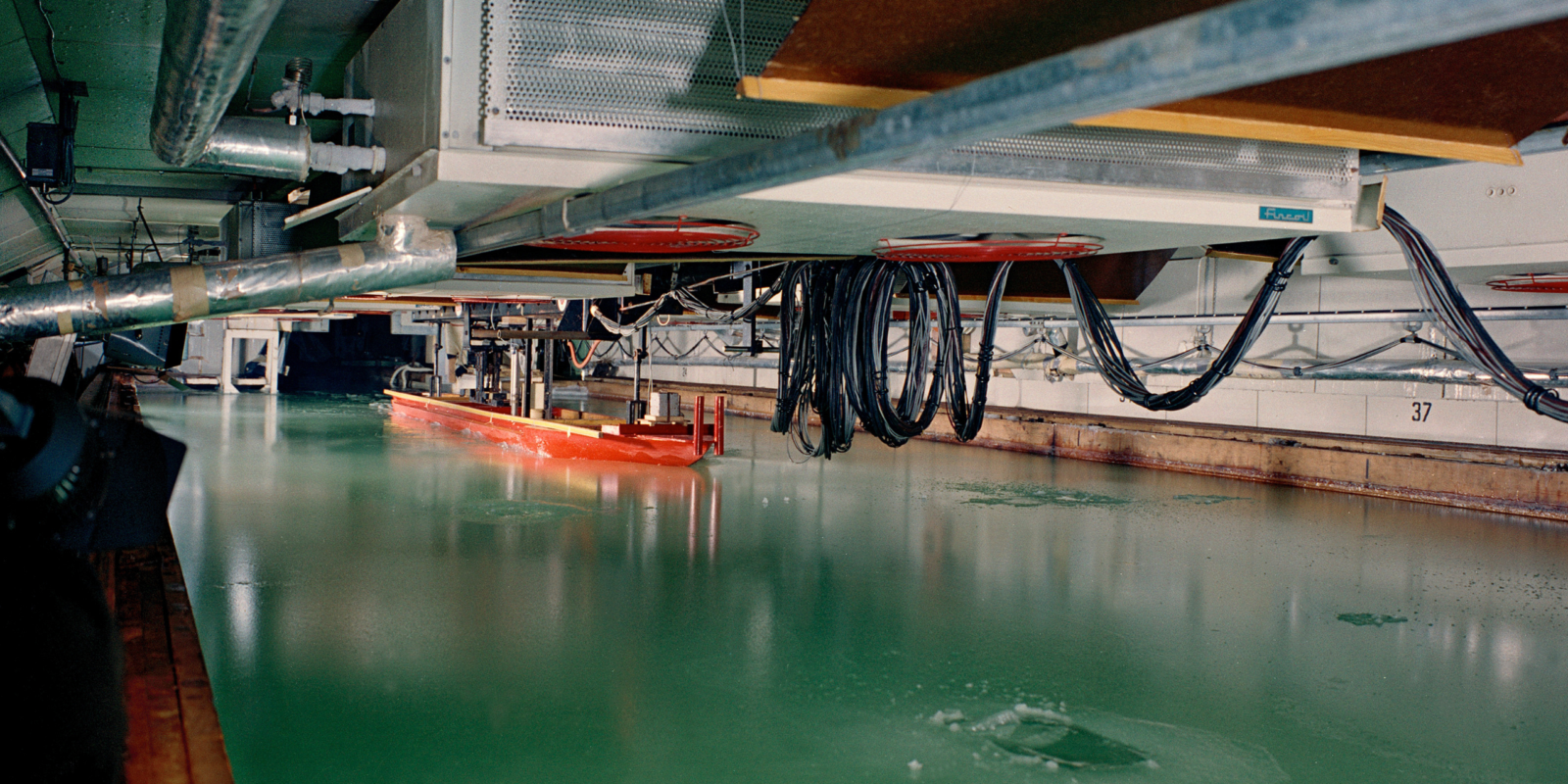
The first idea for a revolving pod in ice was introduced at the company in the 1970s. At the time, the shipyard’s ice model basin and icebreaking design unit (today Railo Technology) were already developing some of the world’s most advanced icebreaking concepts. But the industry was not yet ready for such a radical departure from traditional propulsion systems.
Rethinking icebreaking
That began to change in the late 1980s. Following Finnish icebreaker Otso’s ice trials (delivered in 1986), the Finnish Maritime Administration concluded that the next generation of icebreakers would require significantly better agility, stronger ridge penetration, and improved manoeuvrability in difficult ice conditions.
For Pekka Salmi, the challenge became an opportunity that would define his career.
“Initially, the goal was simply to improve overall icebreaking performance – not only level icebreaking,” Salmi recalls. “Step by step, it evolved into a completely new way of operating ships in ice.”
A revolutionary idea takes shape
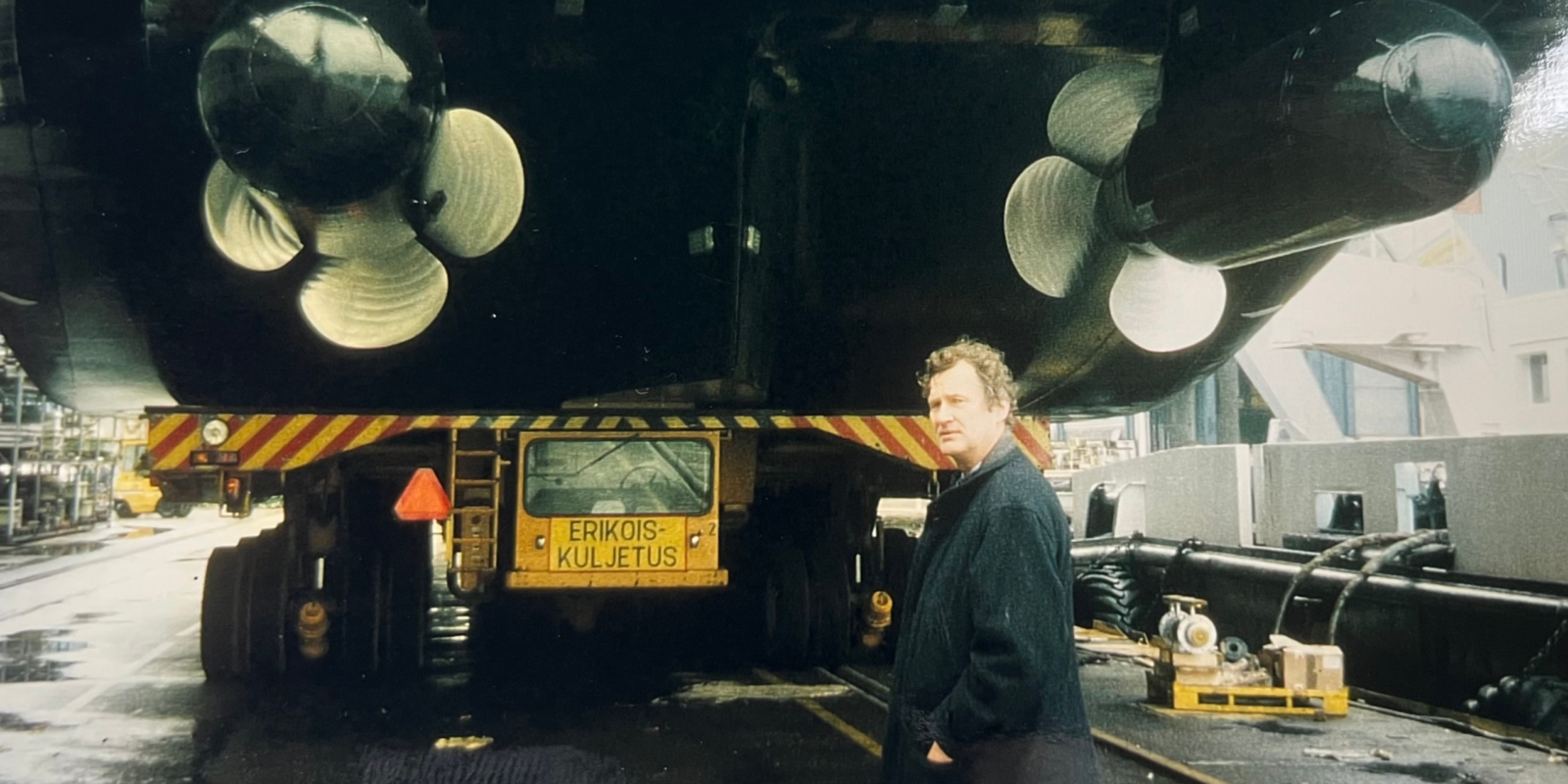
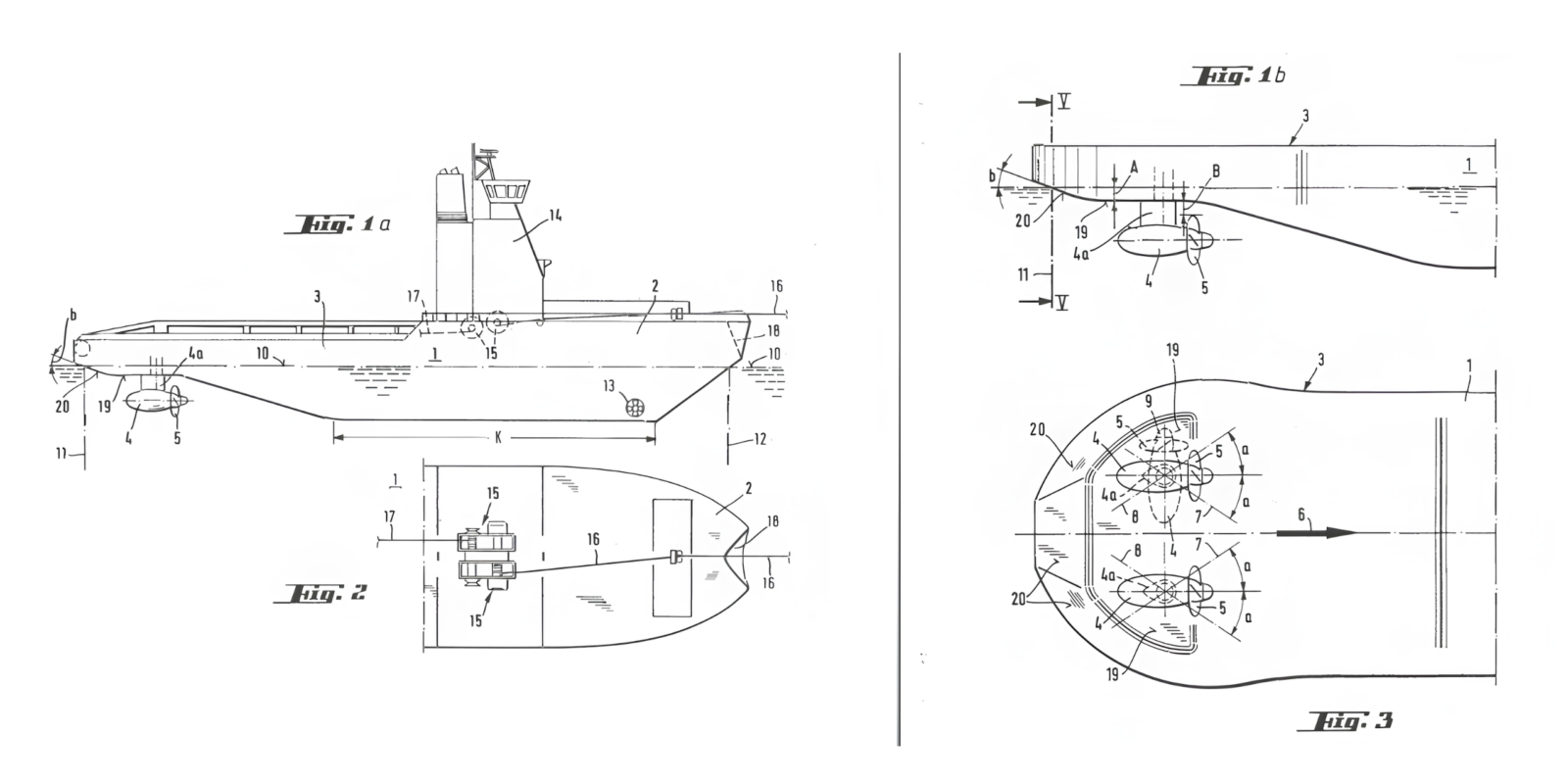
The development team’s vision was simple but revolutionary: to develop a propulsion system that would allow an icebreaker to operate efficiently both bow first and stern first, using full power in either direction.
The first experiment focused on fairway support vessel Letto, where a mechanical, ice-strengthened azimuthing unit with a nozzled propeller was installed and tested. In line with the team’s expectations, the trials demonstrated clear advantages.
From the beginning, however, they were convinced that diesel-electric propulsion offered far greater potential. Separating the propulsion machinery from the prime movers provided increased flexibility, simpler reversing capability, lower noise levels, and better overall performance.
In 1987, Strömberg Drives filed a patent application for podded propulsion. Soon afterwards, Wärtsilä Shipyard, Strömberg Drives and the Finnish Maritime Administration launched a formal joint development programme to create a 1.5 MW electrical azimuthing propulsion unit for icebreaking operations.
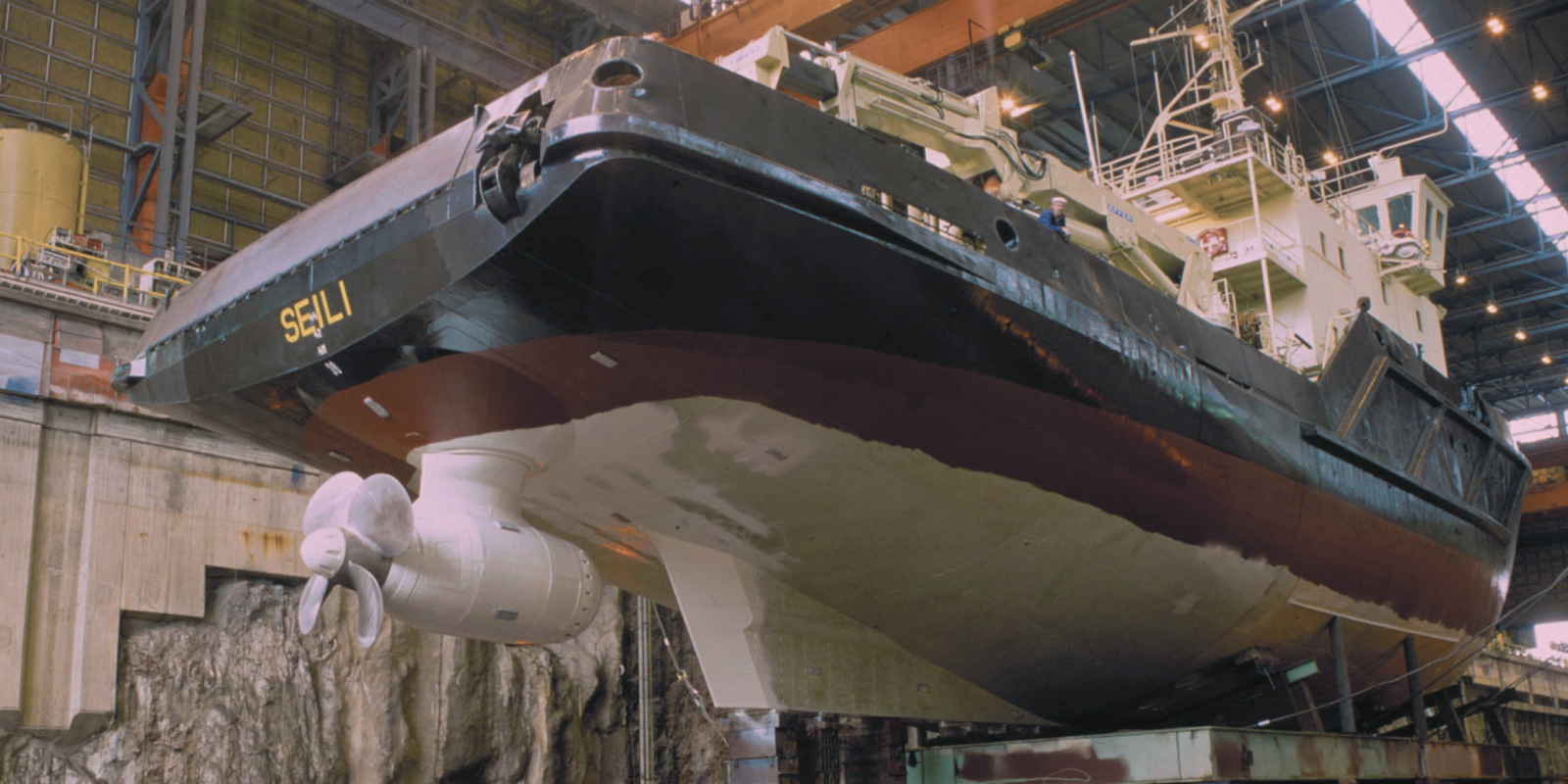
The prototype would be installed in fairway support vessel Seili, a sister ship to Letto. This would allow the two propulsion systems to be tested under identical conditions.
Keeping the idea alive
Then came a major setback. Parent company Wärtsilä Marine went bankrupt, and Masa Yards was established in its place. In 1989, the new company acquired the rights to the development work, allowing the project to continue under a new three-party agreement.
Despite the turbulence, development accelerated. During the winter trials of 1991 outside Oulu, Letto and Seili were tested side by side in severe ice conditions. Although Letto’s mechanical propulsion had significantly more power, Seili’s electric azimuthing propulsion proved superior when operating stern first. The trials demonstrated what had previously only been a matter of belief: efficiency triumphed over brute force.
At the same time, the icebreaker design team was developing a new stern-first operating icebreaker concept, called Tarmo-2, intended to become Finland’s next-generation icebreaker. Extensive model tests confirmed the concept’s exceptional agility and efficiency.
But once again, circumstances intervened. Instead of the DASTM icebreaker, the Finnish Maritime Administration chose to order the multipurpose icebreakers Fennica and Nordica from Hollming and Rauma-Repola shipyards (today Rauma Marine Constructions).
Proving the concept at full scale
For many, this could have marked the end of the concept. But Salmi and his team at the ice laboratory, now part of the Kvaerner Group, remained convinced that the new technology would redefine icebreaking. What they needed was a vessel capable of proving the concept in real operating conditions.
That opportunity came through long-time partner Neste. After extensive discussions, Neste agreed to retrofit two of their ice-class tankers, MT Uikku and MT Lunni, with 11.4 MW azimuthing thrusters to replace their conventional propulsion systems. The vessels had originally been designed by the ice laboratory and were already among the most capable tankers operating in Baltic ice conditions.
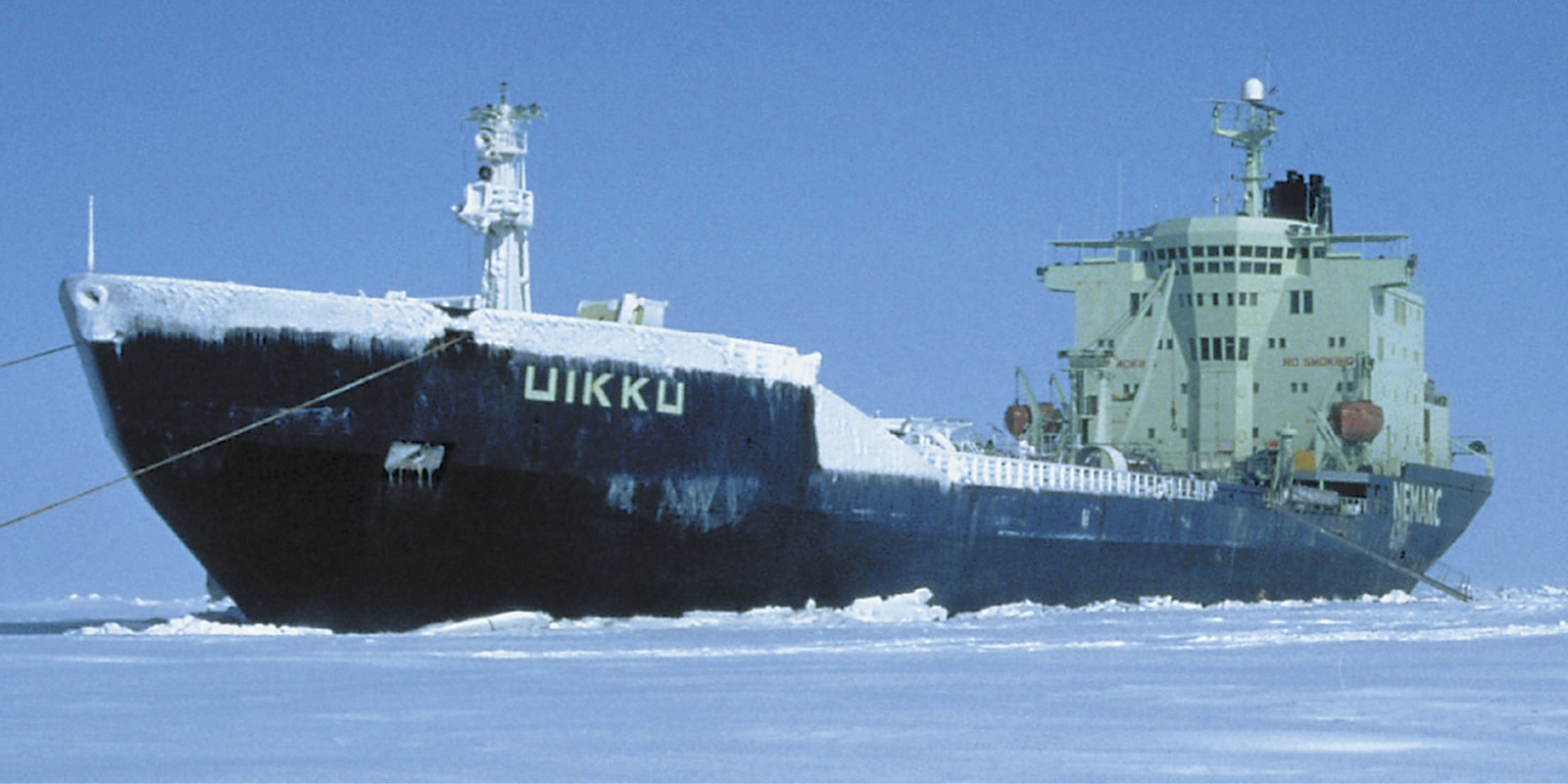
“With the ship design unit and the ice model testing unit working side by side, we could develop, test, and refine solutions continuously throughout the project,” Salmi explains. It is an approach that has defined Railotech ever since: design and testing not as consecutive steps, but as a single, continuous discipline.
According to Salmi, one of the most important tasks was designing a hull form that would guide the ice away from the propulsion units.
In 1992, the organisation responsible for developing the Azipod propulsion system was officially named Kvaerner Masa Azipod (KMA). An agreement was also signed with ABB Drives (now owner of Strömberg), which would later commercialise the technology globally.
Proof in the ice
In the winter of 1994, MT Uikku entered the ice to try the new technology in real operations, after model-scale tests. The results exceeded expectations.
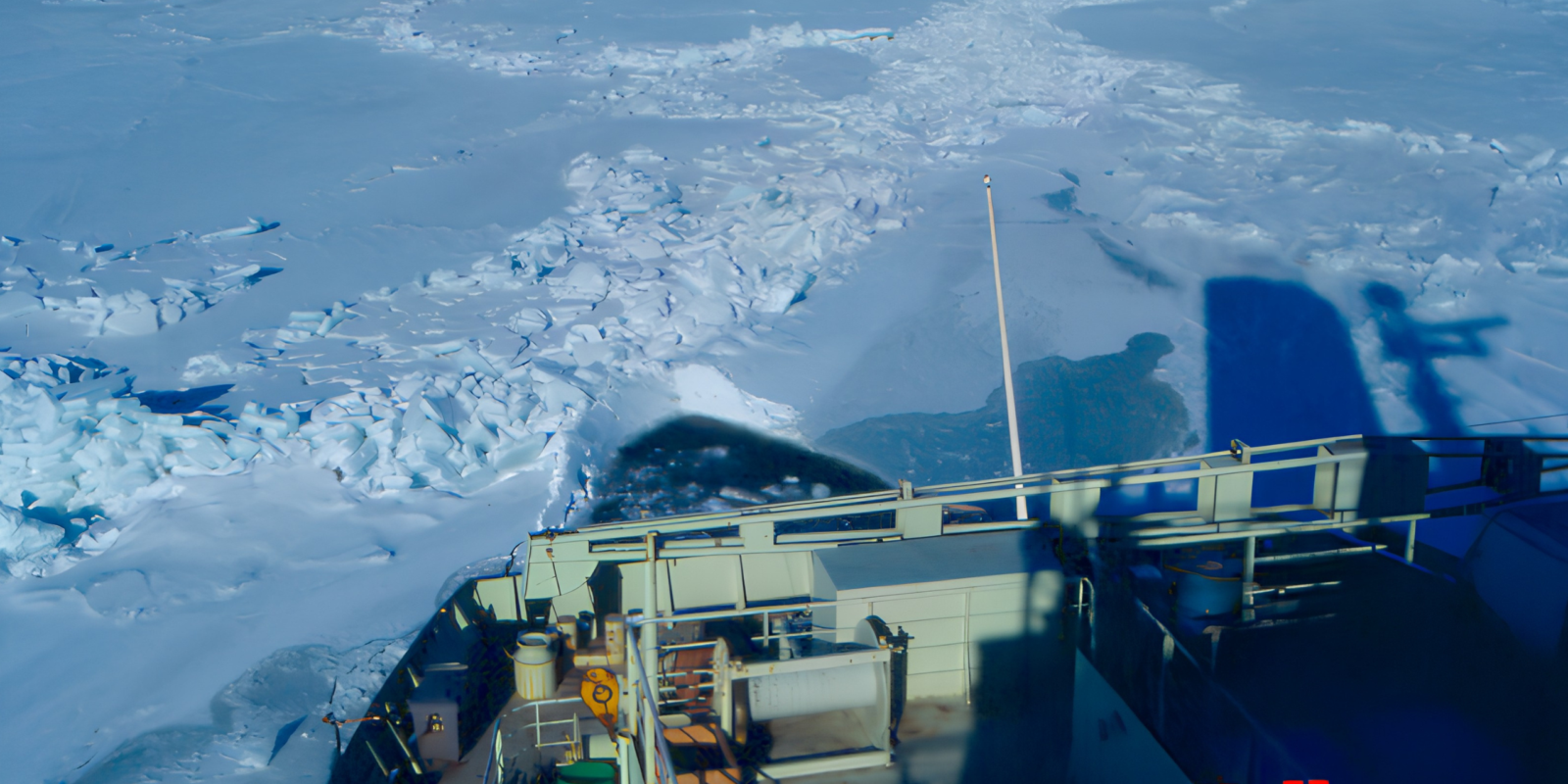
The vessel demonstrated an unprecedented ability to manoeuvre in difficult ice conditions. It could turn more easily in pack ice and advance stern-first in heavy ice using significantly less propulsion power than conventional vessels required.
When sister ship MT Lunni underwent ice trials in a heavy ridge field in March 1996, the superiority of stern-first ridge penetration became even more evident.
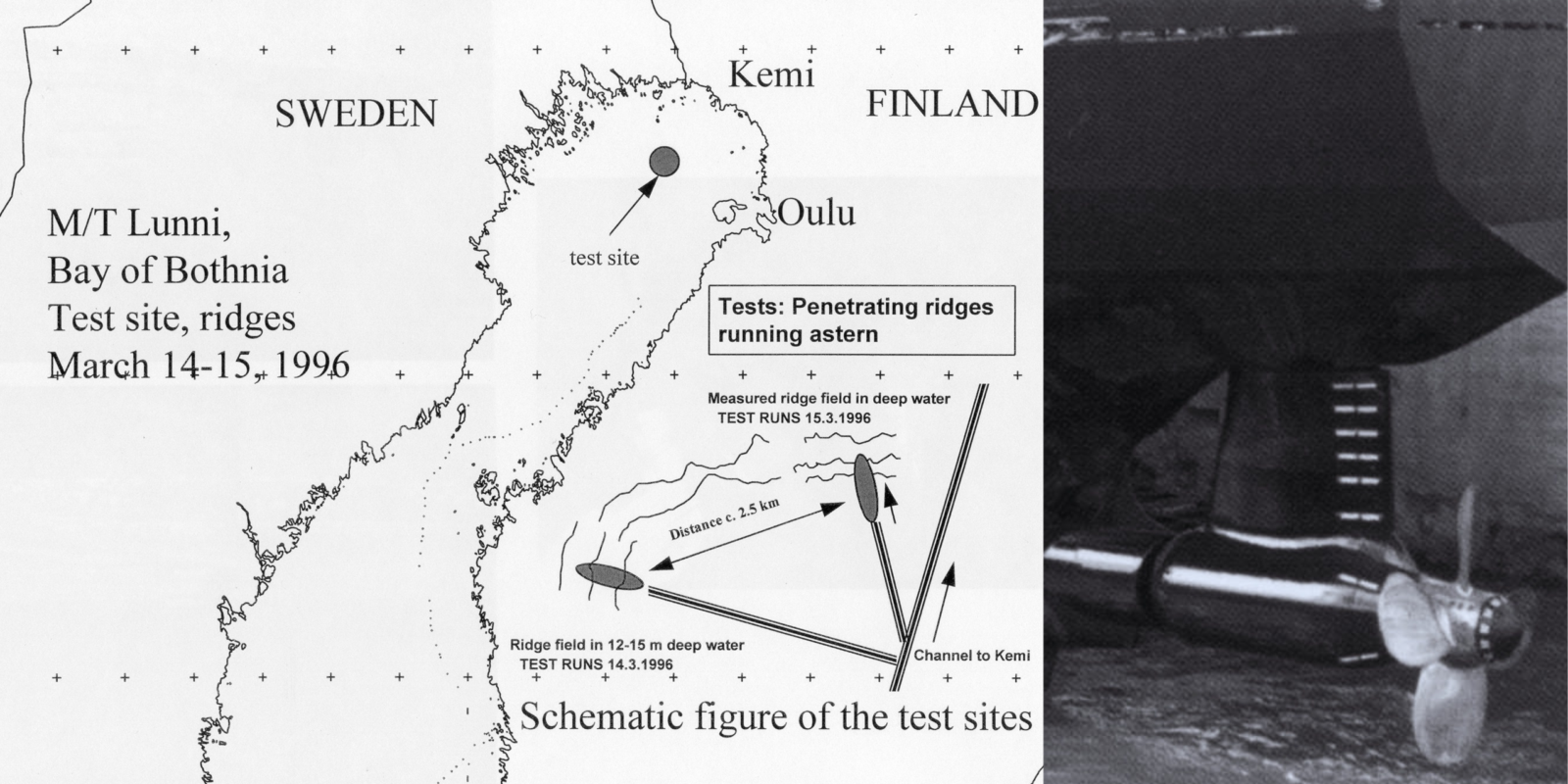
“That was the real breakthrough,” Salmi says. “At that point, we could finally present the DASTM as a proven concept.”
Acceptance across the industry still took time. Most classification societies quickly integrated the new operational philosophy into their rules, while some organisations and administrations remained sceptical well into the 2000s. The Azipod patent application was also challenged repeatedly, before it was finally approved in 1996.
From prototype to commercial reality
Cooperation with Neste continued. A joint venture named Nemarc was founded, becoming the owner of the tankers Uikku and Lunni. The first true double-acting tanker was also on the drawing board for Arctic operations at the Prirazlomnoye field. Due to the strained economy in Russia, this project ended.
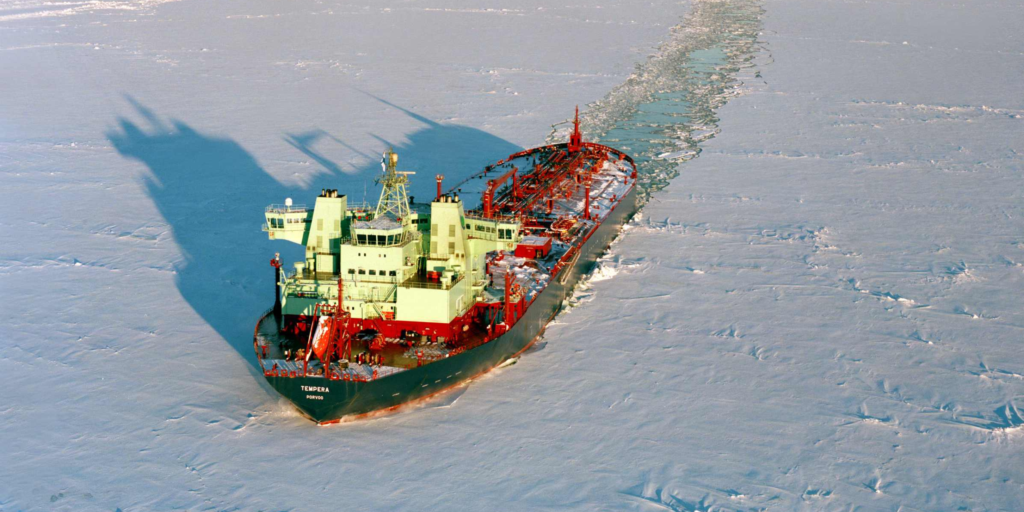
However, Neste believed in the new technology and proceeded to order the double-acting Aframax tankers Mastera and Tempera. At this stage, the concept was moving from experimental development into commercial reality.
The severe winter that changed everything
The decisive milestone came in 2003 with the delivery of Mastera, just in time for a winter that turned out to be exceptionally severe.
Salmi joined a voyage between the Sköldvik oil terminal and Primorsk harbour, uncertain whether the captain would fully utilise the vessel’s stern-first capability. Many captains were still reluctant to abandon decades of conventional operating practice.
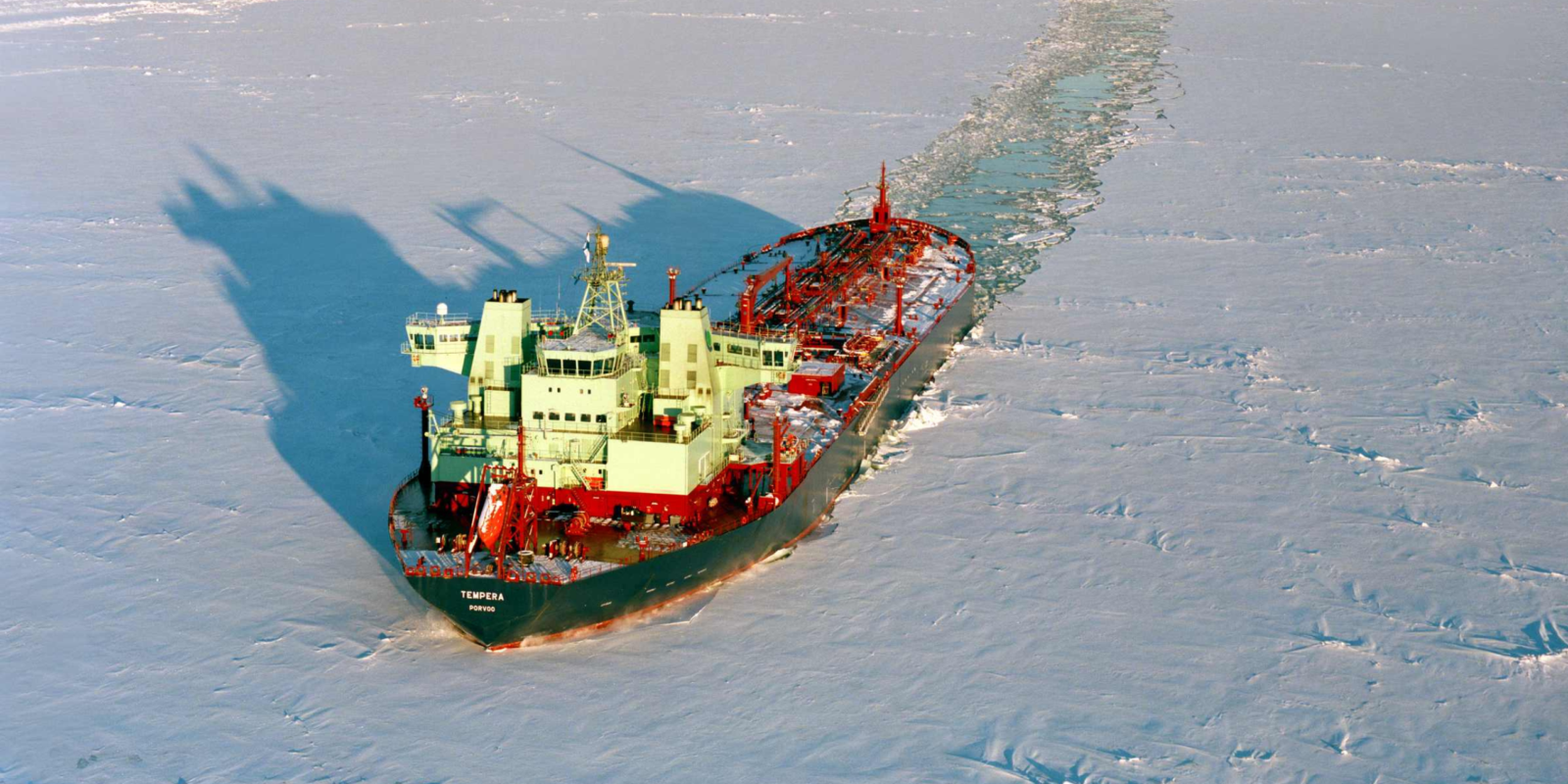
“We had provided the tool, but it was ultimately up to the captains to trust it,” Salmi says.
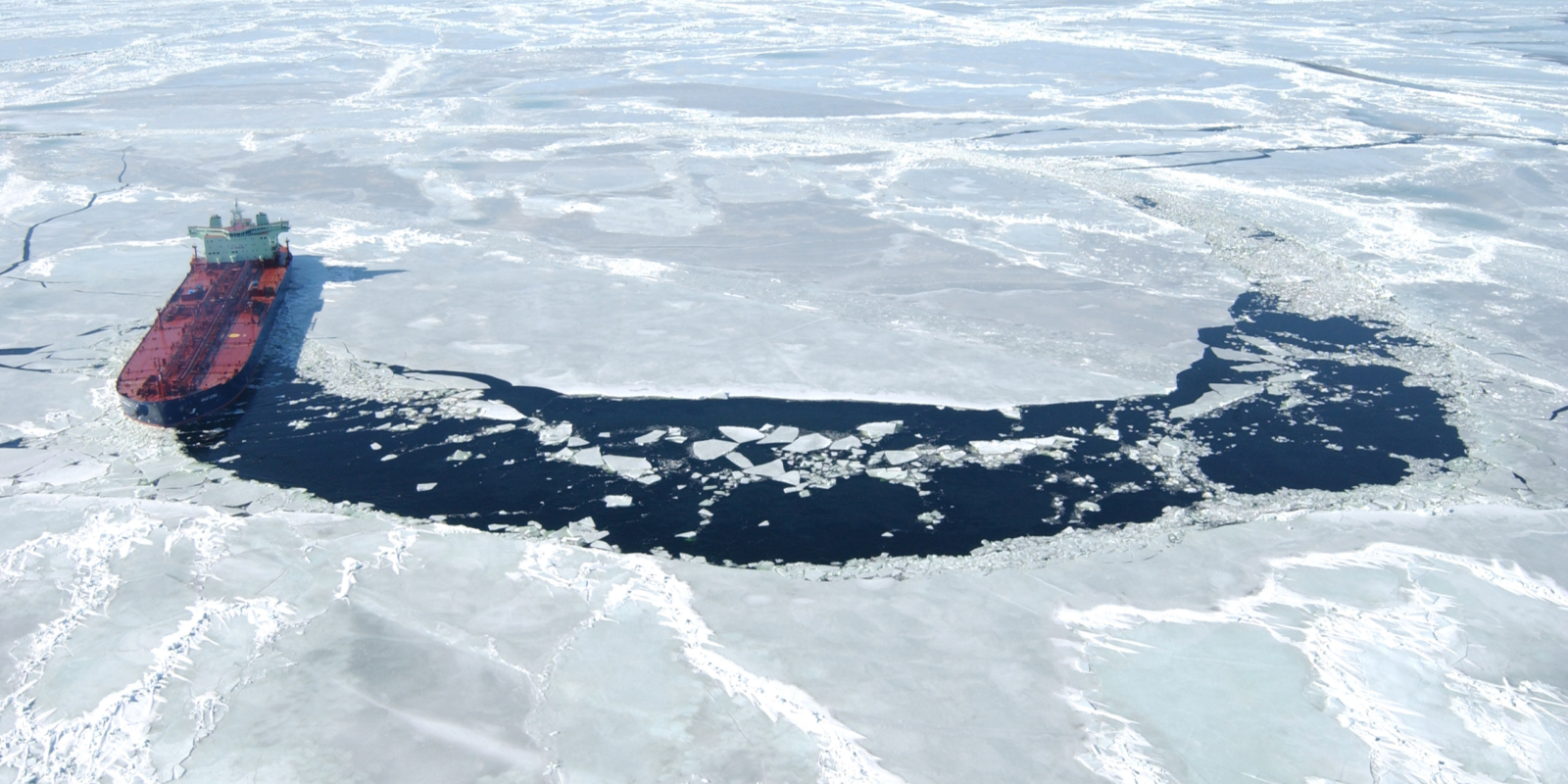
Departing from the terminal, the captain turned the vessel 180 degrees and operated stern first throughout the entire voyage to Primorsk. The results were dramatic. As Mastera advanced through the heavy ice, she opened a wide and stable channel behind her. Soon, vessels departing St. Petersburg began following directly in her channel to pass through the difficult conditions.
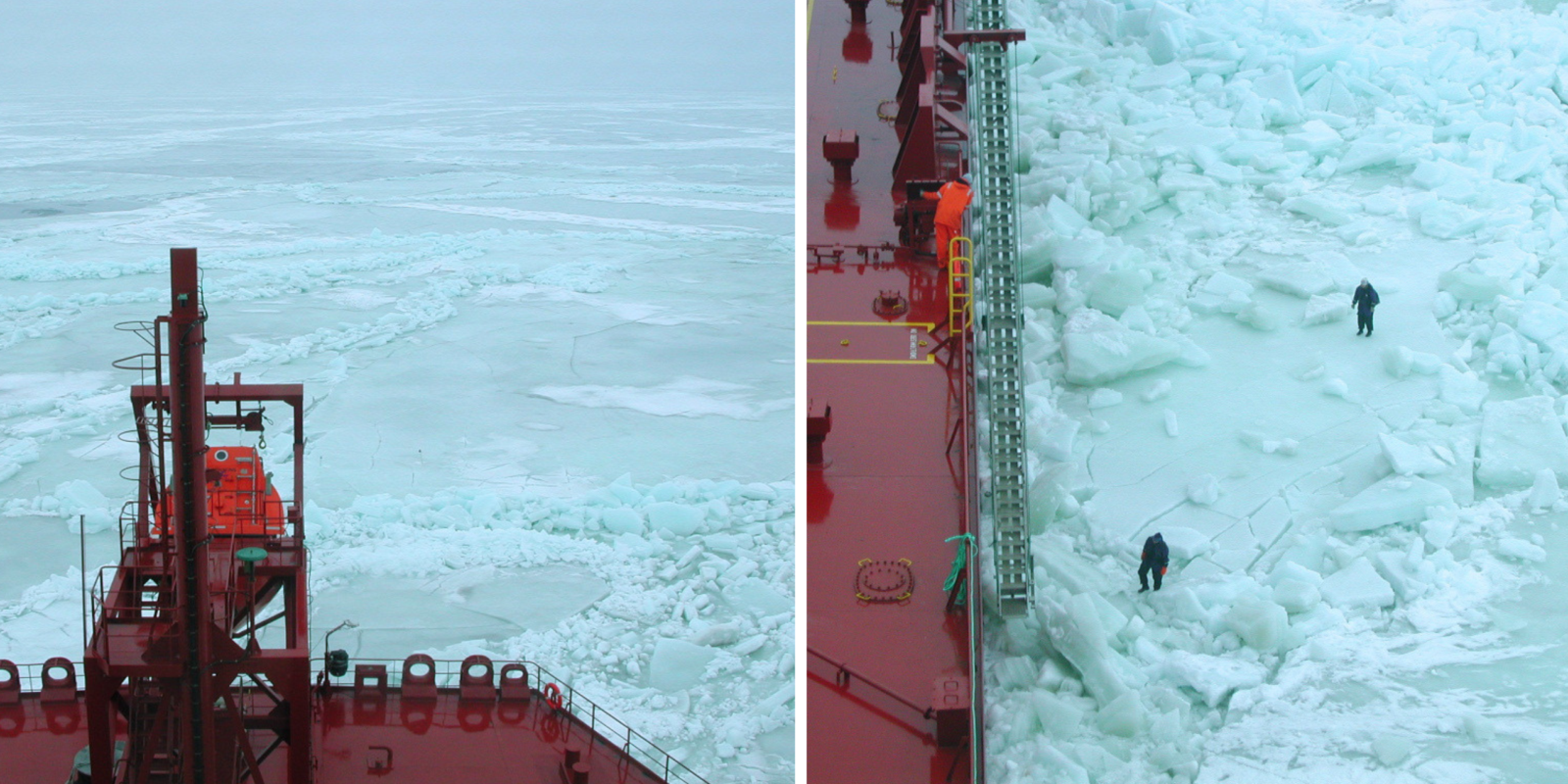
For Salmi, it was a defining moment. The concept had moved beyond theory, beyond model tests, and beyond isolated trials. It had proven itself in commercial operation under some of the harshest conditions in the Baltic.
Arctic expansion and final evidence
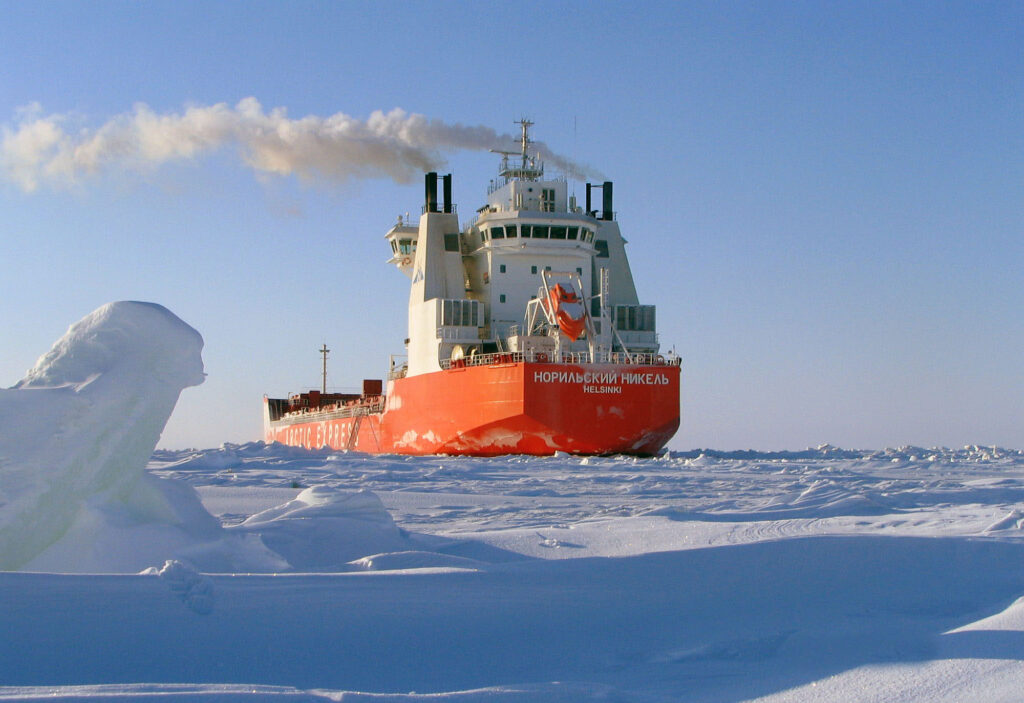
Around the same time, following the collapse of the Soviet Union, the shipping company Norilsk Nickel faced growing challenges maintaining year-round Arctic transport operations without sufficient icebreaker support. Recognising the potential of the new technology, the company partnered with the Finnish ice team, now part of the Aker Group, to develop a new generation of double-acting Arctic cargo vessels capable of independent operations from Dudinka to Murmansk.
The vessel’s hull form was meticulously designed for two different operating modes. In open water and light ice, it would operate bow first. When it encountered heavy ice ridges and dense rubble fields, the vessel would turn 180 degrees and proceed stern-first, using its azimuthing propulsion to manoeuvre and its icebreaking stern to clear ice far more efficiently. The concept reduced reliance on icebreaker assistance, improved scheduling flexibility, and lowered operational costs.
The prototype Norilskiy Nickel (delivered in 2006) was built in Helsinki, followed by four additional container vessels and one tanker in Germany, as order books in Finland were full. By this stage, the technology had reached a turning point.
From radical idea to industry standard
In 2005, all the accumulated Finnish ice technology know-how – spanning 36 years of ice model testing, polar research, icebreaker designs, and full-scale measurement data – was consolidated into the independent company Aker Arctic Technology (today Railo Technology). This enabled the organisation to focus exclusively on advanced icebreaking vessel development and ice model testing for customers around the world, while the Finnish shipyards focused on cruise vessels and ferries.
The final confirmation for the DASTM concept came during Norilskiy Nickel’s Arctic ice trials in March 2006, in which the vessel fulfilled all the extremely demanding icebreaking requirements.
“During the first Arctic Passion Seminar, Göran Wilkman called directly from the Arctic trials to describe the vessel’s performance live to the audience and to report that the vessel was a success,” recalls Railotech’s head of sales and marketing Arto Uuskallio, who participated in the ice trials dedicated to performance verification in ridges with MT Lunni.
After that, the industry’s acceptance was complete. At the Neva exhibition in St. Petersburg the following year, the Russian Register covered their stand with an image of Norilskiy Nickel, promoting their involvement in the classification. What had once been dismissed as unrealistic had become the new standard for Arctic shipping.
Transforming icebreaker design
While double-acting tankers evolved, icebreaker development progressed in parallel. The success of MT Uikku and MT Lunni quickly opened the door to entirely new vessel concepts, fundamentally changing icebreaking itself.
The first purpose-built icebreaker designed for stern-first operations was the river icebreaker Röthelstein, delivered to Austria in 1995 and still operating on the Danube today. Unlike conventional icebreakers, Röthelstein could use controlled stern-first movements to manage and clear ice with far greater precision.
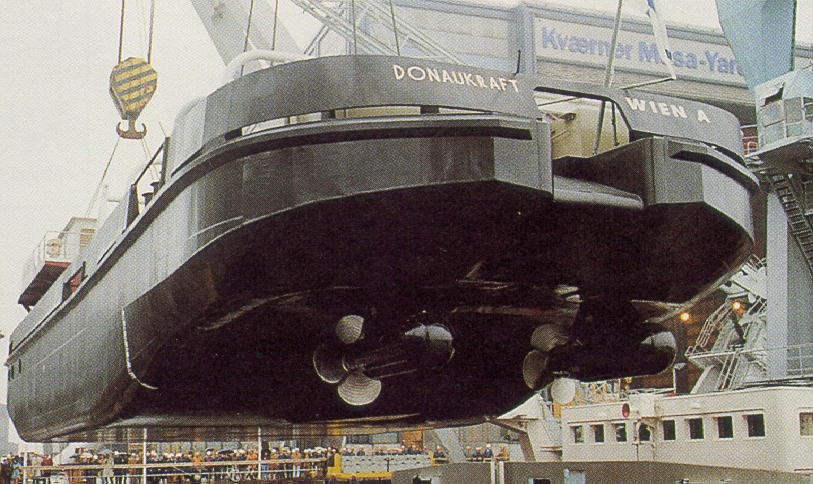
“Operating stern-first is like shovelling sand,” Uuskallio explains. “You can control the icebreaking process in a completely different way compared to traditional bow-first operation.”
Over the years, Railotech’s team contributed to numerous pioneering projects, including USCGC Healy, the oblique icebreaker Baltika, the Arcticaborg and Antarcticaborg icebreaking support vessels, the Great Lakes icebreaker Mackinaw for the United States Coast Guard, and the icebreaking supply vessel Fesco Sakhalin, among many others.
Each project expanded the understanding of how azimuthing propulsion, hull design, and ice interaction could be optimised together.
Learning from the ice
The feedback loop between full-scale operations, model testing, and ship design became one of the organisation’s greatest strengths. Operational experience continuously refined the technology, while small technical improvements often produced major gains in performance.
“The Azipod propulsion system and the DASTM concept evolved together,” Salmi says. “With the seamless manoeuvrability of the propulsion system, the double-acting operation became possible.”
The development work also led to entirely new innovations, including the Double-Acting LNG carriers for Yamal LNG, and the hybrid DAS propulsion system combining shaftline efficiency in open water with azimuthing agility in ice.
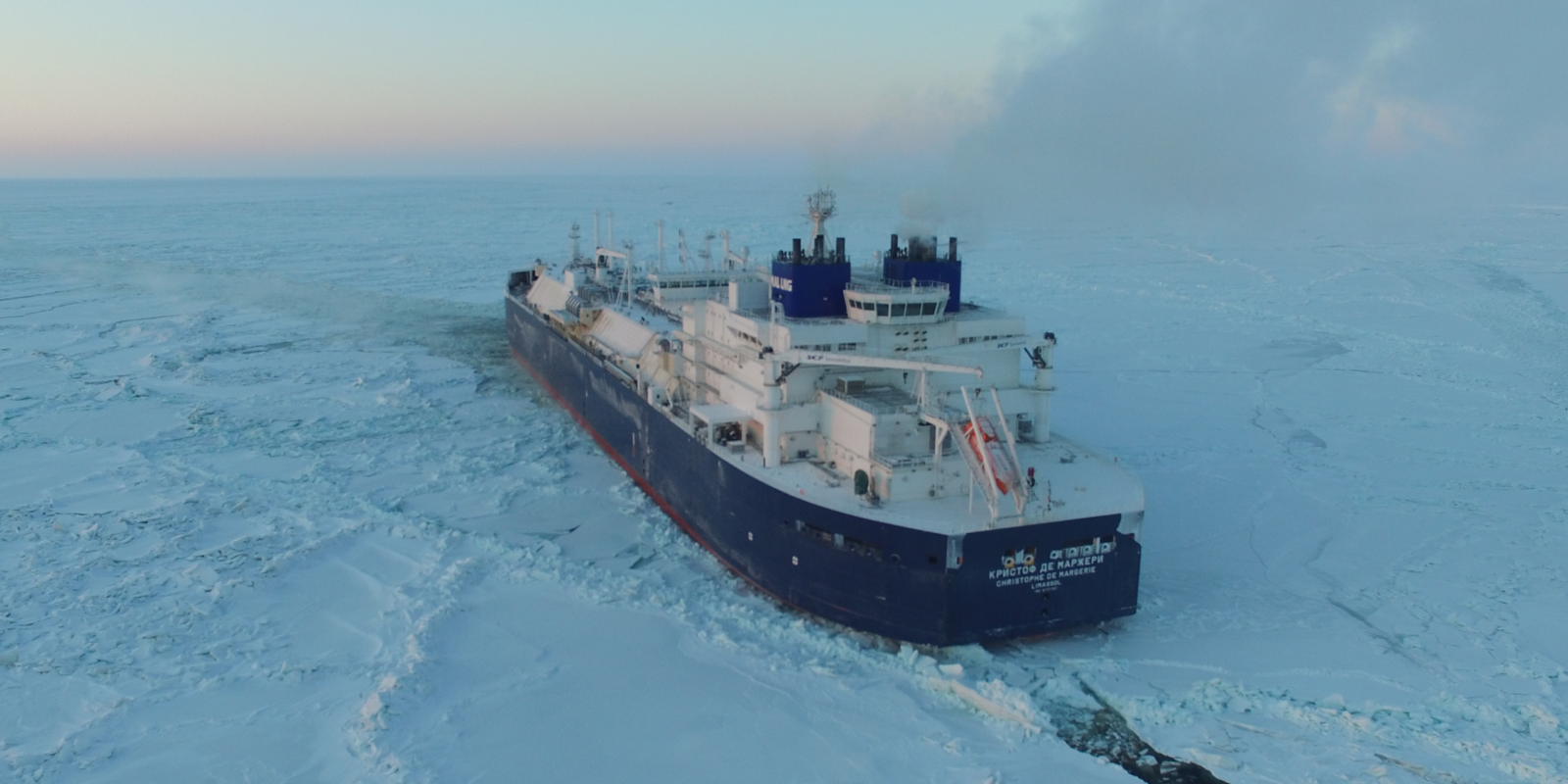
The hybrid DAS solution developed by Railotech has been selected for all next-generation Polar Class 2 icebreakers currently being built.
The DASTM concept has also become the preferred solution for modern Arctic and Antarctic research and expedition vessels, including the luxury cruise vessel Le Commandant Charcot.
The next frontier
Looking back, Salmi believes long-term support for research and development from the Finnish Funding Agency for Technology and Innovation (TEKES) was essential to making the breakthrough possible.
“Without the support we received in the early years, concepts such as the Azipod and the DASTM principle would not have reached full-scale operation,” he says.
As for the future, he sees fossil-free operations as the next major revolution in icebreaking technology. He hopes Finland will once again lead the way.
After decades spent transforming a radical idea into an industry standard, Salmi remains proud to have been part of a team that continuously pushes the boundaries of Arctic engineering.
“It is rewarding to see that an idea which took decades to develop and even longer for the market to fully accept, ultimately became such a success.”
Text by Catarina Stewen