Performance in level ice has for decades been used as a benchmark for comparing icebreakers. In real-life operations, however, uniform level ice is rare. Experience shows that optimising solely for breaking level ice can compromise an icebreaker’s effectiveness in other, more prevalent conditions. What should we then measure to design better icebreakers?
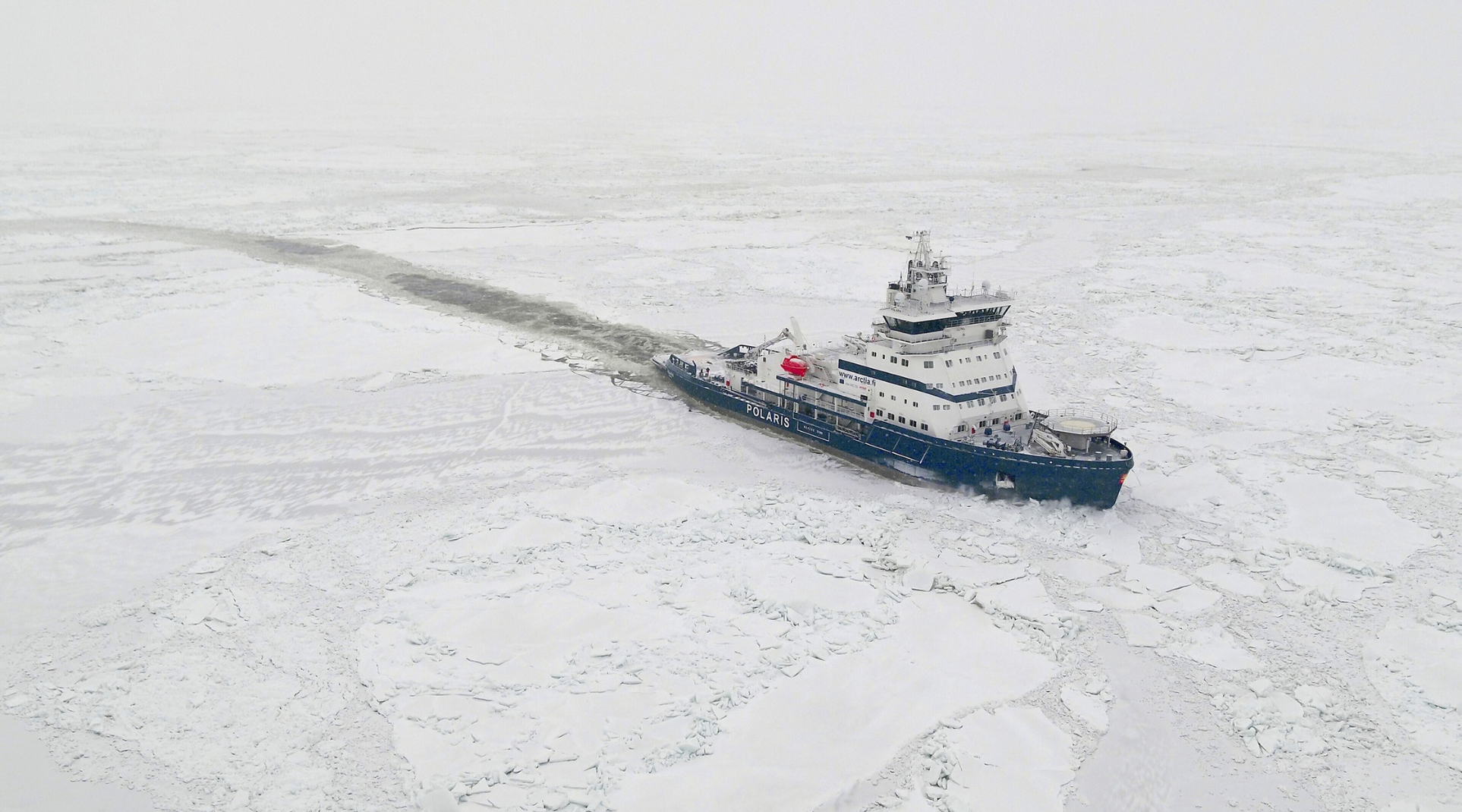
Picture an icebreaker at work: a powerful vessel climbing onto an unbroken sheet of ice at crawling pace and crushing it under its weight. It is an impressive image but tells only part of the story.
In reality, there is more to icebreaking than what can be seen on the surface. In all but the most extreme ice conditions, the bow bends the ice until it breaks without any noticeable change in floating position. The underwater hull then diverts the broken pieces around and underneath the vessel. Much of the real work thus happens out of sight, below water.
“Breaking the ice itself accounts for only about one third of the level ice resistance the vessel encounters,” explains Senior Naval Architect Teemu Heinonen from Railotech. “Roughly two thirds comes from what happens below the waterline, where the ice flows around the hull.”
Real ice is rarely level ice
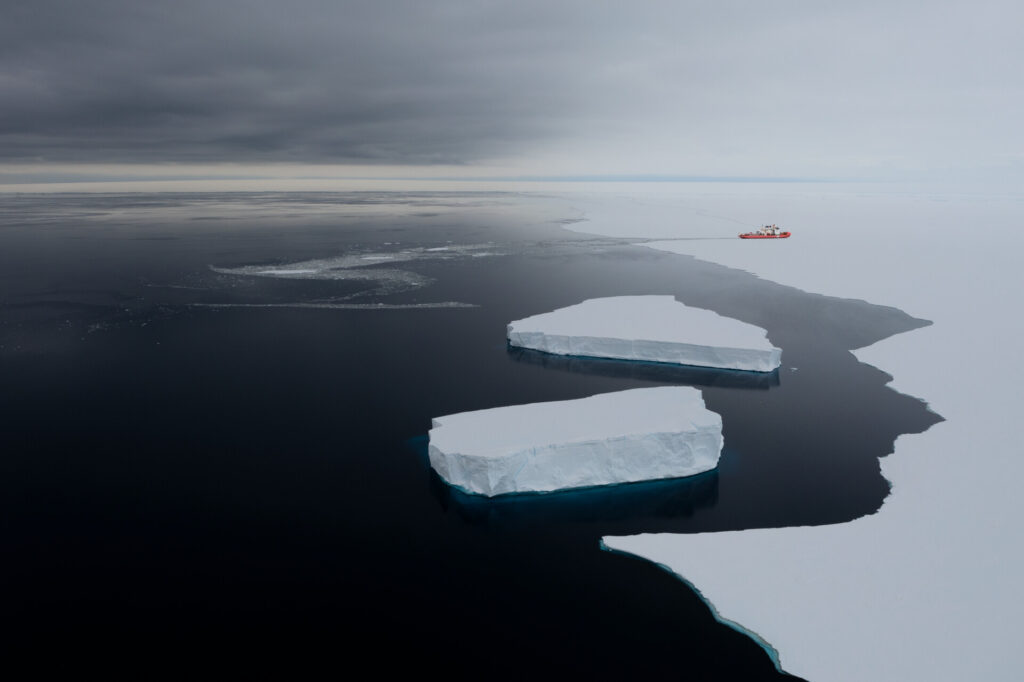
In nature, smooth, unbroken level ice is rare. It occurs mainly where the water is sheltered, such as close to shore, in archipelagos and on smaller lakes.
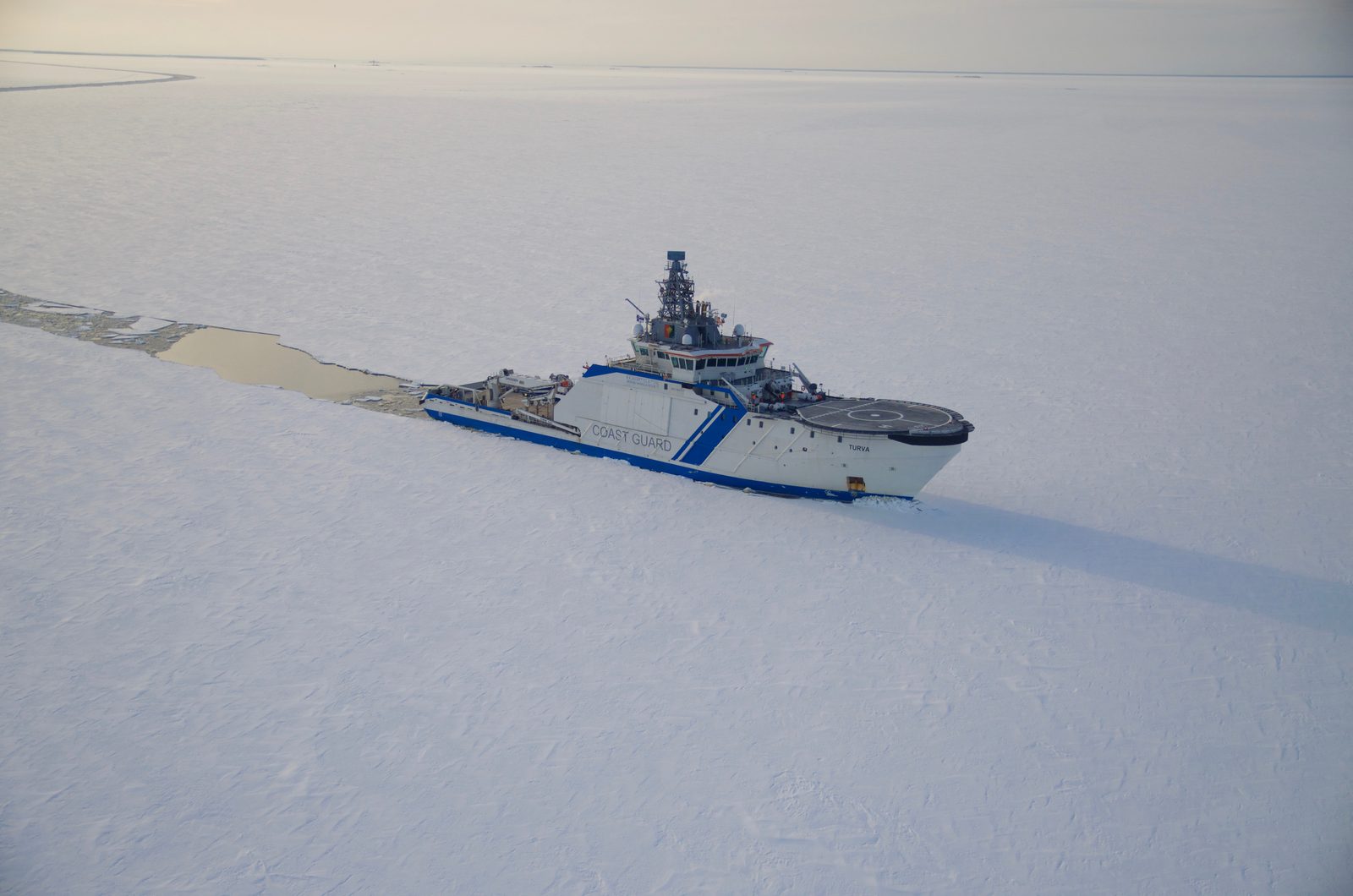
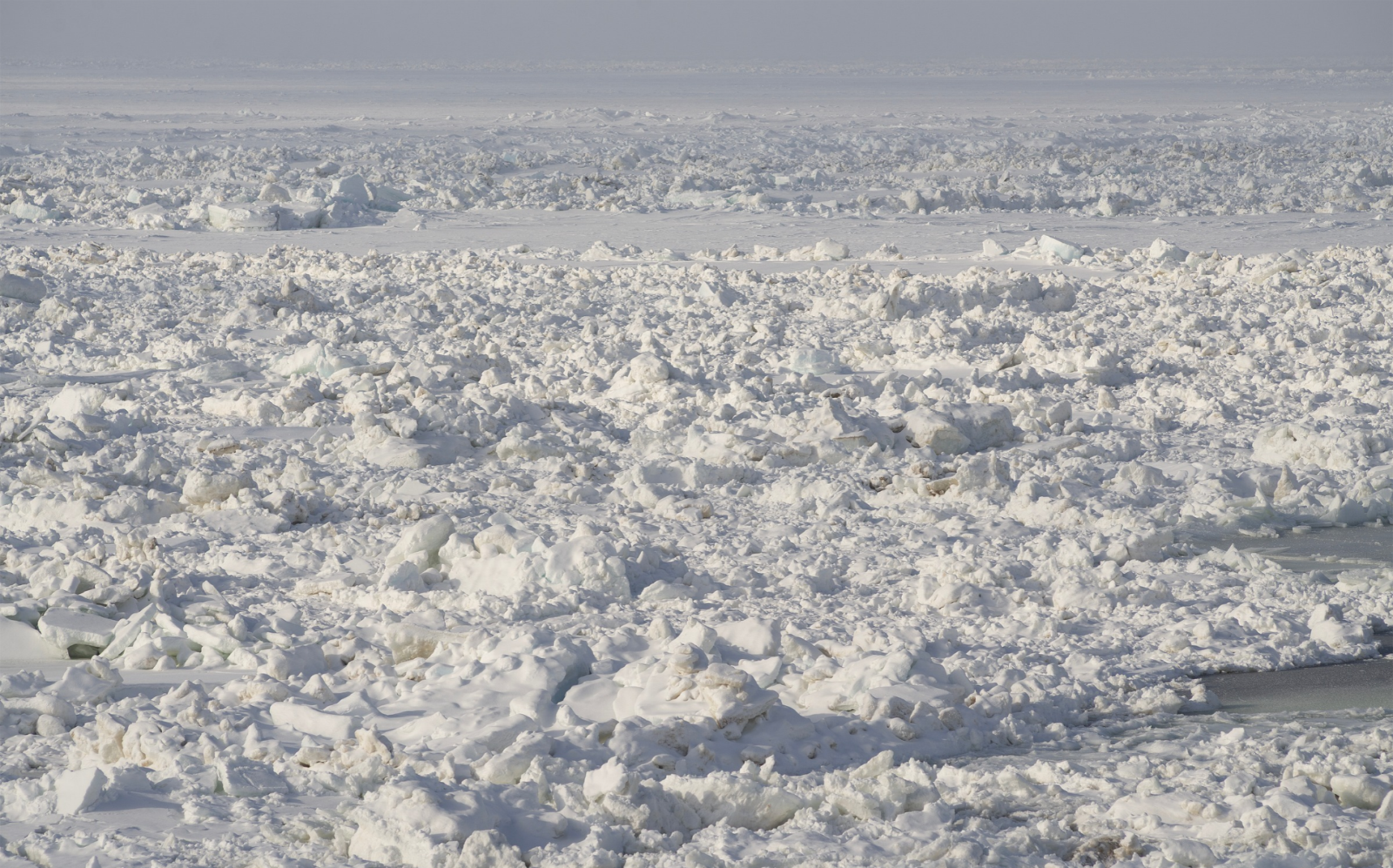
At sea, ice is constantly affected by wind, currents and waves. In areas with regular vessel traffic, the ice cover is repeatedly broken up, creating channels, ridges and brash ice that can be considerably more difficult to navigate than level ice.
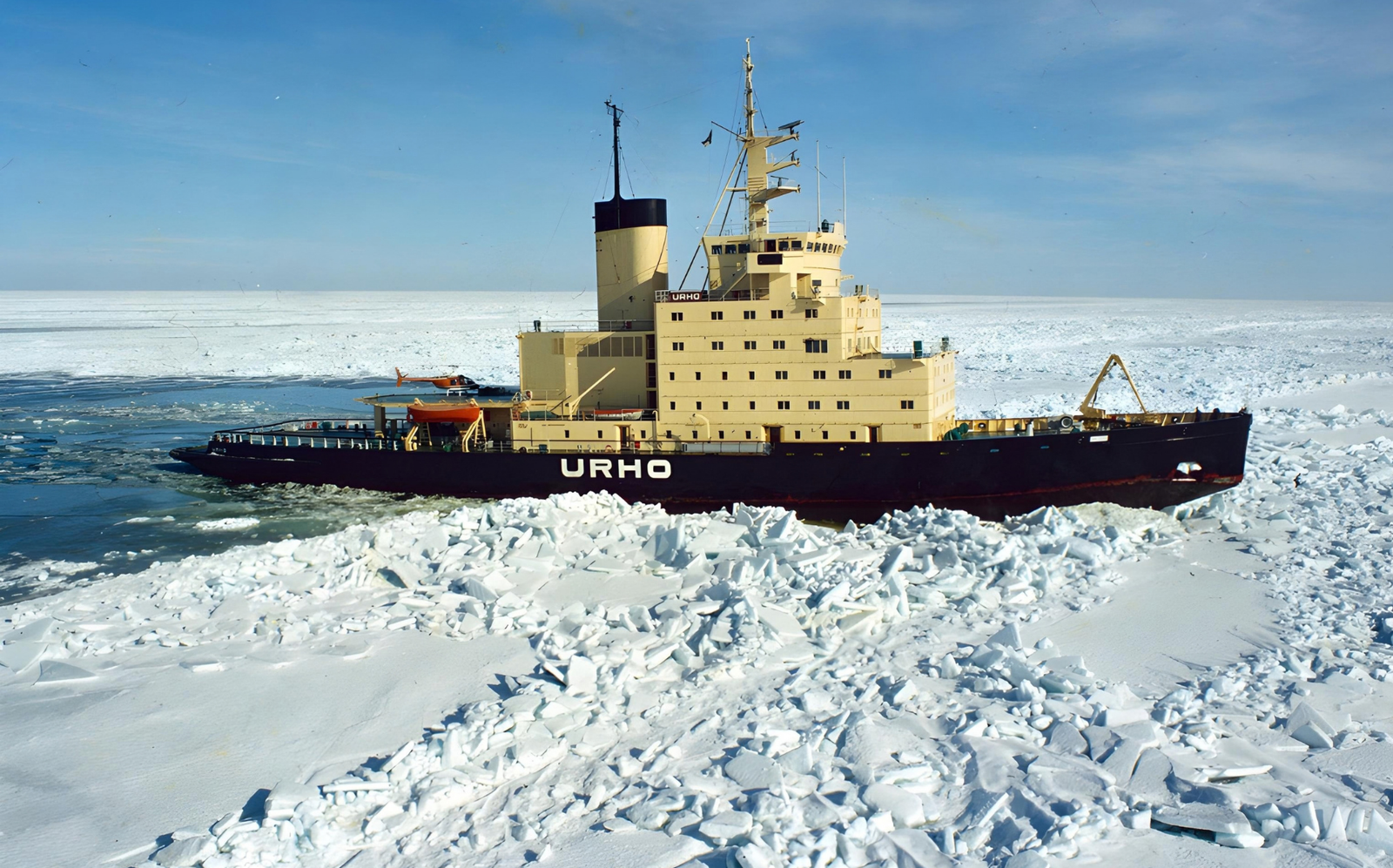
“For example, in the Bothnian Bay, level ice can be one metre thick, while the keel of an ice ridge can extend to a depth of up to twenty metres,” says Lead Naval Architect Tuomas Romu from Railotech.
Icebreaking versus operations
Breaking ice is only part of an icebreaker’s job. A contractual requirement might specify, for example, how fast an icebreaker can travel through one-metre-thick level ice. A winter at sea demands much more.
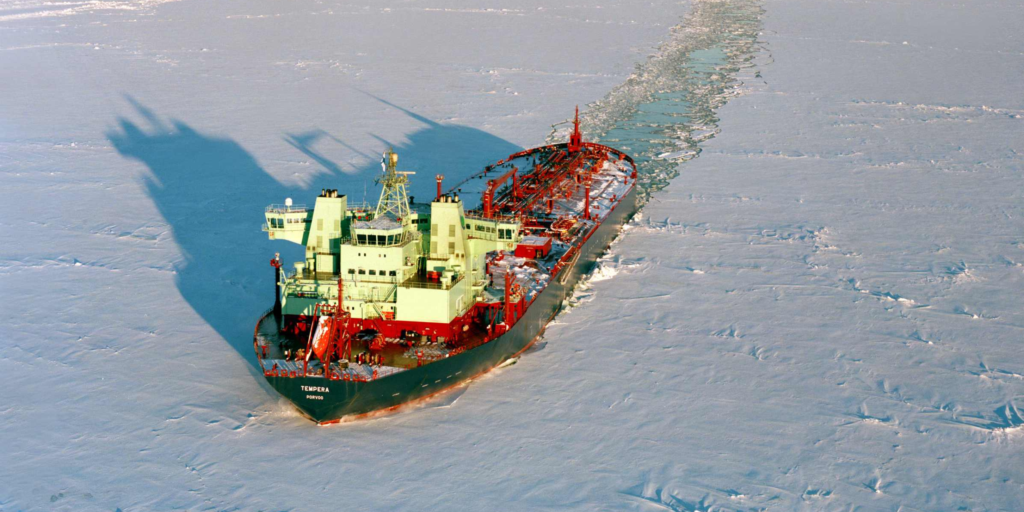
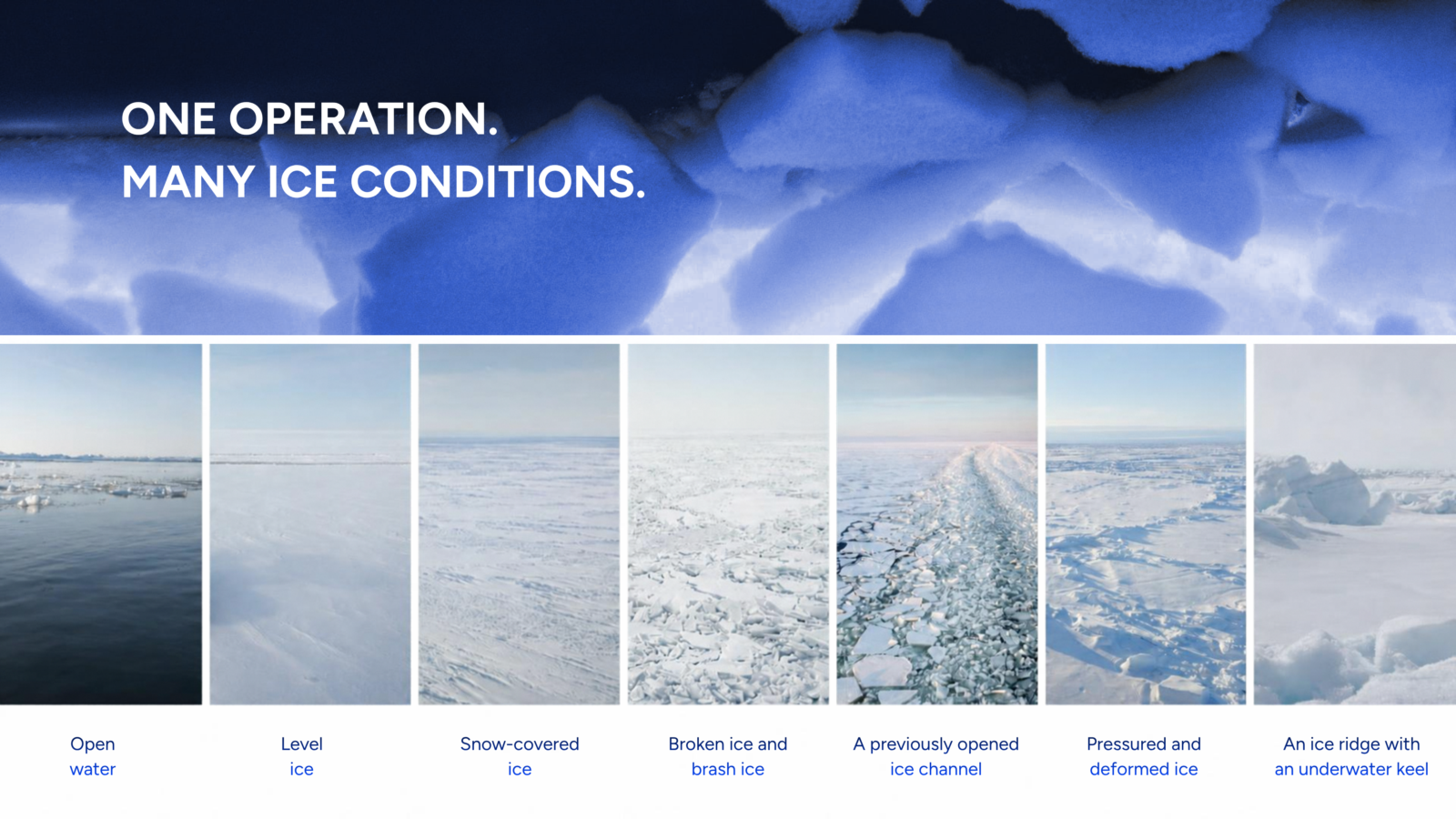
An icebreaker must operate in snow-covered and broken ice, penetrate ridges, clear channels, manoeuvre around vessels requiring assistance, free ships beset in ice and transit efficiently between operating areas in open water.
Focusing on one performance characteristic therefore comes with trade-offs. Minimising level-ice resistance can result in a bow form that performs less effectively in other operating conditions. Slamming in open water is a particular challenge for highly optimised icebreaking hull forms.
“Level-ice optimisation reached its peak in the 1980s, and such bow forms are relatively straightforward to design,” Heinonen notes. “The real challenge is designing a well-balanced icebreaker that can perform multiple tasks efficiently.”
How level ice became the benchmark
Although level ice represents only one part of an icebreaker’s operating environment, it has become an important measure of performance. The reason lies partly in the evolution of icebreaker design.
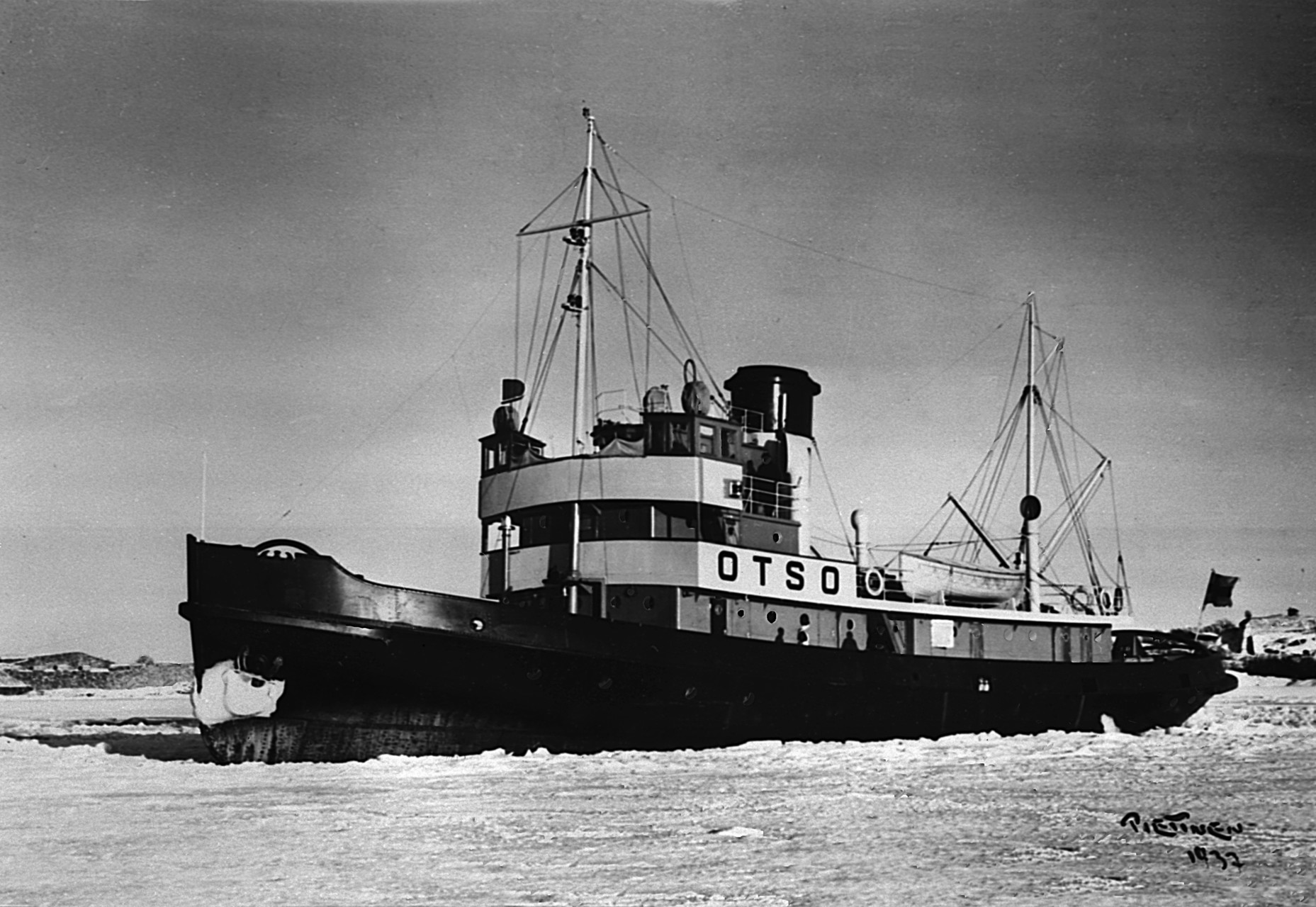
In the 19th century, machinery power was the primary criterion. Later, the relationship between power and vessel breadth became an important performance indicator and remained so until the 1970s. The industry relied heavily on experienced designers, who developed different sizes of broadly similar hull forms.
A dramatic change came in the 1980s, as ice model testing technology evolved rapidly. This progress deepened the understanding of the icebreaking process itself, including the different components of ice resistance: breaking, friction, and submersion. Designers could study the process in far greater detail, gaining new insight into how hull geometry affected resistance and performance. This, in turn, enabled the development of improved calculation methods.

Contractual specifications began to define a required speed in a specified thickness of level ice as a key performance indicator. The criterion was easy and reliable to establish, test and verify, and provided a useful overall indication of an icebreaker’s performance. Different designs could also be compared more systematically.
The race for the most efficient bow
The ability to measure and optimise one parameter also created the temptation to push it as far as possible. A competition between Finland and Germany emerged to develop a bow with exceptionally low resistance in level ice.
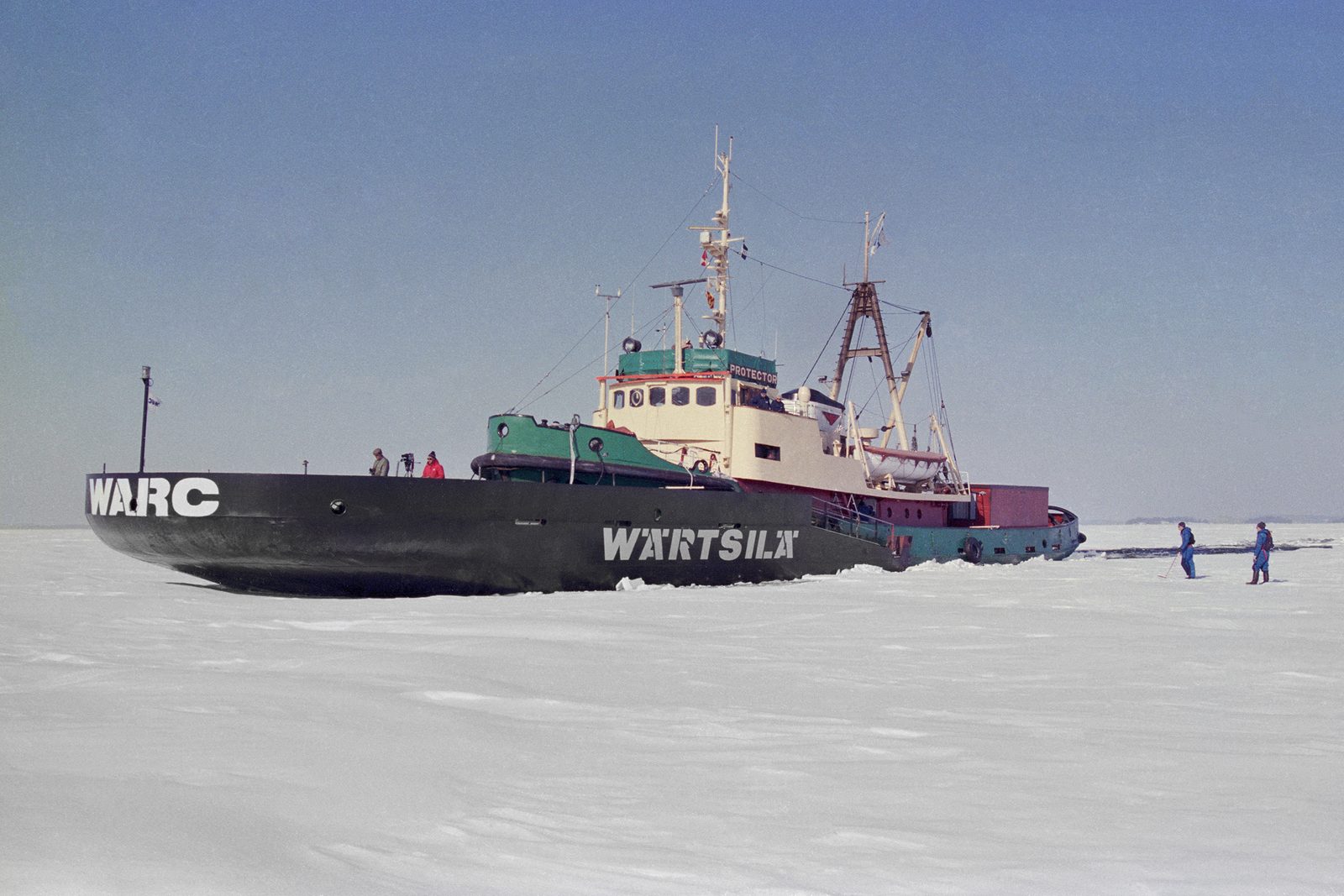
Railotech’s predecessor Wärtsilä Arctic Research Centre developed a novel hull geometry referred to as the “conical bow”. Having built up experience through a detachable semi-scale prototype pushed by a tugboat and a series of shallow-draught river icebreakers, the design was retrofitted to the polar icebreaker Kapitan Nikolaev in 1990.
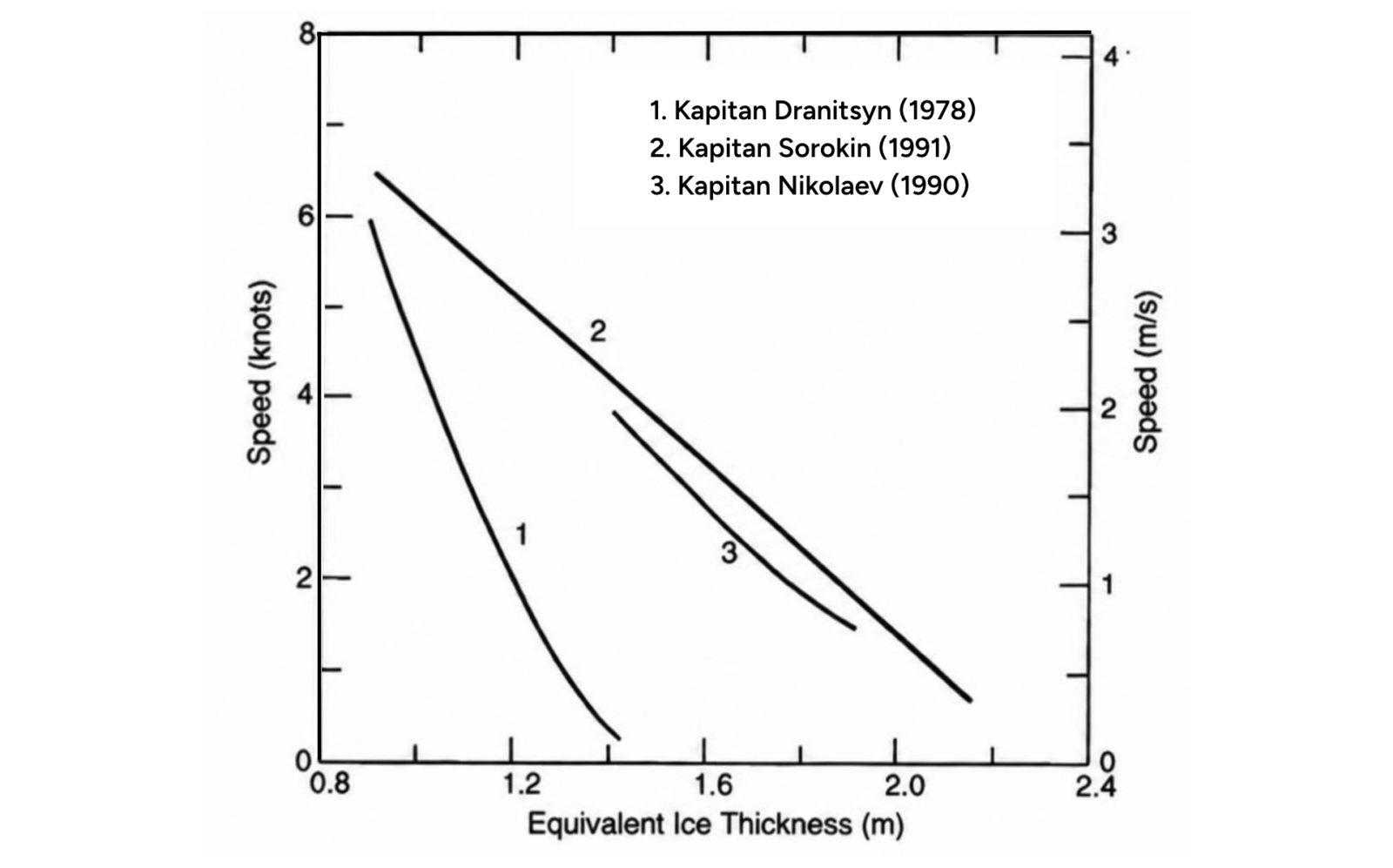
At around the same time, another level-ice optimised bow was developed in Germany and retrofitted to the sister ship Kapitan Sorokin. A third vessel in the same class, Kapitan Dranitsyn, retained its original wedge-shaped bow.
The three vessels offered a rare opportunity to compare very different design philosophies in full scale.
In 1994, Aleksandr Iyerusalimskiy and Loliy Tsoy presented findings based on full-scale tests with all three icebreakers. In thick level ice, the optimisation worked and both new bow forms were superior to the conventional design.
Outside that carefully defined condition, however, the picture changed. Both optimised bow forms experienced severe slamming in open water. In broken ice, Kapitan Sorokin’s bow in particular tended to push ice ahead of the vessel rather than directing it beneath the hull, at times bringing Kapitan Sorokin to a standstill.
The designs had succeeded at precisely what they had been optimised to do. At the same time, their performance demonstrated the risks of allowing one measurable parameter to dominate the overall design.
“When the focus is solely on one operating condition, optimisation can go too far,” says Romu.
From maximum performance to the right balance
At Railotech, it became increasingly clear that while level-ice performance is important, an icebreaker cannot be judged by level ice alone. Instead, every icebreaker should be optimised for its intended operational profile and operating area.
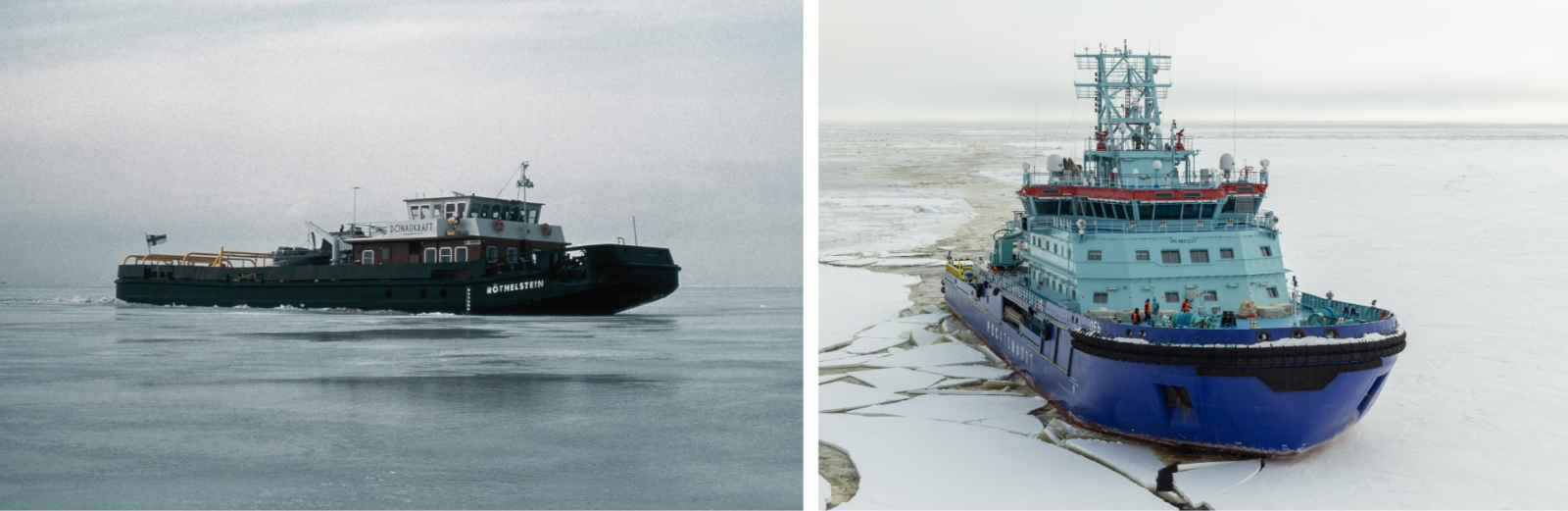
There are still specialised applications where level-ice optimisation is justified. One example is Röthelstein, a river icebreaker developed for the Danube, or Ob, a heavy port icebreaker with ambitious icebreaking capability requirements relative to its size and power.
For most icebreakers, however, the design challenge is different. The aim is not to maximise one capability, but to find the best balance between all the characteristics required during actual operations.
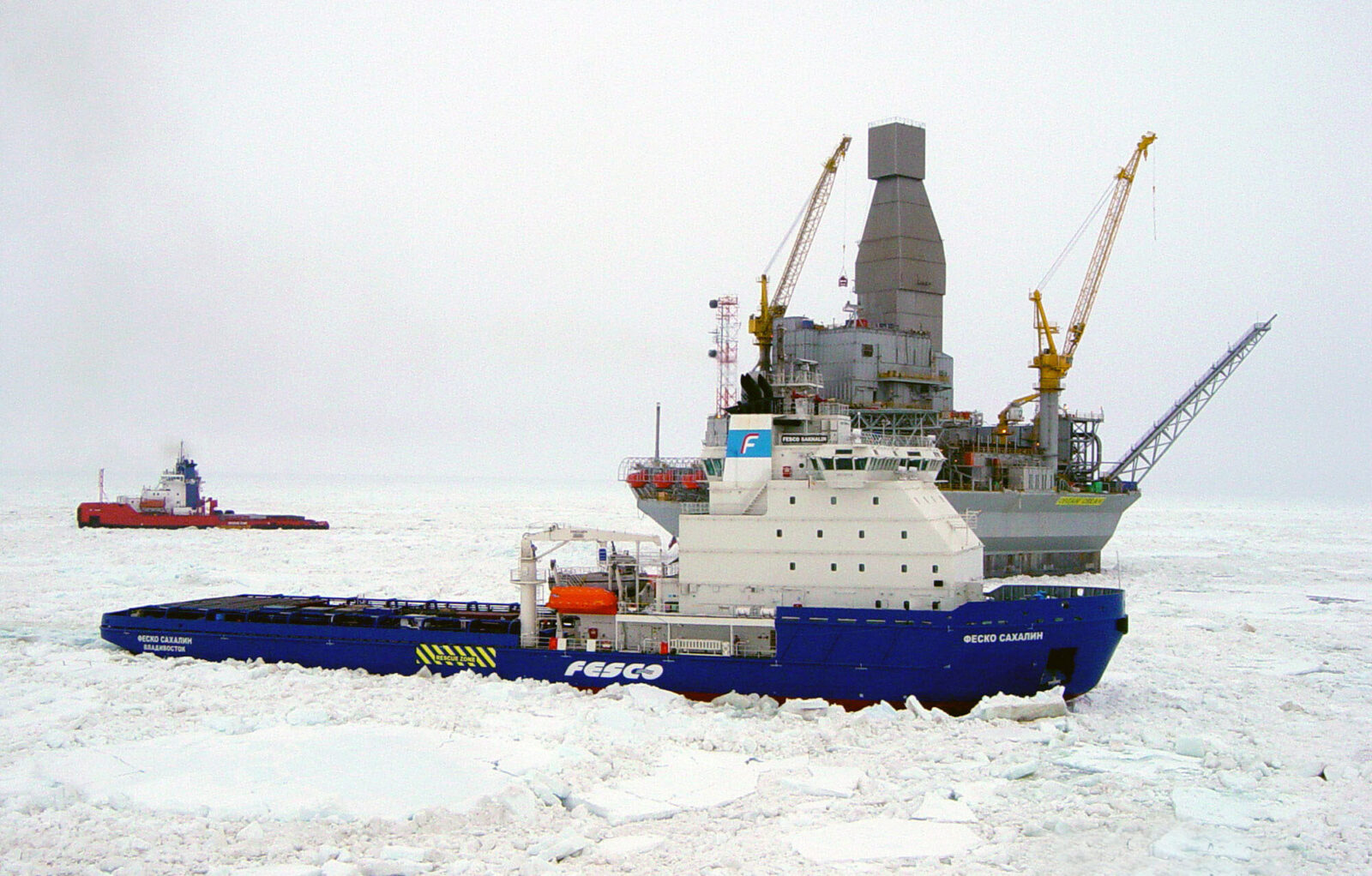
By the early 2000s, this was becoming visible in a new generation of designs. When Railotech developed Fesco Sakhalin, the objective was to combine low level-ice resistance with other important capabilities, including heavy ridge clearing astern, utilising the Double-Acting Ship (DAS™) technology, and good manoeuvrability. Operational feedback from the vessel provided valuable insights that informed many subsequent Railotech projects.
Bow flushing using an azimuthing propulsion unit is another important Railotech innovation that has significantly improved icebreaking performance. First applied in the designs of Baltika, Polaris and Aleksandr Sannikov, the concept was further developed based on operational feedback for the new Swedish icebreaker and, most recently, for Finland’s upcoming B+ class icebreaker.

“By improving what happens below the waterline, for example with an azimuthing propulsion unit at the bow, the hull form can be optimised for the vessel’s entire operational profile without sacrificing icebreaking capability,” Heinonen explains. “This can provide better seakeeping characteristics, channel and ridge performance, and manoeuvrability, for instance.”
Every vessel adds to the picture
Finding the right balance requires long-term experience from real vessels operating in real ice conditions. But in icebreaking, experience cannot be accumulated quickly: gathering meaningful operational data takes decades.
To date, Railotech has completed dozens of different icebreaker designs. Many of the resulting vessels have built up extensive operational experience, while the most recent designs are progressing towards construction.
Every vessel adds another piece to the picture. Model tests show how a design should behave. Full-scale trials reveal how it behaves once built. Years of operation then demonstrate what happens in the wide range of conditions that no test programme can fully reproduce. Together with operator feedback, systematic R&D, and research voyages, this knowledge is captured in Railotech’s unique database that feeds into every new project. Over time, it has created a detailed understanding of what works in practice – and what does not.
“Every project teaches you something new, but it takes decades of accumulated know-how to truly understand what kind of design will be successful and efficient,” says Romu.
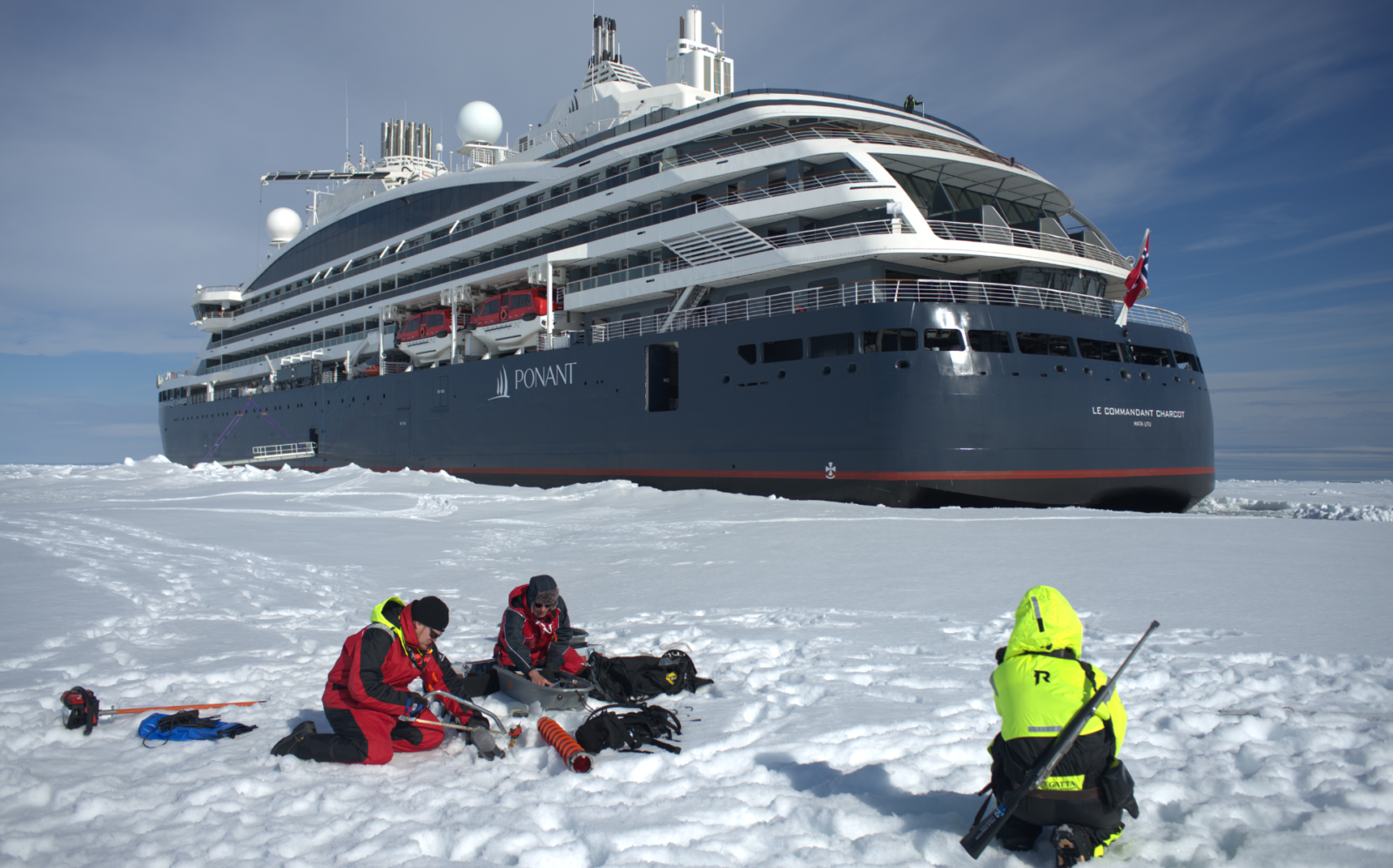
According to Heinonen, level icebreaking has been extensively researched and is well understood. Designing an icebreaker for a wide range of operating conditions, however, requires a much broader combination of expertise.
“The interaction between the hull and the flow of ice below the waterline is a multifaceted phenomenon that remains difficult to model accurately. Long-term, hands-on experience is essential for understanding what kind of hull form will work effectively in practice,” Heinonen says.
Beyond level ice: what should we measure?
Forty years after level-ice performance became an established benchmark, speed in a specified thickness of level ice remains one of the most important contractual requirements in icebreaker projects.
And for good reason. It is a valuable parameter that can be reliably tested and verified, provides a useful indication of icebreaking performance, and allows different designs to be compared on a common basis.
But a single parameter cannot describe the performance of an entire vessel.
A broader assessment can include performance in ridges, brash ice and channels; operational capabilities such as manoeuvrability and vessel assistance; open-water characteristics such as seakeeping and transit efficiency; and overall efficiency measured through energy consumption and emissions. The relative importance of these indicators depends on the vessel’s intended operating area and tasks.
At Railotech, defining these requirements based on the vessel’s intended operational profile and integrating them into the design process is the starting point of every icebreaker project. Turning them into contractual requirements, however, is more demanding. The criteria must be objectively measurable and ultimately verifiable through testing or trials.
“Speed in level ice gives a useful overall indication of an icebreaker’s performance, but if the objective is lower fuel consumption, greater agility, or better performance across different operating conditions, other indicators are also needed,” Heinonen says.
The choice of performance indicators also influences the design itself. If one easily measurable parameter dominates the specification, optimisation will naturally focus on that parameter. A broader set of requirements encourages solutions that perform more efficiently across the vessel’s actual operational profile.
“The best icebreaker is not the one that breaks the thickest ice, but the one that performs the full range of its tasks most efficiently,” Romu concludes.
Text by Catarina Stewen