As the leading company in icebreaker design and technology, Railotech puts considerable effort into research & development to support authorities’ decision-making and the ongoing refinement of the Finnish-Swedish Ice Class Rules.
Sustainable, safe, efficient, and environmentally friendly year-round navigation to and from Finnish and Swedish ports, as well as an efficient winter navigation system, is important for our industry and the competitiveness of our countries.
The Winter Navigation Research Board is a Finnish-Swedish cooperation administering a joint winter navigation research programme, based on a bilateral agreement between the Finnish Maritime Administration and the Swedish Maritime Administration. Here is a brief overview of our latest ice class ship research topics, as part of the Research Board’s programme.
Discrete element method – fluid dynamics
Ice model testing is a proven method in the Finnish-Swedish Ice Class Rules to verify a merchant ship’s performance for granting ice class. However, current ice model testing techniques face challenges from hydrodynamic effects at higher speeds.
The combined discrete element method-computational fluid dynamics (DEM-CFD) simulation method has shown potential to support model tests in providing a more comprehensive evaluation of ship performance in the standardised rule channel in the future.
In a previous review, we concluded that no existing open-source codes could be directly applied in such a scenario. Therefore, this project aimed to review coupling methods of DEM-CFD for developing a simulation framework for ship performance in a rule channel.
Dr Hanyang Gong from Railotech found that the CFDEM and PhasicFlowPlus codes are the most suitable open-source packages available that can be used for simulating brash-ice ship model tests.
A demonstrative simulation of a hull in brash ice was performed by using CFDEM as a proof of concept of using an open-source software package for simulating brash-ice ship model tests. The simulation was able to capture water and ice flow around the hull qualitatively, but further work is required to validate the simulations against model test results and to obtain quantitative results on ice resistance on the ship model.
The research work was also augmented by Dr Malith Prasanna, a research scientist at VTT, in Arctic renewable energy. He gained experience using DEM models to simulate ice loads on offshore structures during his postdoctoral researcher tenure at Aalto University.
Model test procedure update
The model test guideline for determining the minimum required power for Finnish-Swedish ice classes needed an update to better simulate the current situation.
Realistic determination of a ship’s resistance at the set performance point (5 knots in a brash-ice channel of certain midpart thickness) is essential for fair and functional determination of the required minimum power.
According to our understanding, the current procedure functions well for traditional ice-going merchant ships but is not optimal for some modern, open-water-optimised bow forms with vertical or near-vertical bow shapes. Therefore, modifications were introduced, driven by the need to equally consider all bow shapes and the need for better-standardised testing conditions that reflect representative natural conditions.
Additionally, the current procedure considers significantly large-beam ships similarly to small-beam ships, while in reality, the channel in nature is relatively wider for small ships.
Key updates suggested incorporating requirements for realistic simulation of interactions between ice fragments and setting a target speed for a model test experiment. It was also proposed to change the friction coefficient correction formula.
In addition, to these improvements in the simulation of brash ice around ships with different shapes, a significant update in channel width and average thickness of the brash-ice mass in the model test was proposed to better account for significantly wider ships.
The goal is to ensure consistent and accurate performance predictions across different ship models and test facilities, ultimately leading to more equal and functional determination of the required minimum power for ice-class ships.
IB Beam impact
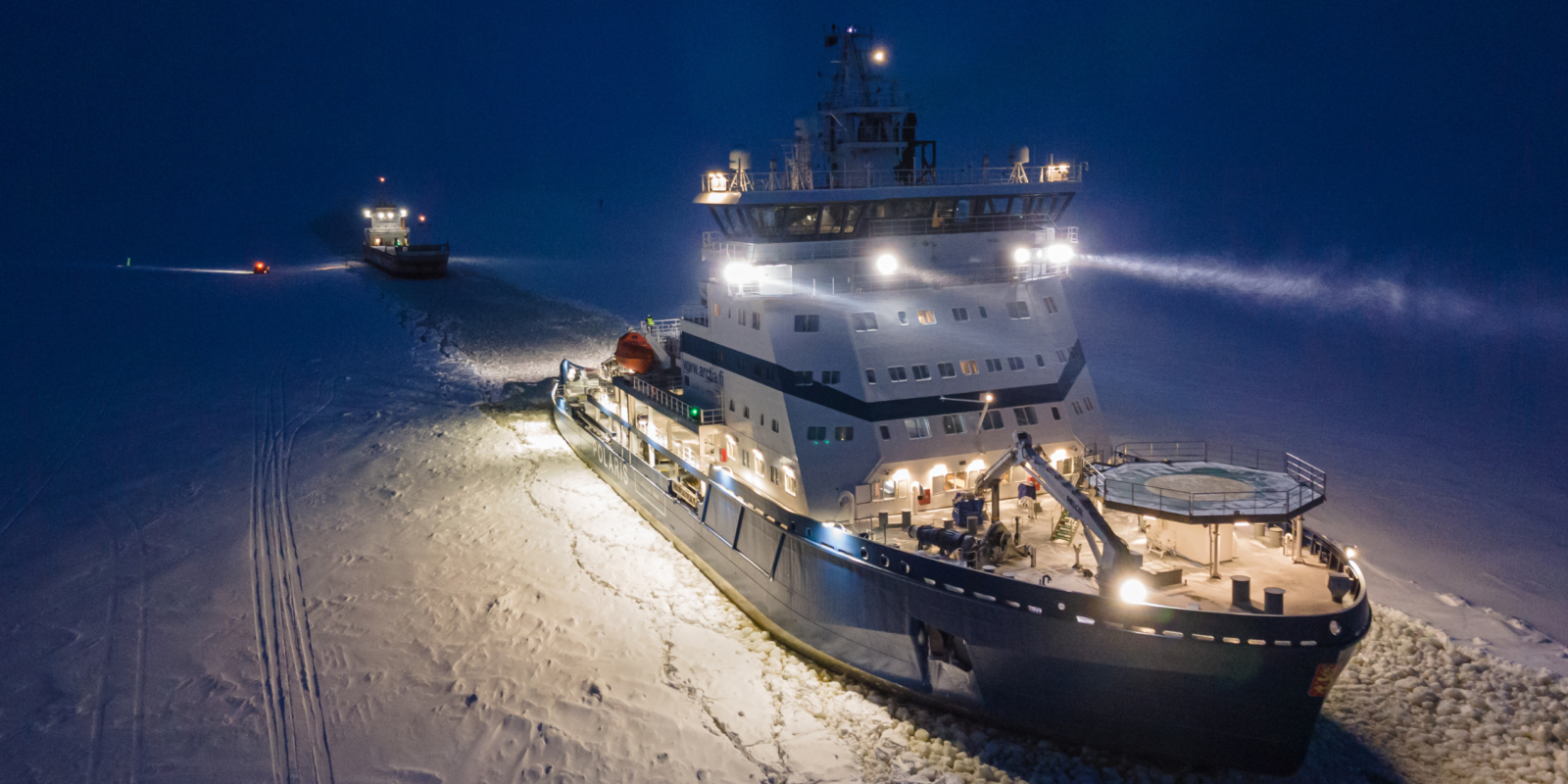
The existing icebreaker fleet in the Baltic Sea has reportedly faced difficulties when assisting large ships in heavy channels. Although such extreme conditions are rare, it was important to examine whether a wider icebreaker would perform more effectively under similar circumstances.
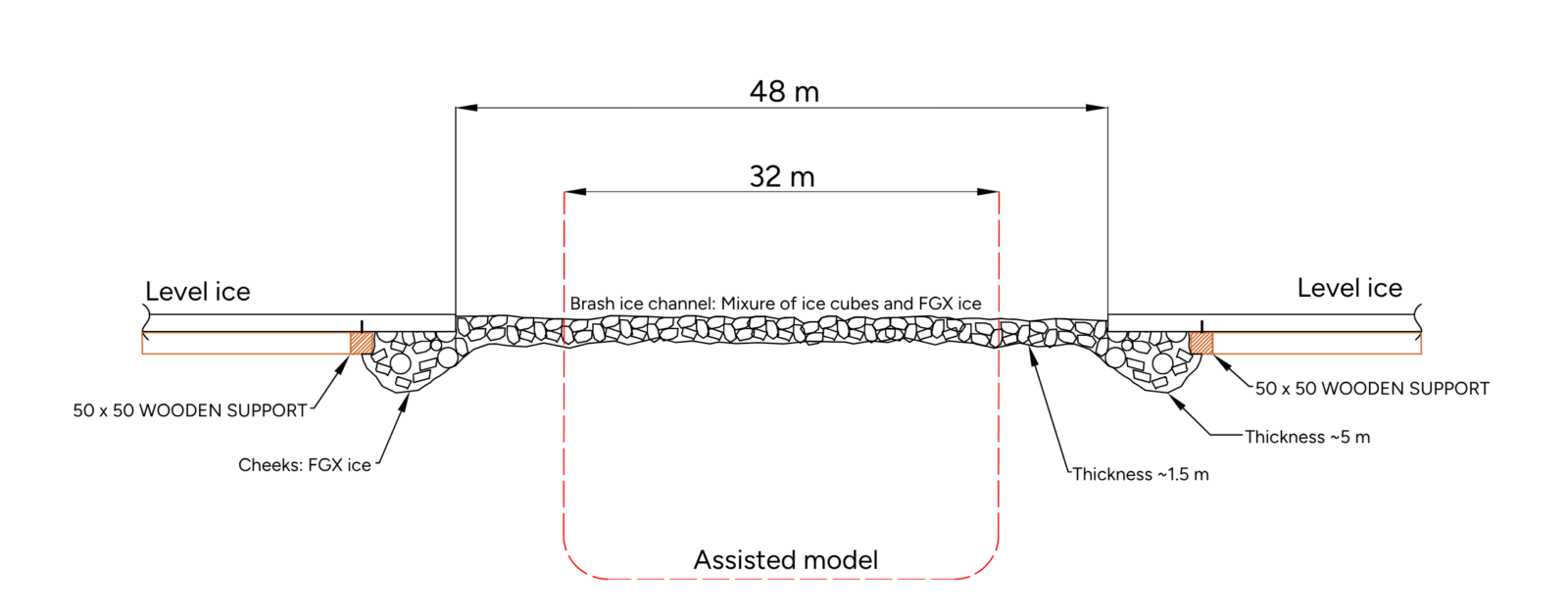
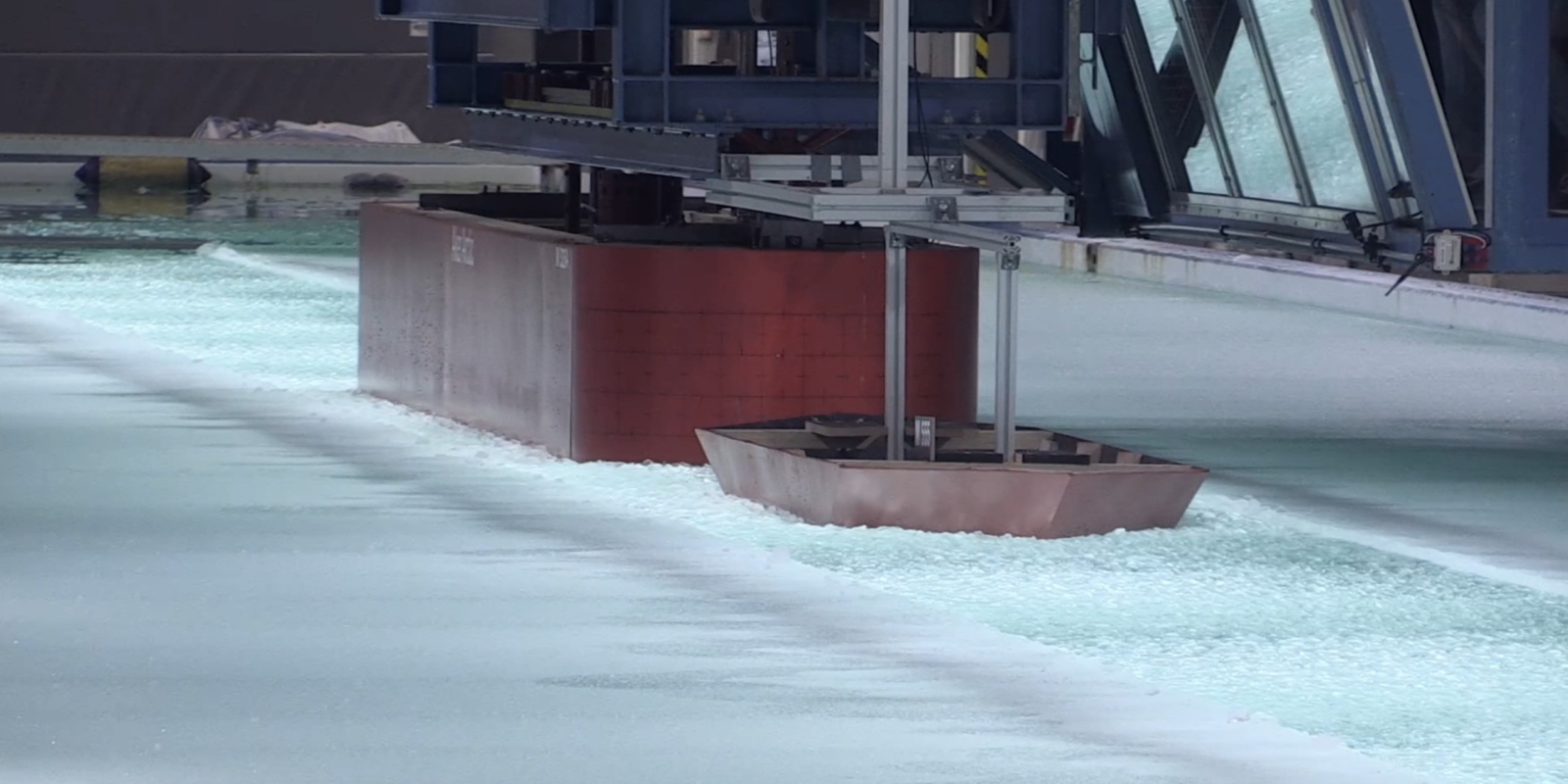
The project explored the effect of the icebreaker beam on the resistance experienced by assisted vessels in heavy channels through experimental methods. The goal was to determine whether increasing the icebreaker beam from 24 metres to either ~28 metres or ~32 metres would offer significant advantages. The impact of the icebreaker beam on the performance of an assisted ship was investigated using simplified physical models.
The tested ice condition represented a heavy brash-ice channel, which has thick side ridges or “cheeks” to realistically restrict the lateral movement of the ice mass in the channel.
Model ice was used to produce the surrounding level ice field for the brash-ice channel. After that, the channel was filled with solid fresh-water ice cubes to produce brash ice with a target thickness of 1.5 m. According to Matala, the ice cubes model realistically all processes considered significant in ship’s ice resistance in an unconsolidated brash-ice channel.
The technically interesting test project provided valuable insight into the impact of displaced brash-ice mass within the limited space of the channel.
Frame stability evaluation
Structural engineer Ville Valtonen has continued to develop alternative methodology for structural dimensioning under the Finnish-Swedish Ice Class Rules (FSICR).
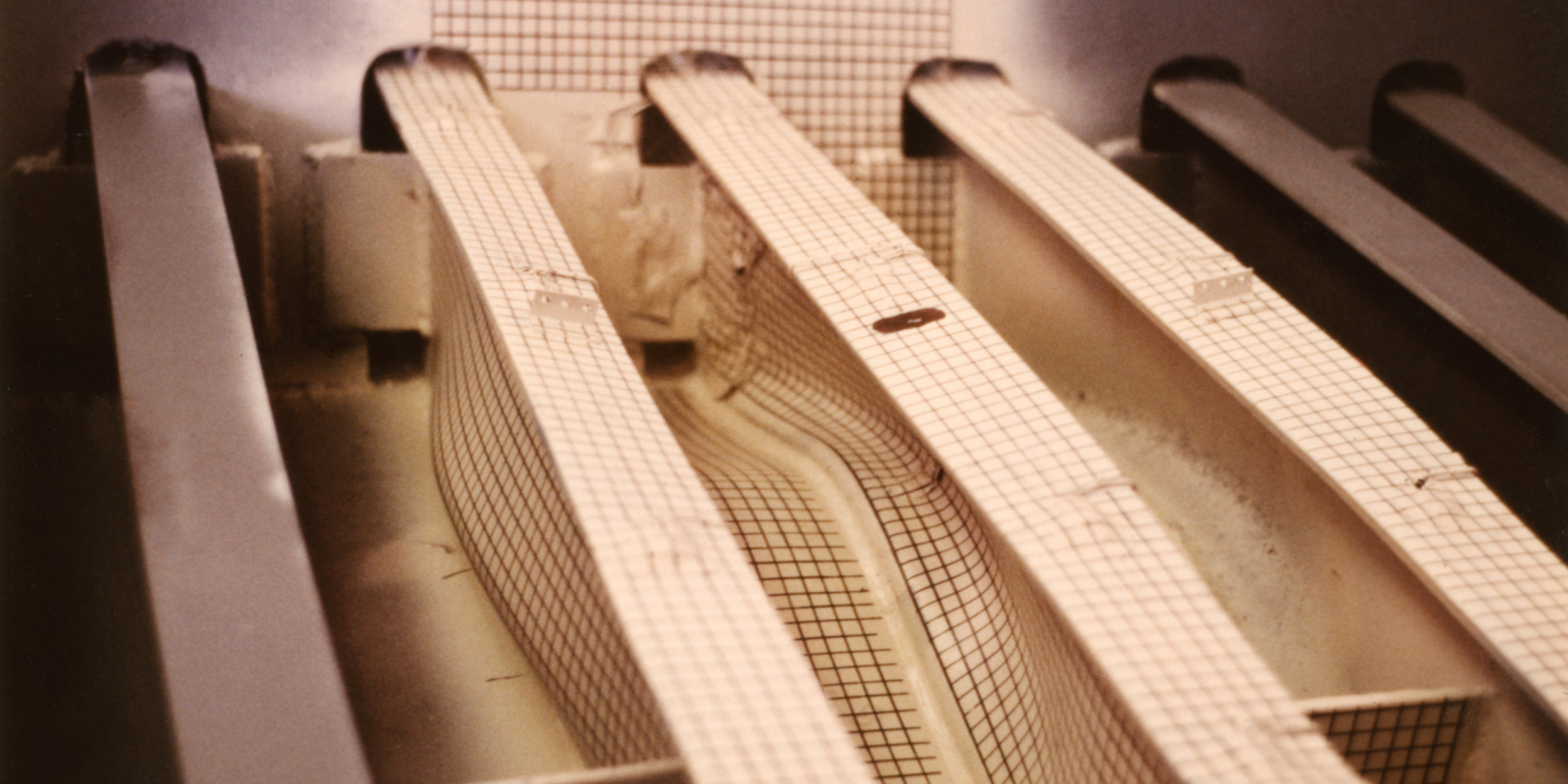
Sufficient stability of framing members is important to ensure load-carrying capacity and, thus, safety against ice loads. Currently, sufficient stability is ensured by a minimum thickness requirement, which is similar in both the FSICR and the IACS PC Rule.
According to Professor Claude Daley, the current minimum thickness requirements in the rules are too conservative for flat-bar frames (resulting in excess weight) and insufficient for flanged members (leading to buckling and tripping failures, i.e. ice damage). In 2003, Daley suggested that improved criteria should be developed. However, the same formula is still used in both the PC and FSICR Rules.
Previously, evaluating frame stability has been rather complicated, as the available tools have been either laboratory tests with semi-scale steel structures, analytical formulas, or non-linear finite element analysis without iteration.
With the tools Valtonen developed for the HULLFEM I-III projects, it has become possible to solve inverse problems related to ice-strengthened ships with non-linear FEM. Essentially, instead of solving the response of a given structure, these tools allow for automatic iteration to solve for the minimum structure that fulfils the given criteria for given load. This allows for finding the minimum thicknesses that guarantee sufficient stability.
During 2026, Valtonen will study minimum thicknesses by using non-linear FEM analysis to provide improved frame stability requirements, which would allow weight savings and improved safety. According to Valtonen, the improved formula could be directly implemented into the Finnish-Swedish Ice Class Rules (and IACS PC Rules).
Valtonen has developed and published a method for non-linear analysis of primary structures for IACS PC Rules in co-operation with James Bond from ABS and has developed the finite element analysis guidelines for the Finnish-Swedish Ice Class Rules.
SNAIL
In early 2026, Railotech carried out full-scale measurements of the brash-ice channel profile on the Kemi-Tornio fairway in the Bothnian Bay. This work is part of the SNAIL (Study on NAvigation in Ice channeL) project funded by the Winter Navigation Research Board.
The field team measured the transverse profile of the brash-ice channel at the same location three times at two-week intervals and also collected performance data from merchant ships passing through the measurement area. The data will be used to validate full-scale performance predictions, improve the accuracy of calculation methods for brash-ice growth, and increase understanding of how ice on a heavily trafficked shipping channel develops as the winter navigation season progresses.
“In addition, the project provided an opportunity for several employees to participate in fieldwork, which is critically important for comprehensive professional development,” says lead research engineer Rikka Matala.
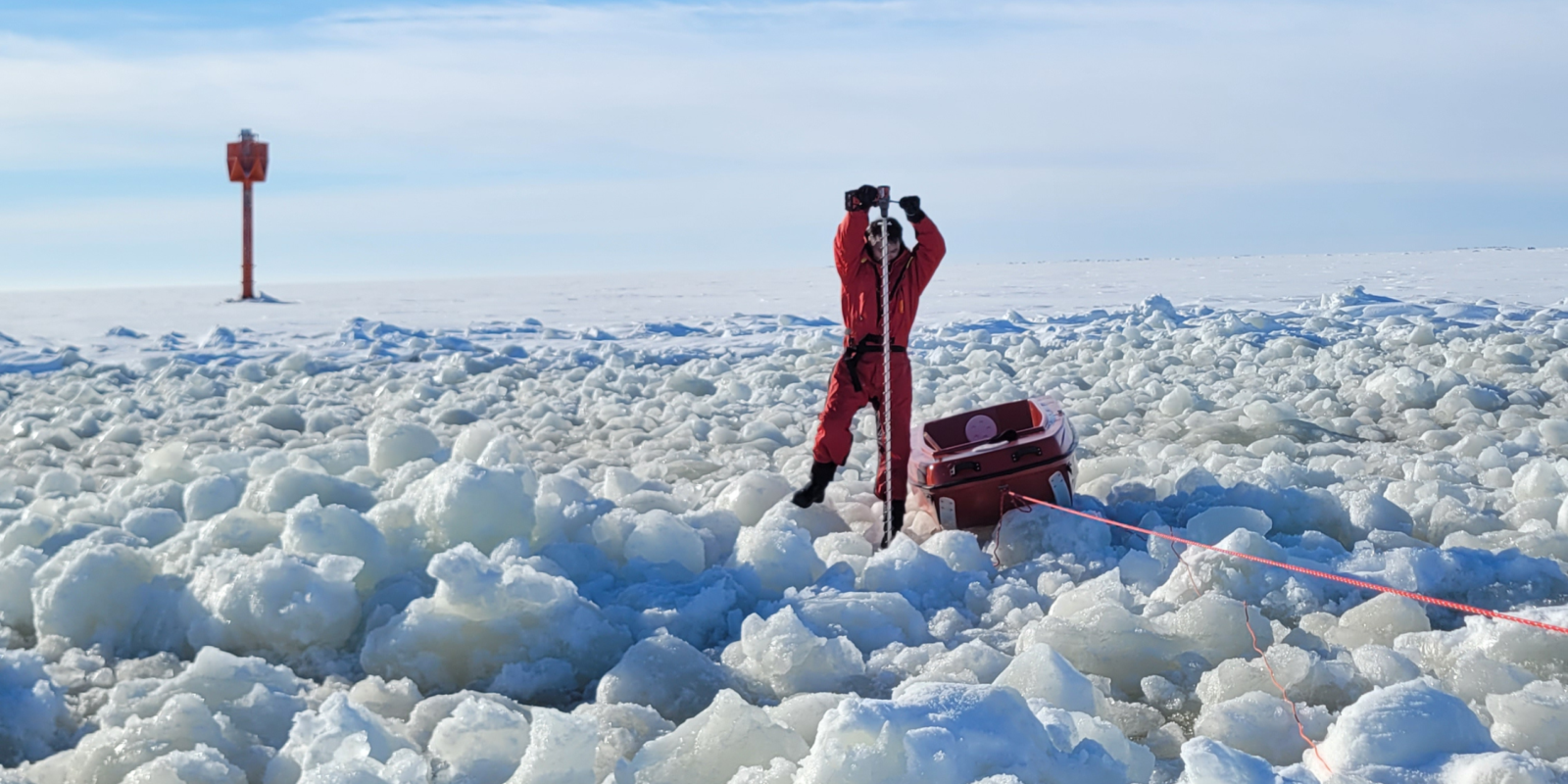
More photos from Bothnian Bay in the news post
Text by Catarina Stewen